
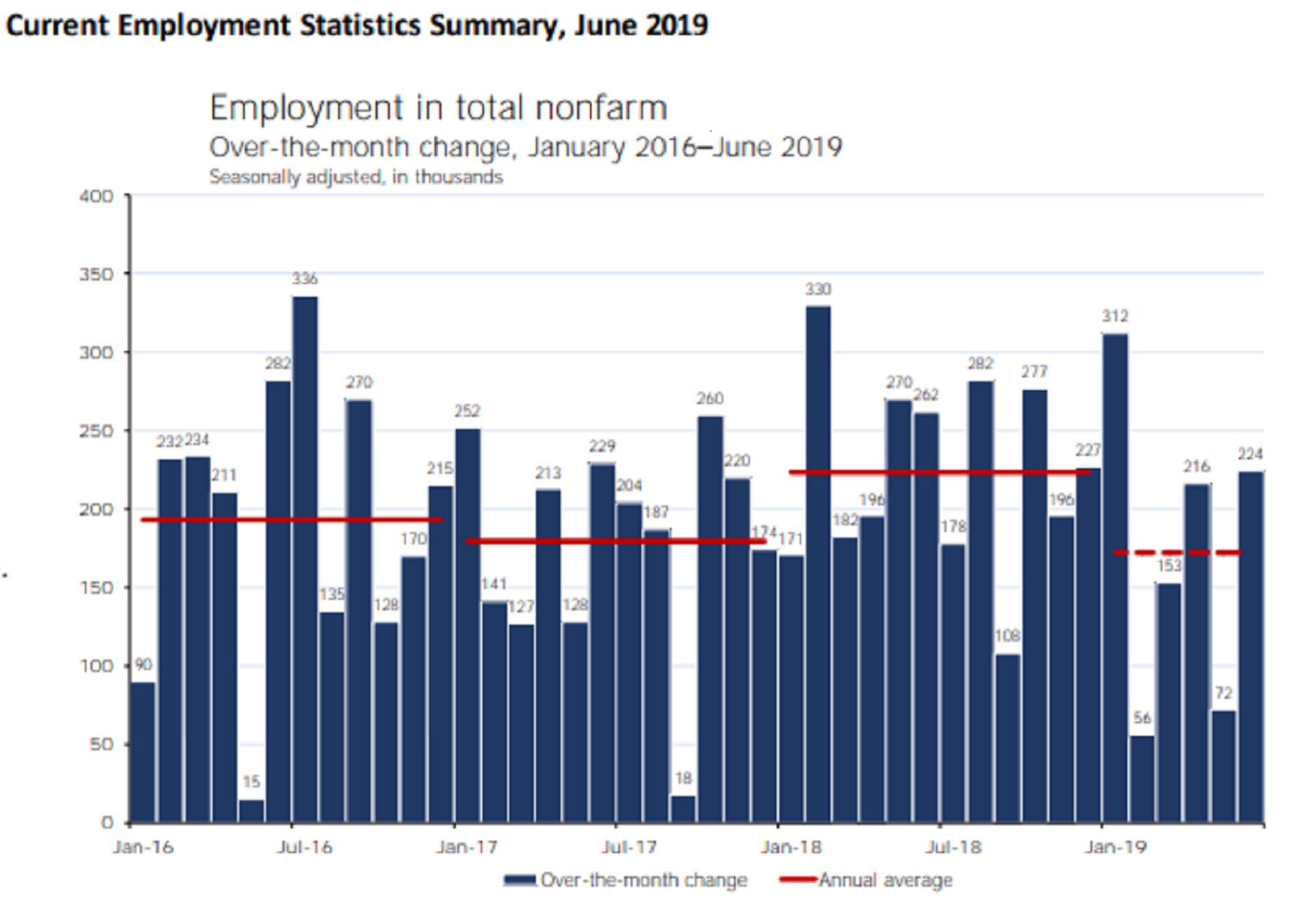
The U.S. economy added 224,000 jobs in June, heavily beating expectations and creating a cautious optimism among analysts wary of the dismal growth seen in May.
The unemployment rate remained largely unchanged at 3.7 percent — or 6 million people — in June, the Bureau of Labor Statistics (BLS) announced Friday in its monthly jobs report.
“The number did beat expections but ... it was pretty abysmal a month ago, and that was revised downward,” Mitch Roschelle, a partner at PwC, told Cheddar.
In Friday’s report, the BLS amended its May figures from 75,000 to just 72,000 jobs added. June’s employment growth was, however, way above the average of 172,000 per month in 2019 so far. The average monthly gain for 2018 was 223,000 jobs.
The industries with the largest gains were professional and business services and health care, which added more than 51,000 and 35,000 jobs in June respectively. The transportation and warehousing sector added roughly 24,000 jobs.
"JOBS, JOBS, JOBS!" President Donald Trump tweeted Friday morning.
In June, average hourly earnings rose by 6 cents and have increased by 3.1 percent over the past 12 months.
The report indicates “that the labor market remains a strength of the economy” and “should ease some of the pressure that the Fed faces to cut rates,” Doug Duncan, the senior vice president and chief economist at Fannie Mae, said in a statement to Cheddar.
The Federal Reserve is expected to cut interest rates at its Federal Open Market Committee meeting later this month in an effort to hinder a potential downturn in the economy, which is currently experiencing its longest expansion on record.
“There is really nothing out there short of some big black swan event that will slow down this economy,” Roschelle said, noting, however, that a shrinking of the global economy would threaten domestic growth.