Major metropolitan areas in the U.S. are in serious need of an overhaul when it comes to transportation infrastructure. People familiar with Amtrak’s Northeast Corridor, which stretches from Boston to Washington, DC, likely have had some experience with extensive delays due to aging tracks, but investments into a high-speed rail system wouldn’t just improve the railroads — automobile traffic could also see some relief.
When it comes to speedy trains, Japan has decades of operating experience. The world’s first and fastest bullet train, the Shinkansen, was launched in the country just days before the start of the 1964 Tokyo Olympics. The train’s ability to carry passengers between Tokyo and Osaka at 130 miles per hour proved to be groundbreaking.
With further advances in technology, Japan’s bullet trains can reach speeds of 200 miles per hour today, and China runs even speedier locomotives that regularly travel at 250 miles per hour over more than 19,000 miles of tracks. To paint a clearer picture, Amtrak’s Acela trains travel the Northeast Corridor line, which is just 457 miles long, at an average speed of about 65 miles per hour.
The Acela train has the capability to reach 150 miles per hour but traveling at that speed along aging tracks would likely increase the number of safety issues.
Years in the Making
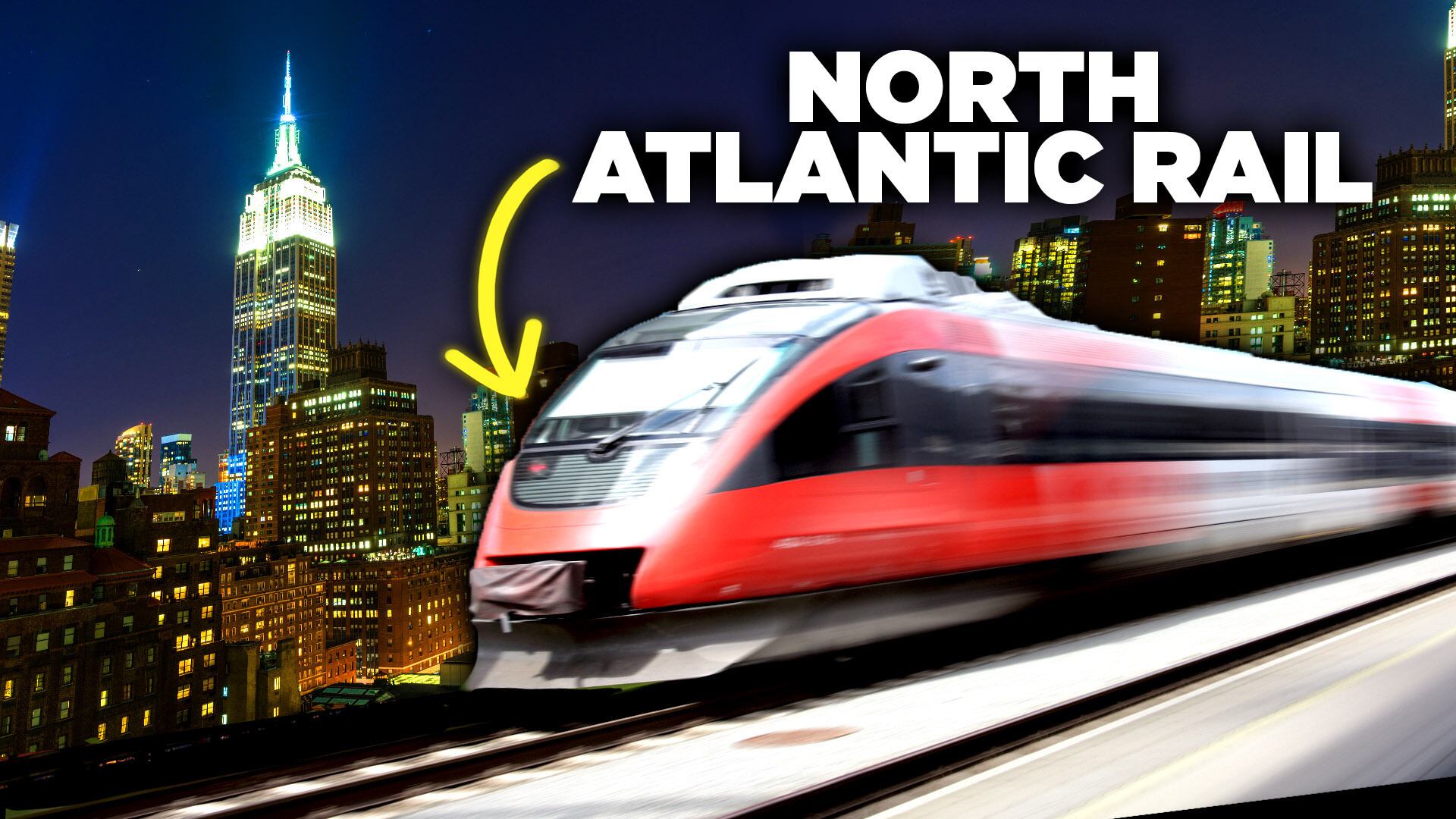
The idea of a high-speed rail system through New York isn't new. In 2004, Robert Yaro, the former president of the Regional Plan Association, lobbied for funds that would help in building high-speed rail systems in places deemed to be megaregions: spanning 300 to 600 miles in area and sharing infrastructure and economies.
Yaro identified 11 such megaregions across the country that met the requirements after conducting a study through the University of Pennsylvania. The number has since increased to 13 nationwide. And, part of the reason why high-speed trains were looked at as a transportation solution is that the megaregions are inconveniently large for car travel but too small to be regularly serviced by flights.
Federal Government Fumbled Construction
In 2009, Yaro pleaded with Congress to support his campaign for his North Atlantic Rail network, and as part of the American Recovery and Reinvestment Act aimed at creating new jobs on the heels of the 2008 Great Recession, more than $10 billion was granted to begin building. However, the project fell through after just a portion of the funds were distributed for the actual construction of new rail infrastructure, with partisan politics also playing a role in the stalled plans.
In 2017, Yaro conducted another study, this time specific to the Northeast. He proposed upgrading the heavily traveled route stretching between Boston and Washington, DC. The findings were presented to the then-Vice President Joe Biden who supported it, but the ambitious plan had a steep price of $105 billion and would take 20 years to complete, eventually killing the project.
Even after now-President Biden released what has been described as a “once-in-a-lifetime” $2.3 trillion infrastructure bill, funding for a high-speed rail was not included, though Amtrak would be able to use $80 billion towards upgrades on the Northeast Corridor if the bill passes.
There also is concern that part of the proposed construction of the North Atlantic Rail system that calls for boring a 16-mile underground tunnel from Long Island to Connecticut could present a threat to natural habitats and wildlife.
Proponents of the project, however, say funding would help the regional economy recover from the impact of COVID-19, create jobs, and would be a significant boost to pollution reduction. Supporters hope to secure $105 billion, $25 billion more than the upgrade package from Biden's plan, but skeptics see little to be optimistic about getting it approved by Congress.
Video produced by Lisa Nho and John Tejada. Article written by Lawrence Banton.