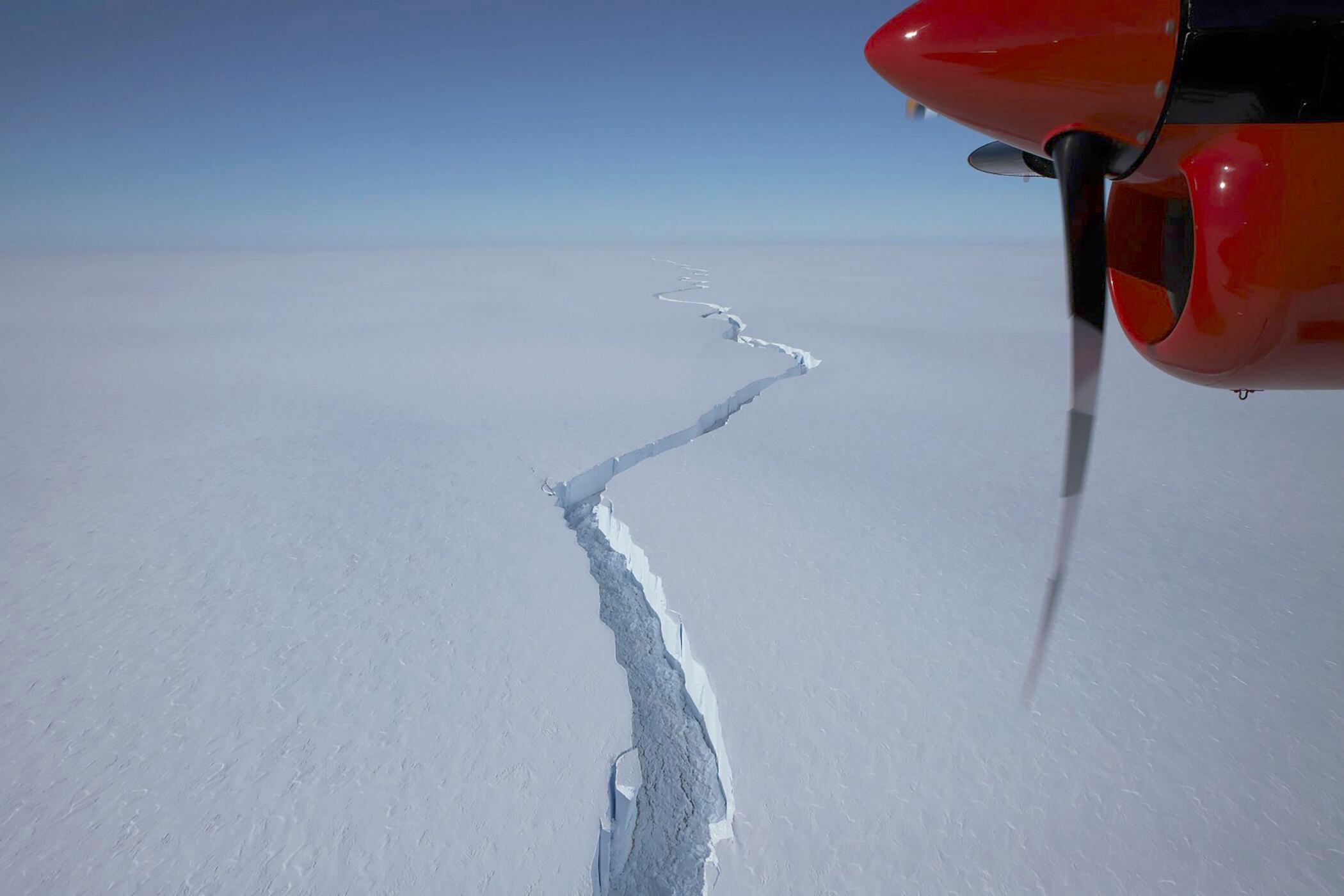
A aerial view taken in Jan. 2021 and issued on Friday July 26, 2021 by the British Antarctic Survey showing a massive crack in the Brunt Ice Shelf in Antarctica. A huge iceberg the size of the English county of Bedfordshire has broken off the 150-m thick Brunt Ice Shelf, almost a decade after scientists at British Antarctic Survey (BAS) first detected growth of vast cracks in the ice.(British Antarctic Survey via AP)
A huge iceberg, the size of the UK county of Bedfordshire, has broken off the Brunt Ice Shelf.
The phenomenon is known as calving and comes almost a decade after scientists at the British Antarctic Survey (BAS) first detected the growth of vast cracks in the ice.
The first indication that a calving event was imminent came in November 2020 when a new chasm – named North Rift – headed towards another large chasm near the Stancomb-Wills Glacier Tongue 35 km (21.7 miles) away.
It's the third major crack in the ice shelf that's become active in the last ten years.
During January, the rift pushed northeast at up to 1 km(0.62 miles) per day, cutting through the 150 meters (492 feet) thick floating ice shelf.
The iceberg was formed when the crack widened several hundred meters in a few hours on the morning of 26th February, finally breaking free from the rest of the floating ice shelf.
The calving is not expected to pose a threat to BAS's Halley Research Station which is located on the Brunt ice shelf.
Visits to the emergency room related to mental health among young adults, teenagers, and children spiked between 2011 and 2020, according to the Journal of the American Medical Association. The annual number rose form 4.8 million to 7.5 million over that period.
A new study suggests water on Mars may be more widespread and recent than previously thought. Scientists reported the finding from China's Mars rover in Science Advances on Friday.
Thinking about trying a new diet but not sure which way to go? An evidence-based analysis of 10 popular eating patterns shows some promote heart health much better than others.
Camilla Marcus, founder of West-Bourne, joined Cheddar News to highlight the issue of wastefulness in the food industry and spoke on the importance of regenerative farming amid a growing climate crisis.