Huawei on Tuesday announced its full-year 2019 results, which beat its own projections from December of 18 percent sales growth.
Despite political pressures and a slowing global smartphone market, Huawei saw its 2019 full-year revenue grow 19.1 percent to roughly $123.3 billion* (858.8 billion yuan) largely due to its domestic handset business.
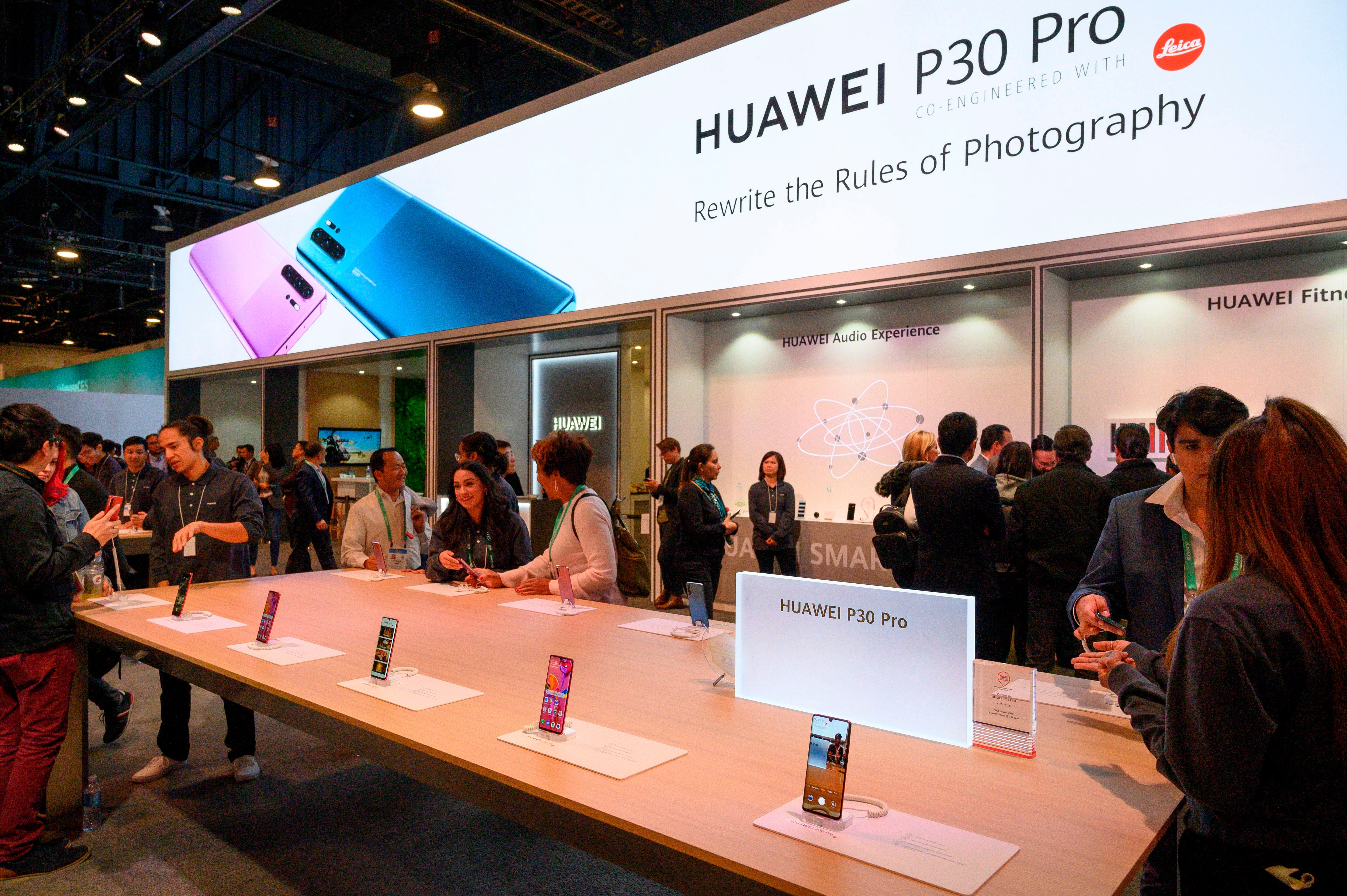
After Samsung and Apple, Huawei is the third biggest smartphone maker in the world by shipment, according to Counterpoint Research, Gartner, and Canalys. As Huawei is unable to sell its phones in the U.S. officially through carriers it sees its greatest customer base in China.
The Shenzhen-based firm is also the world’s largest maker of telecom equipment by revenue, according to research group Dell’Oro.
But over the last two years, Huawei’s political problems have weighed on its performance.
On a call with reporters Monday, Vincent Pang, company board director and senior vice president, reiterated what his company has said a lot recently, that 2019 was a “very challenging year.”
“If you look at the portion from the three business units, this is the first year our consumer business [took in] more than half of our total revenue,” said Pang.
“From the numbers it [was] not a bad year for Huawei,” he added. But growth slowed starting in mid-May when the U.S. put Huawei on its Entity List, restricting U.S. companies from selling to the company unless specifically licensed.
“Q4 of 2019 [growth] slowed down to 8 percent,” said Pang. “The first two quarters remain very high speed but starting from Quarter 3 and 4 [our growth slowed].”
Huawei has faced a number of challenges in the United States and abroad as it fights allegations that its equipment could be used for spying by the Chinese government.
Governments in Europe have weighed banning the company from building 5G equipment or allowing Huawei to move forward within guidelines. The UK earlier this year set a market share cap at 35 percent and will exclude the company from “core” parts of its 5G network, which refers to any equipment that could access the data it transmits. Germany has made a similar decision, and France may reportedly follow in those footsteps.
At home, the Department of Justice is charging the company with conspiracy to steal trade secrets and fraudulent and dishonest business dealings. Huawei CFO Meng Wanzhou meanwhile is still in Canada, being held on related charges. Her extradition hearing continues this week.
Huawei in February responded to the charges, calling the new indictment “part of the Justice Department’s attempt to irrevocably damage Huawei’s reputation.”
As challenging as 2019 was, the company’s woes are multiplying this year. Most multinational companies are dealing with a slowing global economy as a result of the coronavirus outbreak.
The health crisis has not only impacted the manufacturing sector in China over the past two months but also the demand for goods in the world’s largest consumer economy.
On the call Huawei executives sounded hopeful for a strong retail recovery as China has started to lift mobility restrictions, re-opening shops and factories.
“That is the domestic retail sector,” said YingYing Li, chief marketing officer of the
consumer business group. “But if you look at overseas shops have been closed and we are monitoring the impact on us.”
As for manufacturing, Huawei says it is “nearly” back up to pre-virus manufacturing levels given the majority of tech factories are in the southern part of China, away from Hubei province in the central part of the country where the outbreak originated.
When Cheddar asked how the coronavirus has impacted the rollout of 5G, Pang said the impact may be limited in China because the company thinks it can pick up development in the second half of the year, while it will closely monitor Europe’s rollout.
As the epicenter of the outbreak has moved to the U.S., Huawei says there has been no change in the situation with the U.S. government.
“The fact is the conversation is really on pause because there is not much conversation,” said Andy Purdy, chief security officer of Huawei U.S., on the same call.
Huawei is a privately-owned company and is not required to release financial information, but has started to in the last few years to try to provide transparency into its business. The company says its financial statements are independently audited by KPMG.
*using the end of year 2019 conversion rate.