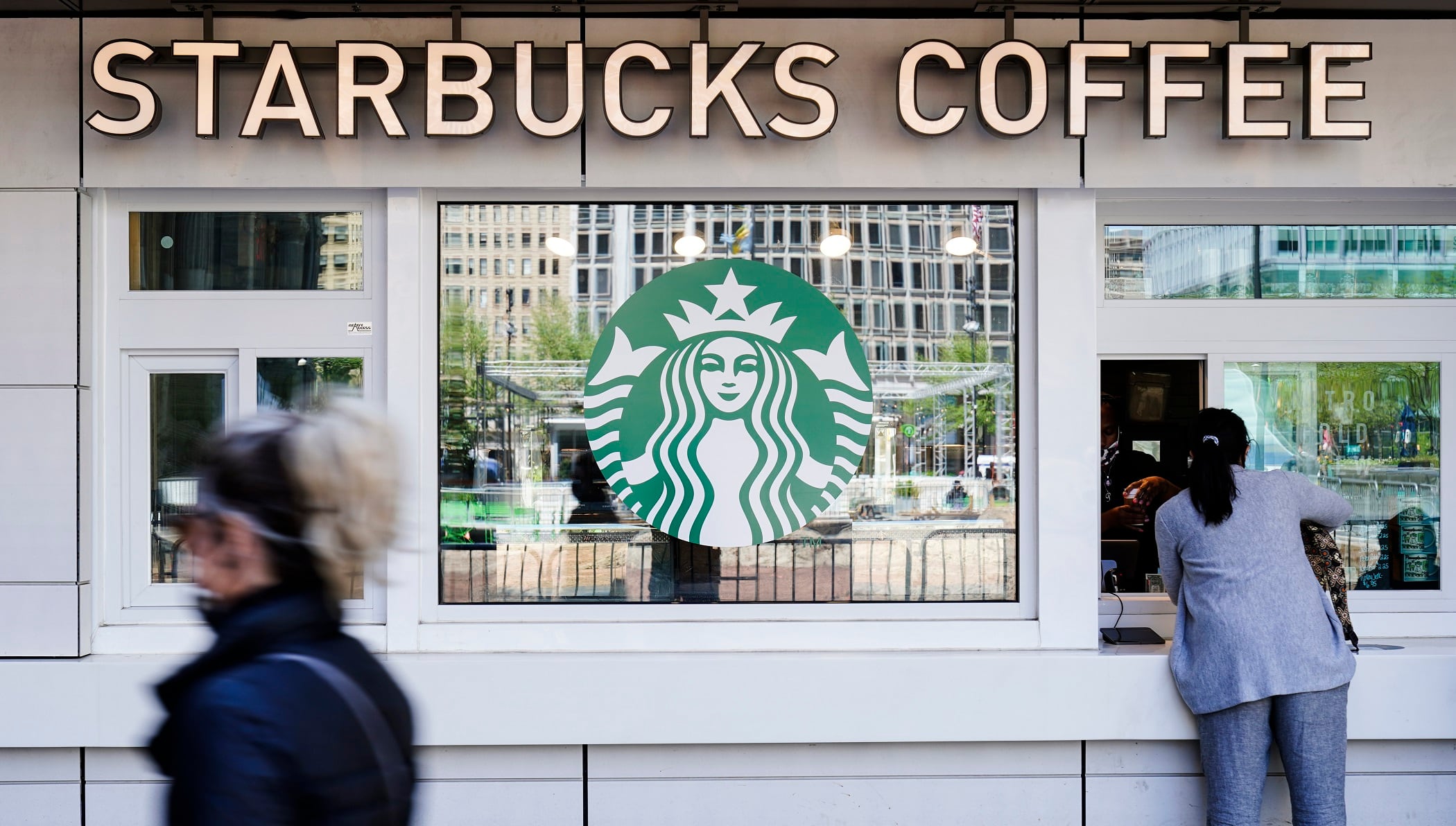
For decades, it’s been a trope: you can find a Starbucks on every corner. But proximity is no guarantee of long-term success, even in the coffee industry. After a recent earnings report showed a dip in sales for the coffee giant, shares in Starbucks quickly fell 17 percent. The cause: widespread pessimism thanks to increased competition, questions about brand burnout and even international problems.
Starbucks is a massive brand with a large following among U.S. consumers. But the recent sales dip has even longtime Starbucks enthusiasts questioning its viability as a long-term product. The usual instinct is for Starbucks supporters to shrug off poor sales because, typically, the brand didn’t have to reinvent itself just to have a positive quarter. That appears to be changing.
“The brand is incredibly resilient,” said former Starbucks CEO Howard Schultz in a LinkedIn post on Sunday. “But it’s clearly not business as usual.”
Why did Starbucks’ sales fall so steeply?
The disappointing sales news stems from a quarterly earnings report a week ago. According to Yahoo! Finance, “the company missed expectations across the board, posting lower-than-expected revenue, earnings, and same-store sales growth.” The reason, according to Yahoo! Finance, was that customers were visiting the store less frequently and order sizes have also shrunk even when customers do visit stores.
This suggests that Starbucks is losing brand favorability in light of current economic uncertainty. CEO Laxman Narasimhan called the economy a “highly challenged environment.” Inflation has set consumer prices rocketing upward, leaving less disposable income for frequent coffee goers. It’s not difficult to imagine that many consumers are now making coffee at home to stem the tide of increasing costs.
In short, Starbucks is failing to connect with customers as it once did. That’s a trend that hasn’t only manifested in the U.S. but overseas — with China in particular. Though Starbucks once had ambitious plans to expand into international markets, the recent news primarily focused on a decrease in sales in the U.S. and China.
This report was particularly alarming for investors and the stock saw a large selloff. If Starbucks loses loyalty from the most important markets, it may lose out on customer traction, which could prove challenging to regain.
What can Starbucks do to improve sales?
“The answer does not lie in data,” wrote Schultz “but in the stores.” Schultz recommended that Starbucks “reinvent” the mobile ordering and payment platform.
Though Starbucks helped pioneer mobile payments, Schultz believes the platform needs to be an “uplifting” experience that will once again draw shoppers to the stores.
Jim Cramer of CNBC had other thoughts, asking: “Is it possible that your coffee is just too darn expensive?”
Growing competition in the coffee space and the future of Starbucks
Coffee competition is fierce. McDonald’s and Dunkin’ Donuts offer robust coffee options forming different levels of their brand experience, whereas Starbucks is famous almost exclusively for its coffee.
In addition, people are supporting independent coffee shops and turning to the grocery shelves for relief from inflationary pressures. What once helped Starbucks stand apart — a premium, in-person coffee experience — is not nearly the draw it once was, especially with higher grocery prices. Other competition from chains like Costa Coffee is giving Starbucks a run for its money on the international scene, making it difficult for Starbucks to gain the worldwide traction it hoped for. Will it be able to turn its fortunes around before sales fall further?