BANGKOK (AP) — Shares advanced in Europe and Asia on Monday as tentative moves by the U.S. Senate to end the federal government shutdown pushed U.S. futures higher.
The Senate voted late Sunday, in a test vote that begins a series of procedural maneuvers, to move toward passing compromise legislation to fund the federal government, though final passage could be several days away. The Senate may hold a vote by mid-December on extending expiring health care tax credits, the key sticking point.
Hopes for an end to the shutdown, the longest ever, pushed the future for the S&P 500 up 0.9%. The future for the Dow Jones Industrial Average gained 0.4%.
Germany’s DAX gained 1.8% to 23,988.83 and the CAC 40 in Paris jumped 1.4% to 8,060.64. Britain’s FTSE 100 rose 0.9% to 9,774.19.
Monday’s gains were led by a rebound in technology shares as investors’ alarm over the runup in stock prices related to the craze for artificial intelligence appeared to calm.
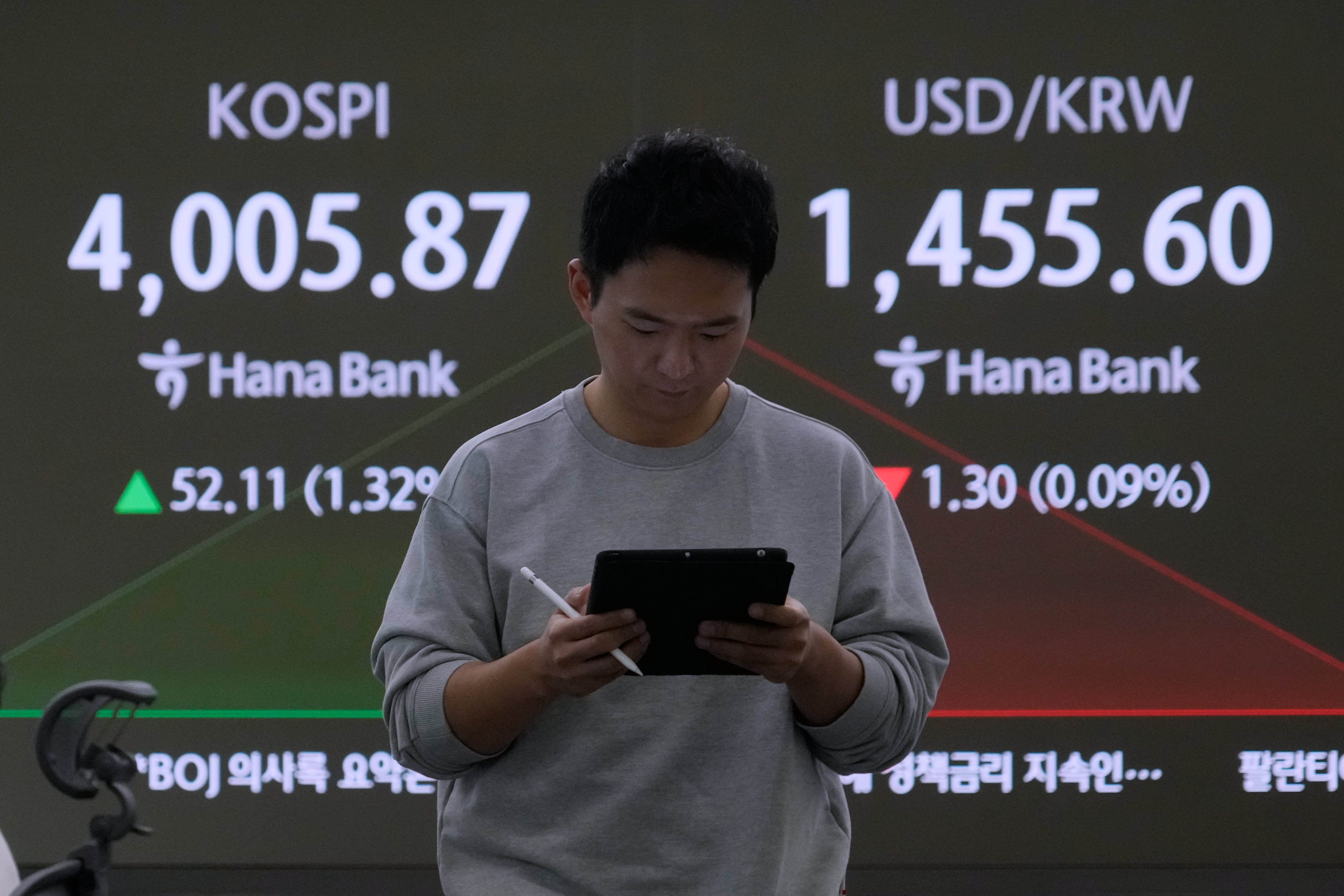
South Korea’s Kospi added 3% to 4,073.24. Computer chip maker SK Hynix, which is cooperating with Nvidia on artificial intelligence, surged 4.5%. Its bigger rival, Samsung Electronics, was up 2.8%.
Tokyo’s Nikkei 225 added 1.3% to 50,911.76, lifted by big gains for AI related shares such as chip maker Tokyo Electron, which surged 4.3%.
The Hang Seng in Hong Kong rose 1.6% to 26,649.06 and the Shanghai Composite index climbed 0.5% to 4,018.60.
Australia’s S&P/ASX 200 picked up 0.8% to 8,835.90.
Taiwan’s Taiex jumped 0.8%, while the Sensex in India gained 0.3%.
On Friday, stock indexes closed mixed on Wall Street, clocking their first weekly loss in the last four. The S&P 500 inched 0.1% higher and the Dow Jones Industrial Average added 0.2%. The technology-heavy Nasdaq fell as much as 2.1%, but recovered most of its losses, shedding 0.2%.
Major indexes wobbled throughout most of the week, weighed down by technology stocks, especially several big names with huge valuations that give them outsized influence over the direction of the market. Google’s parent company, Alphabet, fell 2.1% and Broadcom fell 1.7%.
Wall Street remains focused on the latest quarterly reports and forecasts from U.S. companies.
More than 90% of companies within the S&P 500 have reported earnings for their latest quarter. Most companies have reported growth beyond Wall Street expectations and the influential tech sector has the strongest growth, according to data from FactSet.
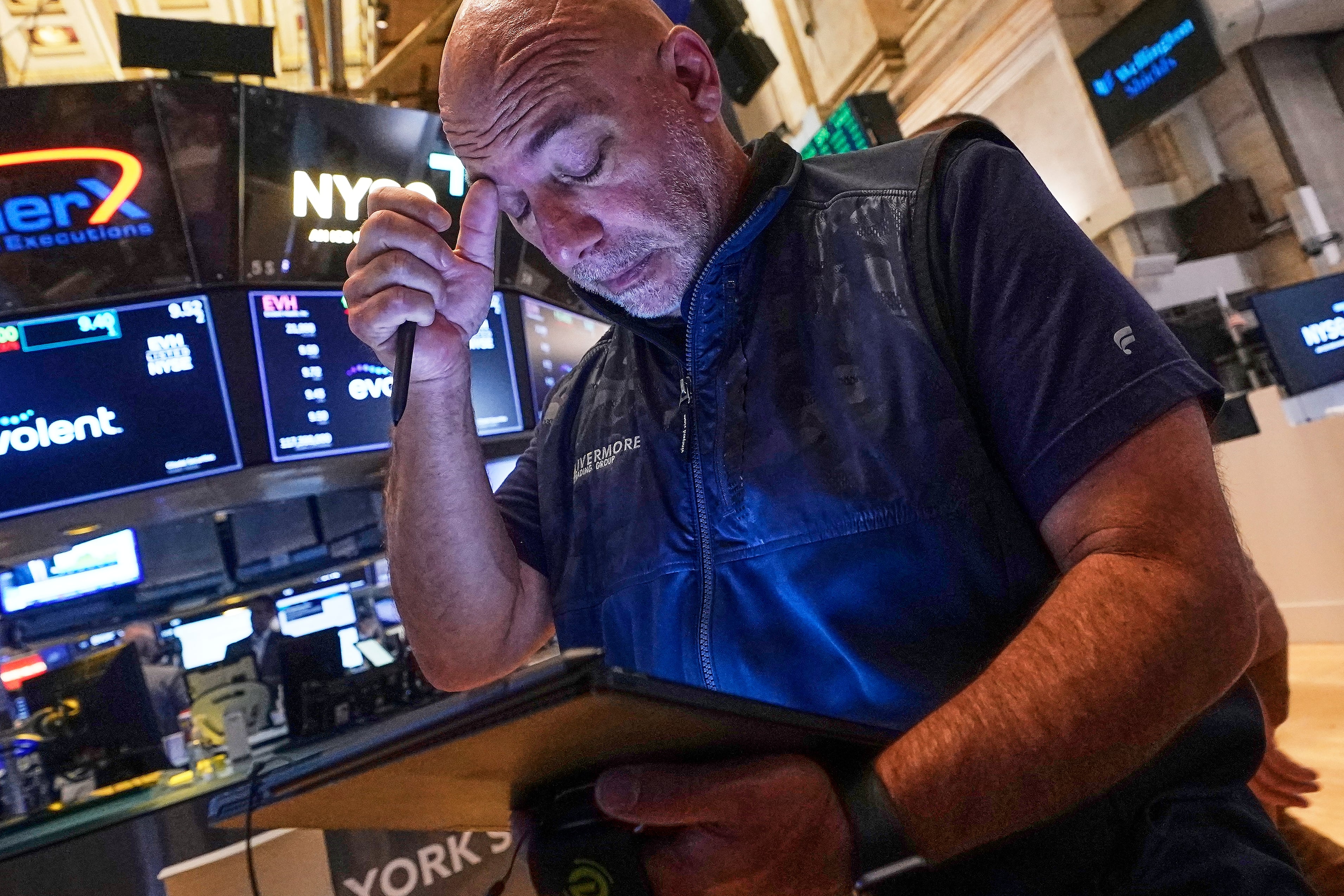
Corporate profits and forecasts were already being scrutinized by Wall Street as investors try to gauge whether the market’s overall high value is justified. The results have taken on more significance amid a lack of other data about the economy because of the U.S. government shutdown, which is now the longest on record.
The shutdown is responsible for delays in key economic data on inflation and employment that traders and the Federal Reserve rely on in making decisions about investments and policy. The lack of data on employment is especially troubling because the job market has been weakening.
The Fed has signaled a more cautious approach on interest rate cuts that Wall Street has been expecting to help stimulate the economy by reducing the cost of borrowing.
The Fed has already cut its benchmark rate twice this year as it tries to counter the impact that a weakening employment market could have on economic growth. Cutting rates could worsen inflation at a time when levels are stubbornly higher than the central bank’s 2% goal, however.
Wall Street is still mostly betting that the Fed will cut interest rates at its December meeting.
In other dealings early Monday, U.S. benchmark crude oil picked up 67 cents to $60.42 per barrel. Brent crude, the international standard, gained 62 cents to $64.25 per barrel.
The U.S. dollar rose to 154.17 Japanese yen from 153.72 yen. The euro inched up to $1.1569 from $1.1562.