Gas station owners have seen volatility before. After all, their main product is a global commodity with deep ties to the larger economy and geopolitical squabbling abroad.
But the coronavirus pandemic has put unique pressures on the industry. As demand for gas has plummeted due to stay-at-home orders, oil prices have hit historic lows. Usually, lower gas prices will lead to more people driving, but during the outbreak that's not happening.
"Our business has dropped about 35 percent," said Bill Douglass, who owns 30 gas station convenience stores throughout Texas. "That 35 percent is the gasoline/diesel portion of the business. That's the driving public. The inside of the stores have not fallen that much."
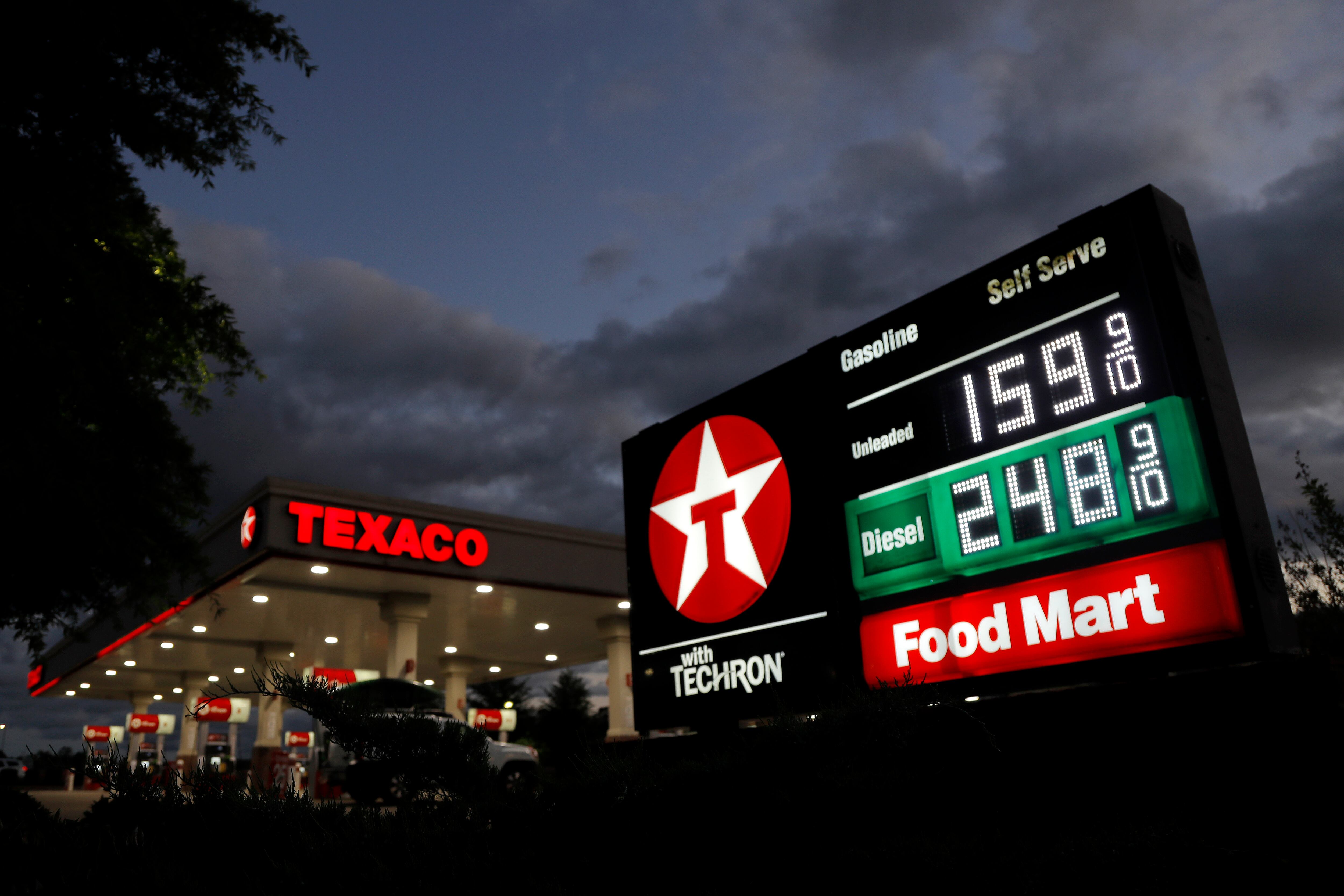
As of Tuesday, the national average for regular gas was $1.76 per gallon, according to AAA. That's the lowest average in over 40 years, and the lowest since Douglass got into the business.
"Overall we're looking at about the half the fuel sales that we had this time last year," Jeff Lenard, vice president at the National Association of Convenience Stores, told Cheddar.
The price drop has put additional pressure on gas stations to adapt their business models to meet other needs outside of the fuel tank such as offering beer and grocery items and forced retailers to explore new ways to reach customers who aren't necessarily looking for them.
"It's going to help shift our business to one that will have to include delivery," Douglass said. "People have gotten used to the fact that they can buy online, order online, and get it delivered."
Oil futures, meanwhile, took another hit this week. June contracts for West Texas Intermediate crude, the main U.S. benchmark for oil prices, dropped 20 percent on Monday. Now some analysts are predicting that June contracts could be headed for the same negative rates as the May contracts, which traded below $0 earlier this month in an effort to off-load a glut of supply.
As for industries impacted by the one-two punch of coronavirus and low oil prices, gas station operators are somewhat anonymous. While oil company logos are plastered all over stations, those big-name giants only own a small fraction of retailers. The majority are independent, one-store operations that rely on convenience store sales to make a profit.
Fuel sales account for 61 percent of convenience store revenues, but they make up just 36 percent of gross profits, according to NACS. The rest comes from in-store sales and gas stations have expanded their offerings accordingly.
"What we see with a lot of convenience stores is they've evolved to the point where they want to be seen as a restaurant that happens to be selling gas as opposed to a gas station that happens to be selling food," Lenard said. "Food is definitely the future."
That future has been disrupted, however, by the coronavirus as gas stations have shut down their prepared food operations (think the Wawa sandwich counter) in line with state shutdowns.
Gas station customers have since switched from on-the-go items to basic groceries and shelf-stable products such as tobacco products and 12-packs of warm beer, which have seen a surge in sales since the outbreak.
"People are buying toilet paper, paper towels, the things people used to buy at convenience stores moons ago," said Lisa M. Dell Alba, CEO of Square One Markets, which owns seven gas station-convenience stores in northeastern Pennsylvania. "People are trying to find the product wherever they can."
Dell Alba said that over the last few weeks there has been a slight increase in traffic from the earlier days of the pandemic, but people are still skipping over that extra "fill-in" trip that drove sales of on-the-go items.
"People are looking to maximize what they put in their car per exposure risk," Lenard said.
"To a certain extent, convenience stores are starting to look more like they did 50 years ago when they were more like mini-marts or small grocery stores."
The mandated shutdown of restaurants has also narrowed the overall market for consumers.
"I think the fact that in Texas we don't have any restaurants open has produced a certain amount of traffic to come in and buy what they can," Douglass said.
While the coronavirus has forced gas stations to rely even more on their convenience stores, the trend did not emerge overnight. The industry has been moving in that direction for decades.
In the past, gas stations made money off of service work, but car dealerships have taken over that business as auto-repair has become more technical and specific to certain car models
"The old car service model was you just needed a good mechanic and some good tools," Lenard said. "But now the really expensive diagnostic equipment makes it much less desirable."
Separating gas sales from convenience store sales is complicated, however, because one supports the other in attracting customers.
"If you stop at the gas pump, you're way more likely to go inside the store than if you're driving down the street," Lenard said. "So gas prices are important beyond the sale because it's a customer on your lot."
Finding ways to get around that need-based relationship with customers could be in the cards for more ambitious gas station owners.
Dell Alba said she's looking into deliveries and "planned purchase" options as opposed to impulse or on-the-go items.
"As an independent small operator, I tend to look at behavioral shifts," she said. "The longer people stay in their homes, cook their own meals, I think they're going to be some long-term habit changes."