Gabbard says AI is speeding up release of JFK assassination files
By David Klepper
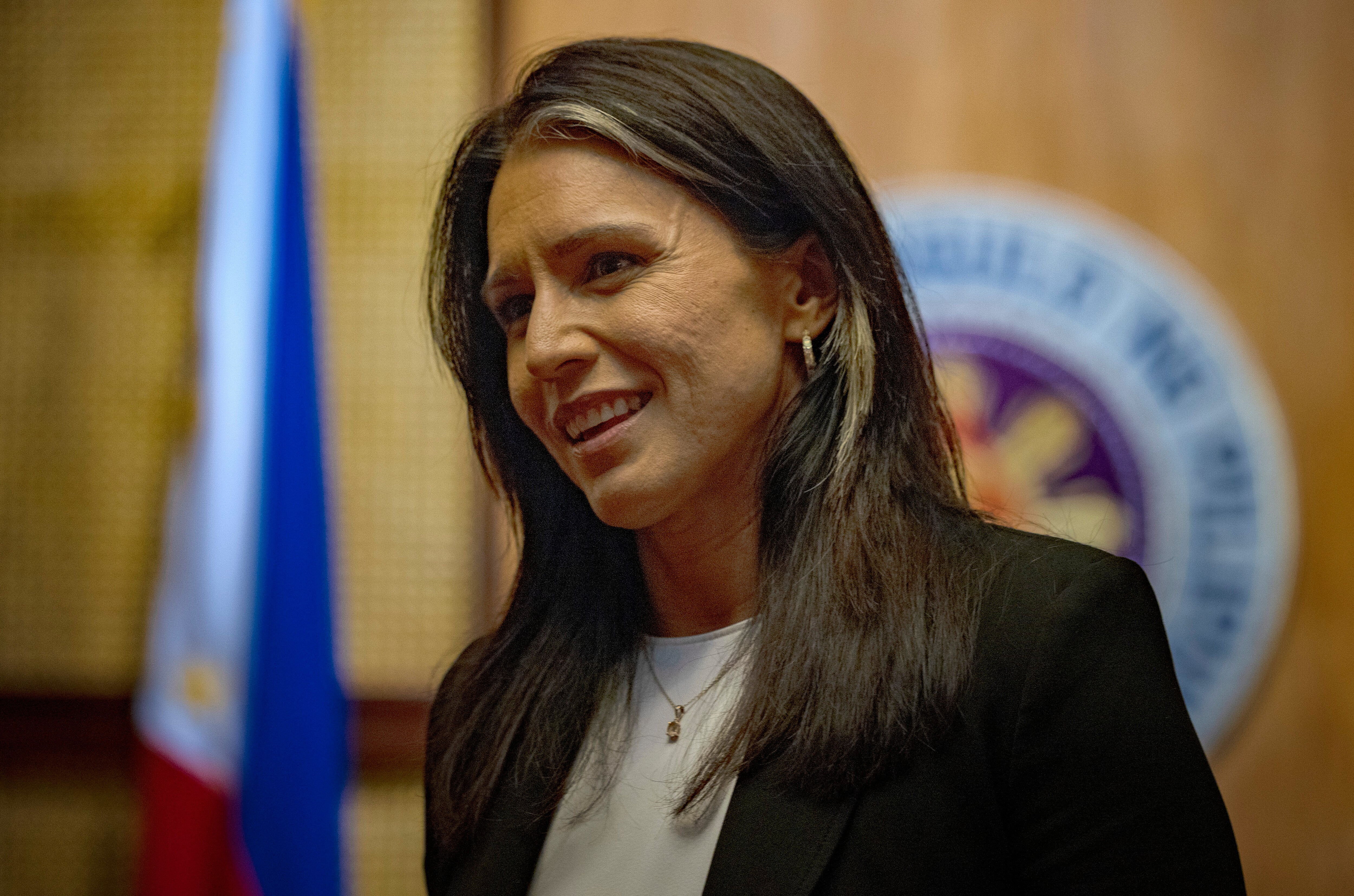
U.S. Director of National Intelligence Tulsi Gabbard departs following a closed door meeting with Philippine President Ferdinand Marcos Jr. at Malacanang Palace in Manila, Philippines Monday, June 2, 2025. (Ezra Acayan/Pool Photo via AP)
WASHINGTON (AP) — Artificial intelligence is speeding up the work of America’s intelligence services, Director of National Intelligence Tulsi Gabbard said Tuesday.
Speaking to a technology conference, Gabbard said AI programs, when used responsibly, can save money and free up intelligence officers to focus on gathering and analyzing information. The sometimes slow pace of intelligence work frustrated her as a member of Congress, Gabbard said, and continues to be a challenge.
Experts had predicted the process could take many months or even years, but AI accelerated the work by scanning the documents to see if they contained any material that should remain classified, Gabbard said during her remarks at the Amazon Web Services Summit in Washington.
“We have been able to do that through the use of AI tools far more quickly than what was done previously — which was to have humans go through and look at every single one of these pages,” Gabbard said.
The intelligence community already relies on many private-sector technologies, and Gabbard said she wants to expand that relationship instead of using federal resources to create expensive alternatives.
“How do we look at the available tools that exist — largely in the private sector — to make it so that our intelligence professionals, both collectors and analysts, are able to focus their time and energy on the things that only they can do," she said.
Gabbard, who coordinates the work of 18 intelligence agencies, has vowed to shake up America’s spy services.
Since assuming her role this year, she has created a new task force to consider changes to agency operations as well as greater declassification. She also has fired two veteran intelligence officers because of perceived opposition to Trump, eliminated diversity, equity and inclusion programs and relocated the staff who prepare the President’s Daily Brief to give her more direct control.
OpenAI has appointed Slack CEO Denise Dresser as its first chief of revenue. Dresser will oversee global revenue strategy and help businesses integrate AI into daily operations. OpenAI CEO Sam Altman recently emphasized improving ChatGPT, which now has over 800 million weekly users. Despite its success, OpenAI faces competition from companies like Google and concerns about profitability. The company earns money from premium ChatGPT subscriptions but hasn't ventured into advertising. Altman had recently announced delays in developing new products like AI agents and a personal assistant.
President Donald Trump says he will allow Nvidia to sell its H200 computer chip used in the development of artificial intelligence to “approved customers” in China. Trump said Monday on his social media site that he had informed China’s leader Xi Jinping and “President Xi responded positively!” There had been concerns about allowing advanced computer chips into China as it could help them to compete against the U.S. in building out AI capabilities. But there has also been a desire to develop the AI ecosystem with American companies such as chipmaker Nvidia.
The end of 2025 is almost upon us. And it’s time to unpack Spotify Wrapped. On Wednesday, the music streaming giant delivered its annual recap — giving its hundreds of millions of users worldwide a look at the top songs, artists, podcasts and other audio they listened to over the past year. Spotify isn’t the only platform to roll out a yearly glimpse of data collected from consumers’ online lives. But since its launch about a decade ago, Wrapped has become one of the most anticipated. And Spotify is billing the 2025 edition to be the biggest yet, with a host of new features it hopes may also address some disappointments users had last year.
Elon Musk’s X unveiled a feature that lets users see where an account is based. Online sleuths and experts quickly found that many popular accounts, often posting in support of the U.S. MAGA movement with thousands or hundreds of thousands of followers, are based outside the U.S. This raises concerns about foreign influence in U.S. politics.