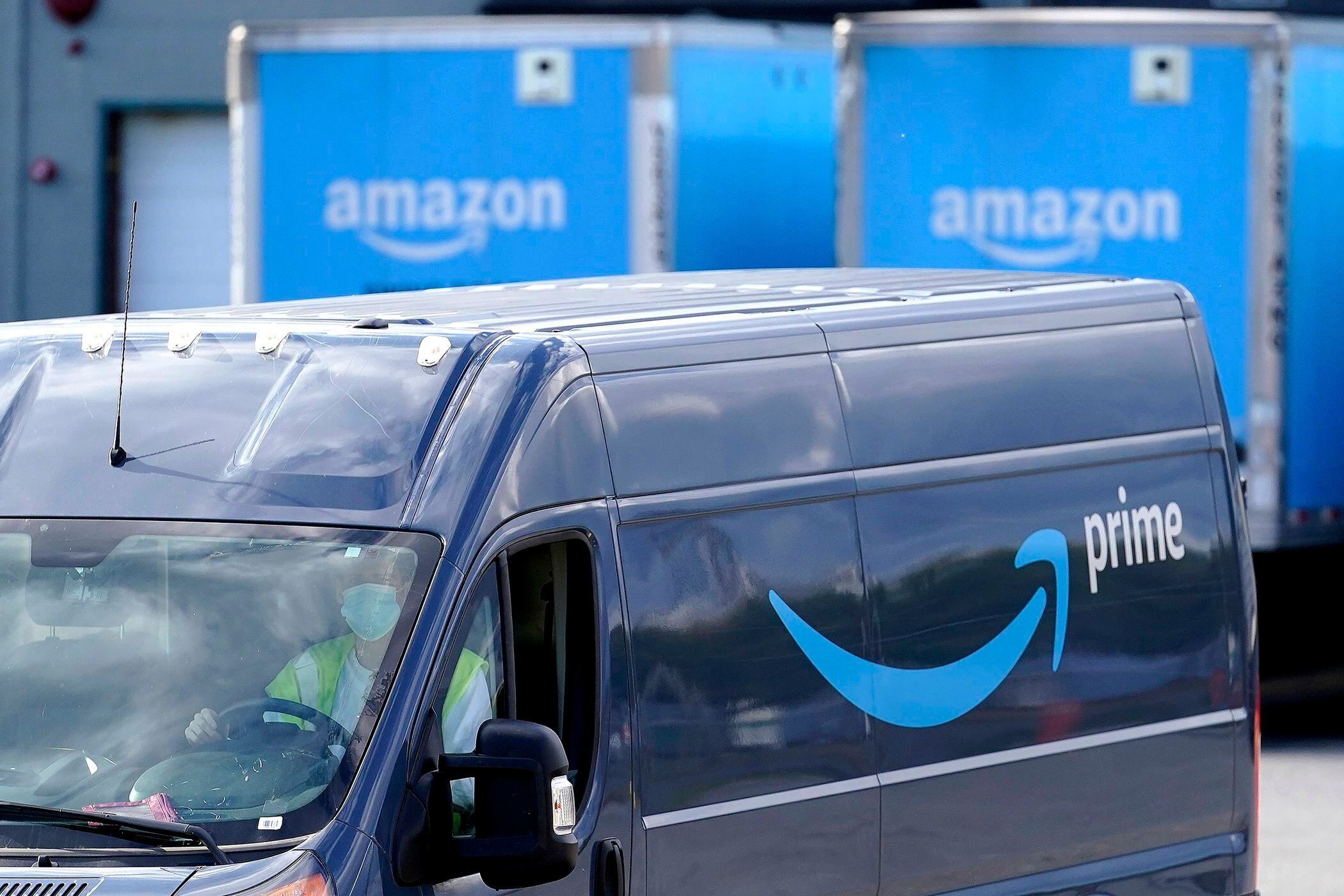
In this Oct. 1, 2020 file photo, an Amazon Prime logo appears on the side of a delivery van as it departs an Amazon Warehouse location in Dedham, Mass. Amazon is paying nearly $62 million to settle charges that it took tips from its delivery drivers. The Federal Trade Commission said Tuesday, Feb. 2, 2021, that for more than two years, Amazon didn’t pass on tips to drivers, even though it promised shoppers and drivers it would do so. (AP Photo/Steven Senne, File)
Amazon is paying nearly $62 million to settle charges that it took tips from its delivery drivers. The Federal Trade Commission said Tuesday that for more than two years, Amazon didn’t pass on tips to drivers, even though it promised shoppers and drivers it would do so. The FTC said Amazon didn’t stop taking the money until 2019 when the company found out about the FTC’s investigation. Seattle-based Amazon.com Inc. did not immediately respond to a request for comment Tuesday. The online shopping giant will pay $61.7 million to settle the charges, which the FTC said will go back to drivers.
Jay Woods of Freedom Capital Markets shares thoughts on how the latest inflation report will impact the market, and why he expects a ‘cascade’ of IPOs if Reddit’s public debut goes well.
During AT&T's widespread outage Thursday, landline phones were a working alternative — which most of the U.S. does not have. Over half of Americans are estimated to have ditched landlines altogether.
Jade Kearney Dube, Founder & CEO of She Matters talks the Symptom Tracker app, cultural competency for healthcare providers, and being a Black woman CEO looking for funding.
Ahead of April’s planned BitCoin halving, Bitfarms CEO Geoff Morphy shares why he thinks the crypto rally will continue, plus why you’ll see a broader adoption of clean energy for mining.
Did you know there's a big difference between a dude ranch and a working cattle ranch? Check out the new generation of ranches, and live out your cowboy dreams.
Lara Rhame, FS Investments chief U.S. economist, discusses the recent market highs, how the job market is in a ‘good place,’ and why rates staying higher for longer might not be a bad thing.