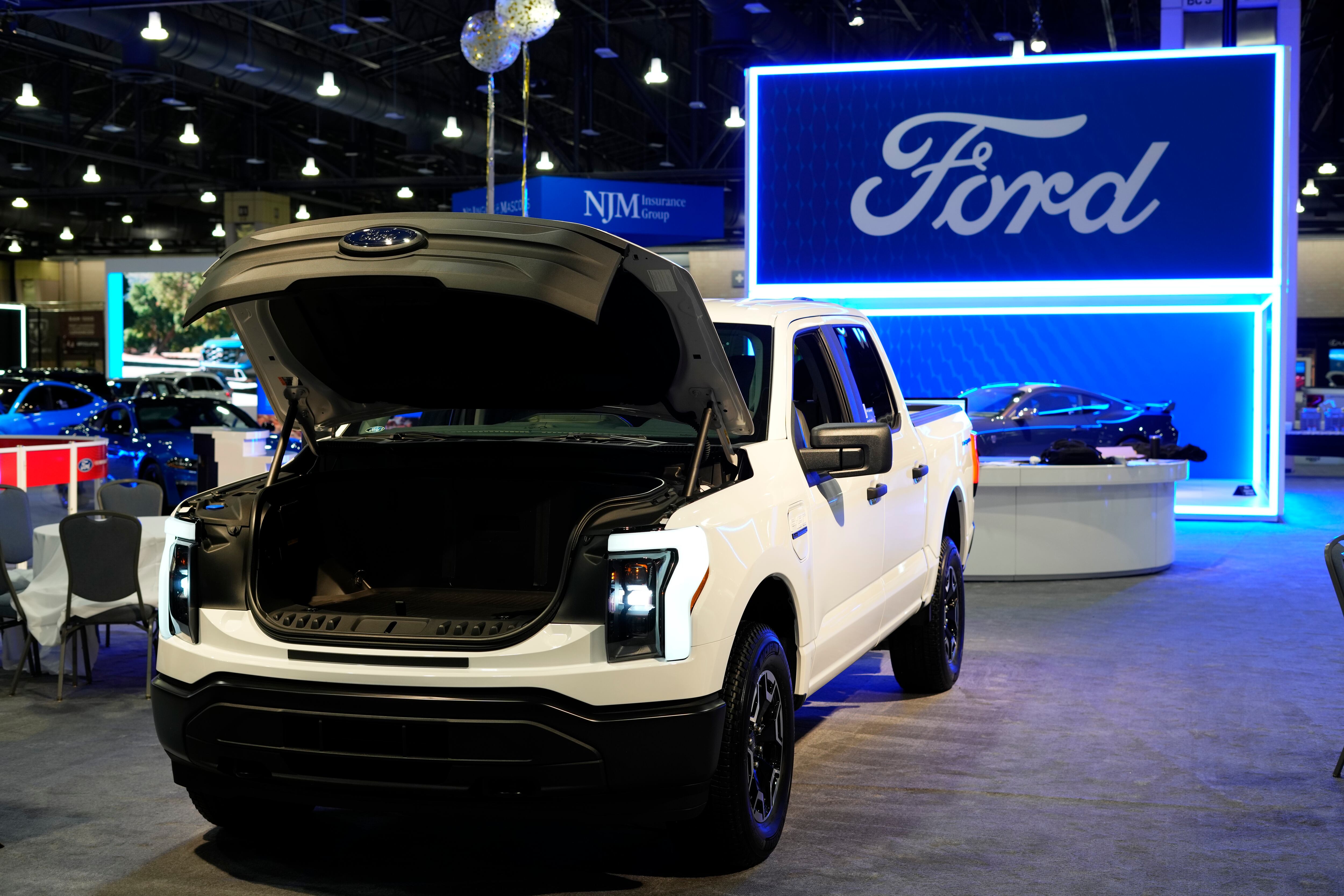
The Ford F-150 Lightning displayed at the Philadelphia Auto Show on Jan. 27, 2023, in Philadelphia. Ford says it’s reducing production of the F-150 Lightning electric pickup vehicle as it adjusts to weaker-than-expected electric vehicle sales growth. (AP Photo/Matt Rourke, File)
Ford is cutting production of the F-150 Lightning electric pickup after weaker-than-expected electric vehicle sales growth.
Ford said that about 1,400 workers will be impacted by the move to lower F-150 Lightning production, with the Rouge Electric Vehicle Center transitioning to one shift, effective April 1. Approximately 700 employees will transfer to Ford's Michigan assembly plant while other workers will be placed in roles at the Rouge Complex or other facilities in Southeast Michigan. Some employees are expected to take advantage of the Special Retirement Incentive Program agreed to in the 2023 Ford-UAW contract.
Ford said a few dozen employees could be impacted at component plants supporting F-150 Lightning production, depending on how many workers apply for the retirement program. The company said it would provide placements for impacted employees within Southeast Michigan.
Ford also said Friday that it's creating almost 900 new jobs and adding a third crew at its Michigan assembly plant to meet demand for the Bronco and Bronco Raptor and the all-new Ranger and Ranger Raptor.
Fintech pioneer Tom Sosnoff discusses the evolution of retail investing, the rise of AI, and his new platform Lossdog aimed at the next generation of trading.
The FAA prepares to select cities for its eVTOL pilot program, marking a major step toward electric air taxis and the future of urban air mobility in the U.S.
Rising oil prices tied to the Iran conflict are driving up gas and airfare costs, creating new challenges for travelers heading into the spring break season.
The Supreme Court strikes down Trump-era tariffs, limiting presidential trade powers and raising questions about refunds, global trade, and business impact.
New research from GoDaddy and UCLA shows small businesses signal shifts in GDP, jobs, and digital growth earlier than traditional data or Wall Street trends.
GoFundMe launches Back in Business Fund with Paris Hilton to provide targeted grants helping women entrepreneurs recover and rebuild after natural disasters.
Samsung launches its “AI in Action Lab” in NYC, giving public high school students hands-on AI experience and tools to prepare for real world innovations.