The federal government's partial ban on flavored vape products went into effect at 12:01 a.m. Thursday, capping a year of backlash, lobbying, and patchwork laws meant to respond to what public health officials consider to be an epidemic of teen vaping.
The efficacy of the ban, however, remains an open question. Juul, by far the leading brand of pod-based e-cigarettes, had already voluntarily removed its flavored products from the market, leaving just menthol and tobacco (the two flavors not affected by the FDA's ban). And, as reported recently by the New York Times, many teens have already moved on to disposable vapes, which are exempt from the federal ban in a major loophole.
Lauren Williams, a Kentucky high-school teacher, told the Times: "Students were telling me that everybody had gone to Puff Bars, which are disposable ... the one we confiscated here this week is Banana Ice. Students are not using Juuls anymore because no one wants menthol or tobacco."
In addition to tobacco and menthol flavors, the ban also has carve-outs for "mods," the more advanced e-cigarettes sold in vape shops. That exemption was intended to mollify the vape-shop industry, which said it faced extinction if those were to be regulated. It is also unclear how the FDA will enforce the ban given that vape products are typically sold in convenience stores, of which there are more than 150,000 in the country, according to the industry's trade group. Most of those stores are not part of larger national chains that could institute company-wide implementation efforts.
The FDA, for its part, says that it will closely monitor the marketplace and has an enforcement plan in place.
The partial federal ban follows several other state bans, including one in New York that was blocked by a state judge last month. And on the first day of the federal ban, the now-outlawed flavored pods were still available on some store shelves in Lower Manhattan ー priced at nearly double the cost of the tobacco flavors.
Astronauts will have to wait until next year before flying to the moon and another few years before landing on it. NASA on Tuesday announced the latest round of delays in its Artemis moon-landing program.
The Biden administration has enacted a new labor rule that aims to prevent the misclassification of workers as independent contractors. The labor department rule going into effect Tuesday replaces a scrapped Trump-era standard that lowered the bar for classifying employees as contractors
The KC-46 was to be the ideal candidate for a fixed-price development program. Instead, it has cost Boeing billions, and made industry wary of such deals.
Dave Long, CEO and Co-Founder of Orangetheory Fitness joins Cheddar to chat trends in the industry for 2024. He updates us on the company's plans to expand and what the state of the economy has meant for business.
One of the world's largest renewable energy developers will be getting hundreds of wind turbines from General Electric spinoff GE Vernova as part of a record equipment order and long-term service deal.
A moon landing attempt by a private US company appears doomed because of a fuel leak on the newly launched spacecraft. Astrobotic Technology managed to orient the lander toward the sun Monday so its solar panel could capture sunlight and charge its onboard battery.
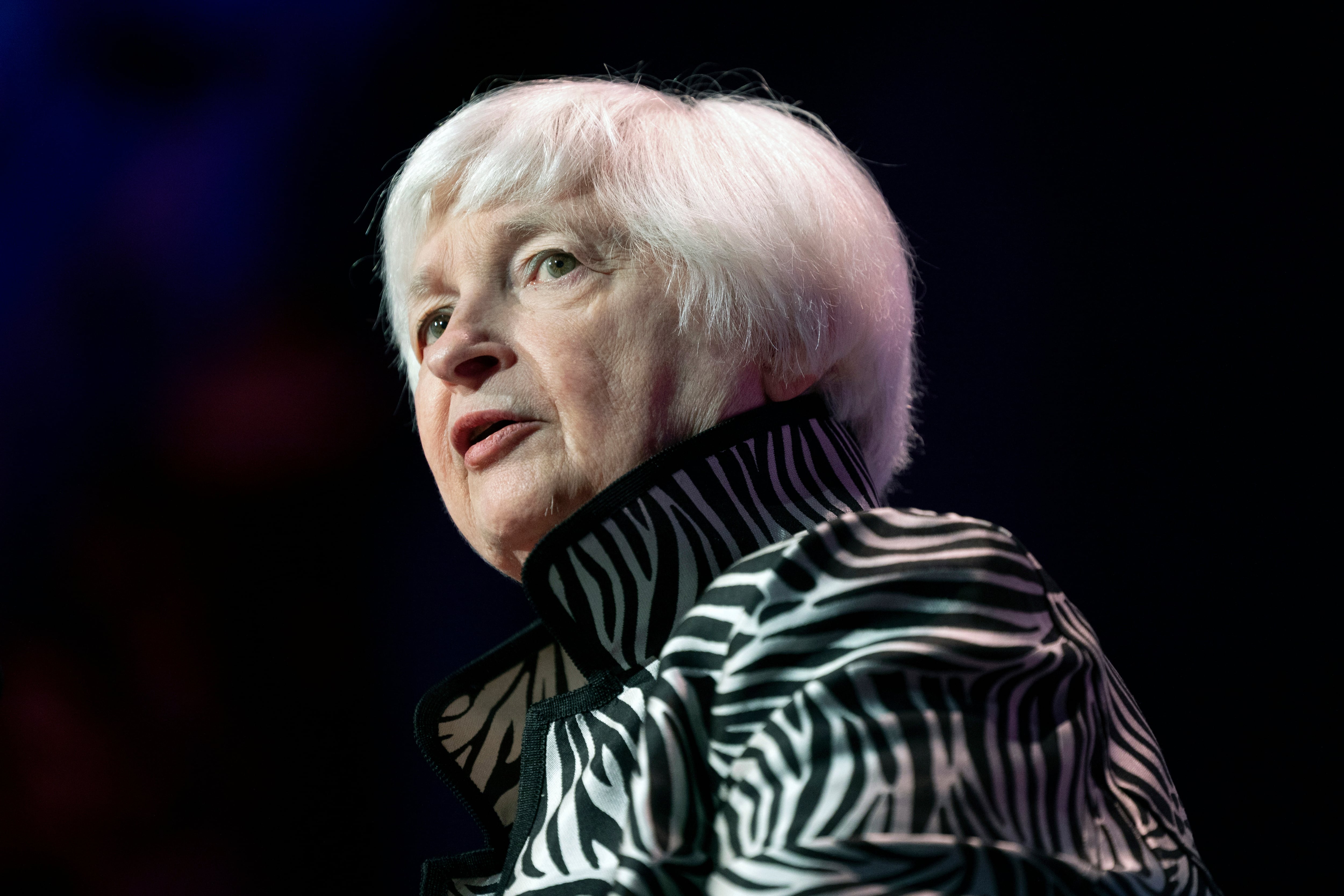
Treasury Secretary Janet Yellen has announced that 100,000 businesses have signed up for a new database that collects ownership information intended to help unmask shell company owners. Yellen says the database will send the message that “the United States is not a haven for dirty money.”
A new version of the federal student aid application known as the FAFSA is available for the 2024-2025 school year, but only on a limited basis as the U.S. Department of Education works on a redesign meant to make it easier to apply.