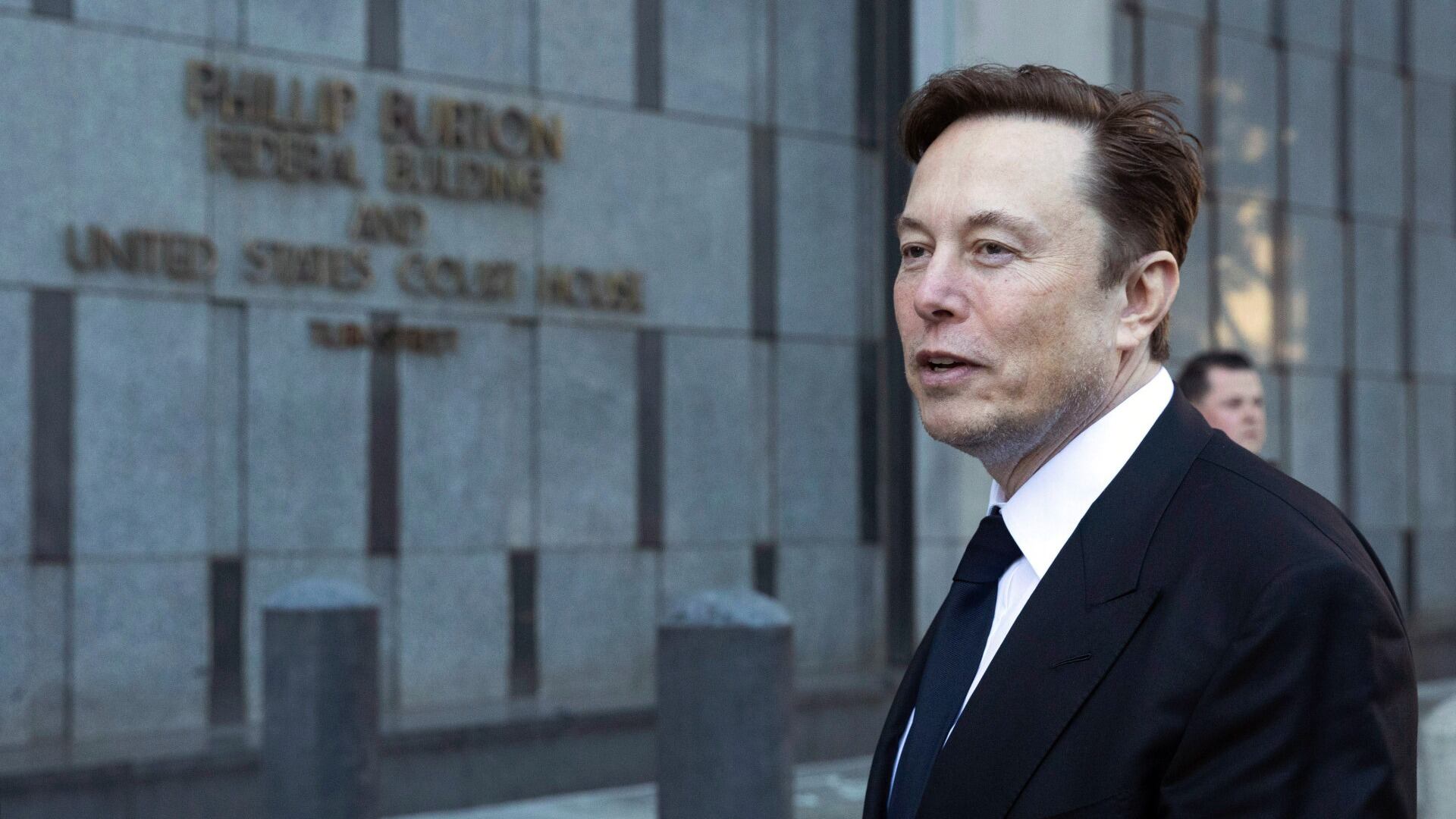
Elon Musk departs the Phillip Burton Federal Building and United States Court House in San Francisco, on Tuesday, Jan. 24, 2023. Tesla has received requests from the Justice Department for documents related to its Autopilot and “Full Self-Driving” features, according to a regulatory filing. (AP Photo/ Benjamin Fanjoy, File)
A 2018 Twitter post by Tesla CEO Elon Musk unlawfully threatened Tesla employees with the loss of stock options if they decided to be represented by a union, a federal appeals court ruled Friday.
The ruling by a three-judge panel of the 5th U.S. Circuit Court of Appeals upheld a March 2021 order by the National Labor Relations Board, which ordered that the tweet be deleted. The case arose from United Auto Workers' organizing efforts at a Tesla facility in Fremont, California.
Also upheld was the board's order that Tesla reinstate and provide back pay to an employee who was fired for union-organizing activity.
Musk tweeted on May 20, 2018: “Nothing stopping Tesla team at our car plant from voting union. Could do so tmrw if they wanted. But why pay union dues and give up stock options for nothing? Our safety record is 2X better than when plant was UAW & everybody already gets healthcare.”
The ruling said that "because stock options are part of Tesla’s employees’ compensation, and nothing in the tweet suggested that Tesla would be forced to end stock options or that the UAW would be the cause of giving up stock options, substantial evidence supports the NLRB’s conclusion that the tweet is as an implied threat to end stock options as retaliation for unionization.”
Neither Tesla nor the UAW has responded to emailed requests for comment Friday afternoon.
Healthcare policy is shifting fast, raising questions about drug prices, Medicare and access. Leap Health CEO Hani Elias explains what patients need to know.
The U.S. job market is cooling as hiring slows and employers turn cautious. LinkedIn’s Kory Kantenga breaks down jobs, wages, spending and AI’s impact.
AI is entering a new phase as enterprises move beyond experimentation and demand measurable returns. Appian CEO Matt Calkins discusses what comes next.
Commercial Metals CEO Peter Matt reveals how a $2.5B acquisition spree is transforming the 111-year-old steelmaker into a construction solutions powerhouse.
Angelo Zino, Senior Vice President and Technology Equity Research Analyst at CFRA, breaks down Big Tech earnings, AI spending, and what's next for the Mag 7.
Big Tech is pouring billions into AI. Ray Wang, CEO of Constellation Research, explains what Meta and Microsoft's earnings reveal about those investments.