By Carla K. Johnson and Adam Geller
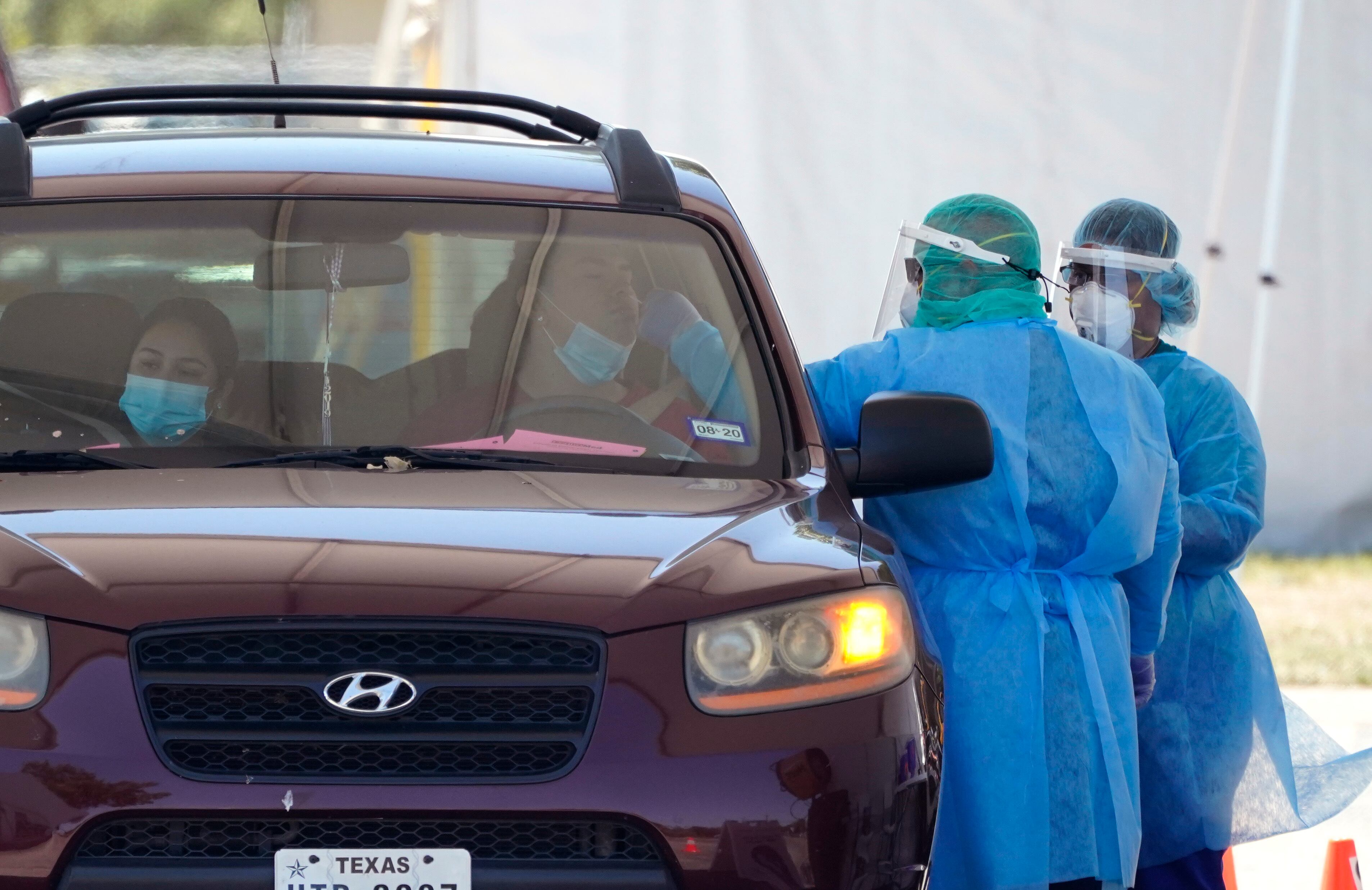
The number of Americans newly diagnosed with the coronavirus is falling — a development experts credit at least partly to increased wearing of masks — even as the outbreak continues to claim nearly 1,000 lives in the U.S. each day.
About 43,000 new cases are being reported daily across the country, down 21 percent from early August, according to data compiled by Johns Hopkins University. While the U.S., India, and Brazil still have the highest numbers of new cases in the world, the downward trend is encouraging.
"It's profoundly hopeful news," said Dr. Monica Gandhi, an infectious-diseases expert at the University of California, San Francisco, who credits the American public's growing understanding of how the virus spreads, more mask-wearing and, possibly, an increasing level of immunity.
"Hopefully all those factors are coming into play to get this virus under control in this country that's really been battered by the pandemic," she said.
The virus is blamed for more than 5.7 million confirmed infections and about 178,000 deaths in the U.S. Worldwide, the death toll is put at more than 810,000, with about 23.7 million cases.
Jeffrey Shaman, a public health expert at Columbia University, said he is skeptical enough people are immune to significantly slow the spread. But he agreed that changes in Americans' behavior could well be making a difference, recalling the impact that people's actions had in containing Ebola in West Africa several years ago.
"Ebola stopped for reasons we didn't anticipate at the time. It was so horrifying that people stopped touching each other," Shaman said. Something similar may be happening with the coronavirus, he said.
"I know I don't have nearly the number of contacts that I used to," Shaman said. "But if we relax that, if we get complacent, will we just see another outbreak?"
The decline in newly reported cases in the U.S. comes even as deaths from the virus remain alarmingly high. Over the past two weeks, officials have reported an average of 965 deaths a day from COVID-19, down from 1,051 a day in early August.
Deaths from the coronavirus are a lagging indicator — they trail new infections because of the time it takes for people to get sick and succumb to the disease.
The percentage of tests coming back positive for the disease has also declined over the past two weeks, from 7.3 percent to 6.1 percent. But that comes as the total number of tests administered has fallen from its August peak of more than 820,000 a day, leveling off in recent weeks at about 690,000 a day.
The situation has improved dramatically in several states that struggled with high caseloads earlier this summer.
In Arizona, for example, officials reported 859 new cases Tuesday, down from a peak of 5,500 in late June. More than 2,000 people arrived at the state's hospitals showing symptoms of the virus on a single day in early July. This week, that number has been less than 1,000.
In Florida, where more than 10,000 people have died, the state reported 2,600 new virus cases Tuesday. Earlier in the summer, it was regularly reporting more than 10,000 new cases.
Malinda Coler, 37, of San Francisco, said she has been diligent about mask wearing and other preventive measures, less to protect herself than a best friend who has a compromised immune system, with severe arthritis psoriasis.
"So I wear a damned mask and get infuriated when others don't," she said.
It's not clear what will happen to case numbers as more school districts bring students back to classrooms and colleges reopen their campuses. In recent weeks, schools including the University of North Carolina, Michigan State, and Notre Dame have moved instruction online after outbreaks on their campuses.
Officials at the University of Tennessee at Knoxville said Monday that four students are facing disciplinary proceedings after three hosted off-campus parties with no mask or other distancing and another left isolation to meet with others despite testing positive for the virus.
"If the facts reported to the university are accurate, these students will face at least suspension from the university, and potentially greater penalties," Chancellor Donde Plowman wrote.
___
Associated Press writers Mae Anderson, Nicky Forster, and John Zenor contributed to this story.