By Carla K. Johnson and Adam Geller

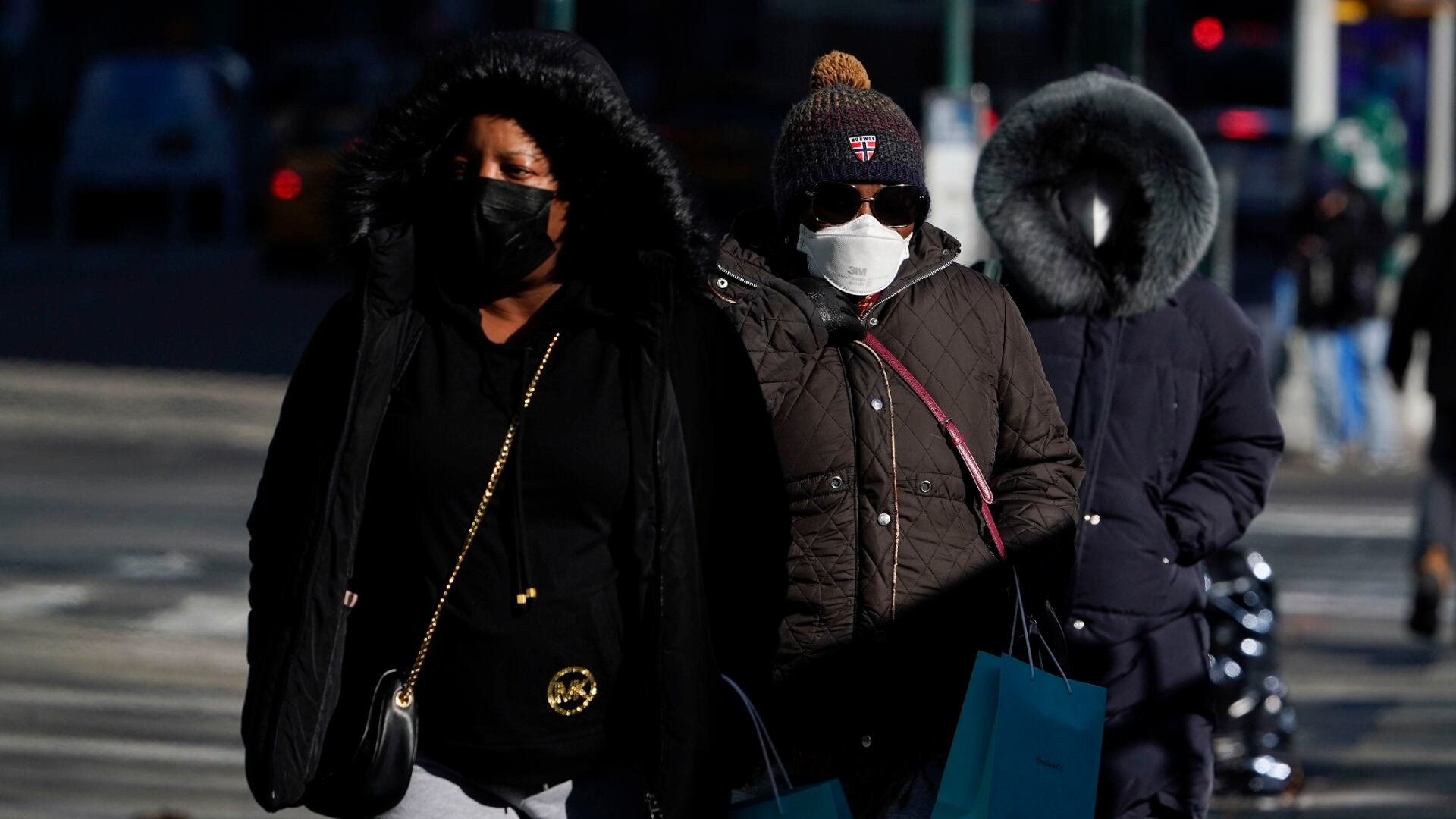
The number of Americans newly diagnosed with the coronavirus is falling — a development experts credit at least partly to increased wearing of masks — even as the outbreak continues to claim nearly 1,000 lives in the U.S. each day.

About 43,000 new cases are being reported daily across the country, down 21 percent from early August, according to data compiled by Johns Hopkins University. While the U.S., India, and Brazil still have the highest numbers of new cases in the world, the downward trend is encouraging.

"It's profoundly hopeful news," said Dr. Monica Gandhi, an infectious-diseases expert at the University of California, San Francisco, who credits the American public's growing understanding of how the virus spreads, more mask-wearing and, possibly, an increasing level of immunity.

"Hopefully all those factors are coming into play to get this virus under control in this country that's really been battered by the pandemic," she said.

The virus is blamed for more than 5.7 million confirmed infections and about 178,000 deaths in the U.S. Worldwide, the death toll is put at more than 810,000, with about 23.7 million cases.

Jeffrey Shaman, a public health expert at Columbia University, said he is skeptical enough people are immune to significantly slow the spread. But he agreed that changes in Americans' behavior could well be making a difference, recalling the impact that people's actions had in containing Ebola in West Africa several years ago.

"Ebola stopped for reasons we didn't anticipate at the time. It was so horrifying that people stopped touching each other," Shaman said. Something similar may be happening with the coronavirus, he said.

"I know I don't have nearly the number of contacts that I used to," Shaman said. "But if we relax that, if we get complacent, will we just see another outbreak?"

The decline in newly reported cases in the U.S. comes even as deaths from the virus remain alarmingly high. Over the past two weeks, officials have reported an average of 965 deaths a day from COVID-19, down from 1,051 a day in early August.

Deaths from the coronavirus are a lagging indicator — they trail new infections because of the time it takes for people to get sick and succumb to the disease.

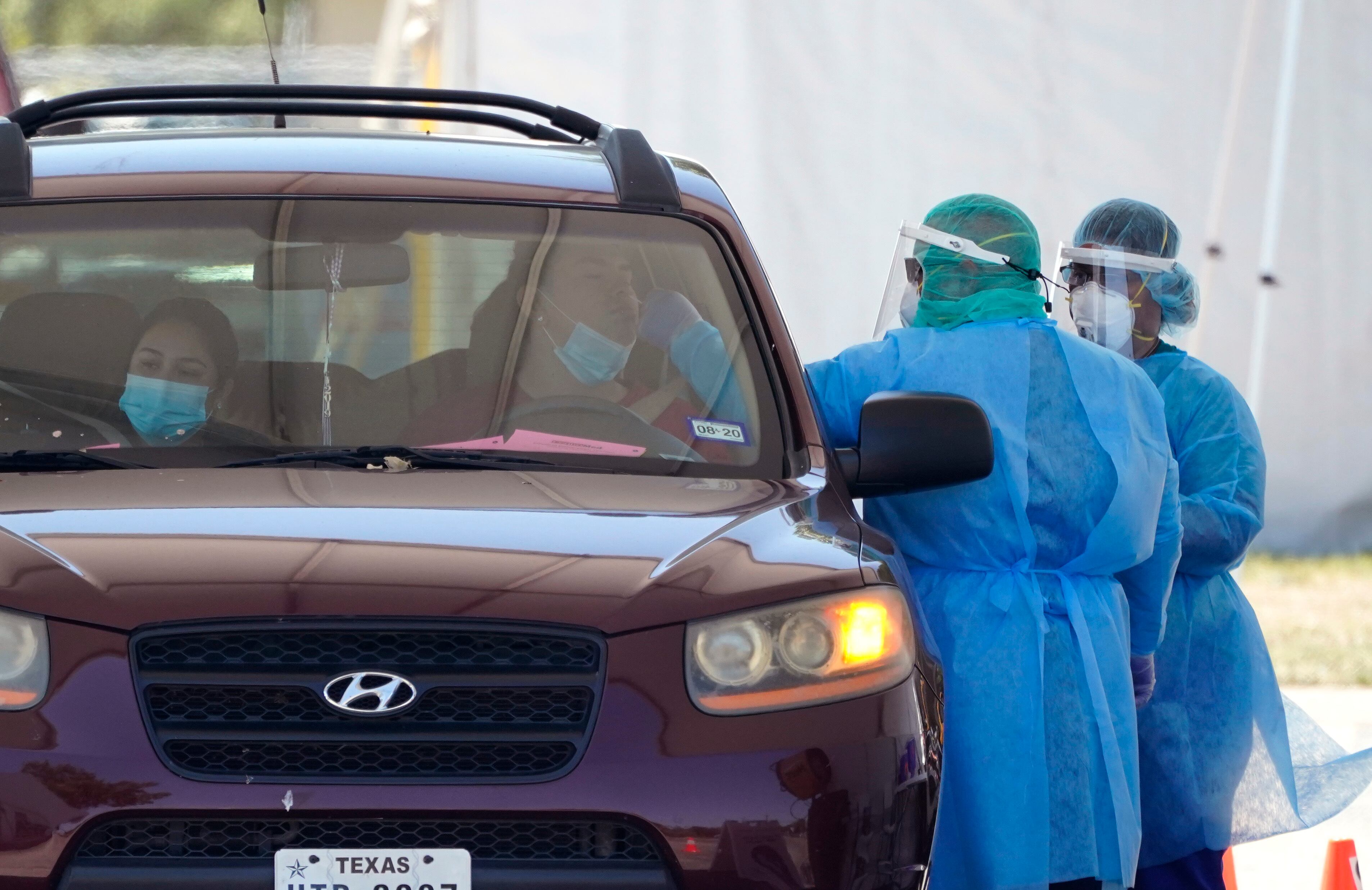
The percentage of tests coming back positive for the disease has also declined over the past two weeks, from 7.3 percent to 6.1 percent. But that comes as the total number of tests administered has fallen from its August peak of more than 820,000 a day, leveling off in recent weeks at about 690,000 a day.

The situation has improved dramatically in several states that struggled with high caseloads earlier this summer.

In Arizona, for example, officials reported 859 new cases Tuesday, down from a peak of 5,500 in late June. More than 2,000 people arrived at the state's hospitals showing symptoms of the virus on a single day in early July. This week, that number has been less than 1,000.

In Florida, where more than 10,000 people have died, the state reported 2,600 new virus cases Tuesday. Earlier in the summer, it was regularly reporting more than 10,000 new cases.

Malinda Coler, 37, of San Francisco, said she has been diligent about mask wearing and other preventive measures, less to protect herself than a best friend who has a compromised immune system, with severe arthritis psoriasis.

"So I wear a damned mask and get infuriated when others don't," she said.

It's not clear what will happen to case numbers as more school districts bring students back to classrooms and colleges reopen their campuses. In recent weeks, schools including the University of North Carolina, Michigan State, and Notre Dame have moved instruction online after outbreaks on their campuses.

Officials at the University of Tennessee at Knoxville said Monday that four students are facing disciplinary proceedings after three hosted off-campus parties with no mask or other distancing and another left isolation to meet with others despite testing positive for the virus.

"If the facts reported to the university are accurate, these students will face at least suspension from the university, and potentially greater penalties," Chancellor Donde Plowman wrote.

___

Associated Press writers Mae Anderson, Nicky Forster, and John Zenor contributed to this story.

Share:
More In Science
The Space Race In 2022
2021 was an exciting year for space innovations, but 2022 could hold even more in store. Cheddar took a deep dive into the space mission on tap for the year ahead.
U.S. Purchases 600K Doses of New Antibody Treatment Amid Omicron Surge
The United States purchased over 600,000 doses of a monoclonal antibody treatment from Glaxosmithkline and Vir Biotechnology, bringing the total worldwide doses purchased to 1.7 million. This comes as the country attempts to ramp up treatment options as cases of the omicron variant continue to surge. Dr. Asha Shah, Director of Infectious Diseases at Stamford Health joined Cheddar's Opening Bell to discuss.
2021: A Rebound of the Economy and Greenhouse Gas Emissions
As the pandemic slammed the brakes on the nation's economy in 2020, America's greenhouse gas emissions reached their lowest levels in at least three decades. However, as the world, and the economy re-opened, 2021 told a much different story as emissions surged. Biden's flagship 'Build Back Better' act involves billions in spending on electric cars and renewables, in an effort to cut U.S. emissions, experts are still skeptical that the nation will meet the current 2030 target. Andrew Dessler, professor of atmospheric sciences at Texas A&M University, joins Cheddar News.
Experts Debate Throat vs. Nasal Swabs for Omicron Testing
Amid the omicron surge, a new debate has emerged about whether or not throat swabs are more effective than nasal swabs for COVID testing. Dr. William Schaffner, MD, professor of infectious diseases, Vanderbilt Medical Center, sat down with Cheddar's News Wrap to weigh in on the dispute. "Should there be a change? You've got to do the studies, show that in the field [a throat swab] works as well or better than the nasal specimen," he said. "Let's not do it off our hips, as we say."
State of Emergency Declared in Virginia, as Multiple States Face Extreme Winter Weather
Virginia Governor Ralph Northam is declaring a state of emergency after Monday's winter storm left hundreds of drivers stranded on the interstate for more than 24 hours. The snow also knocked out power for many residents, with more than 100,000 outages remaining days later. Michael Wehner, a climate scientist at Lawrence Berkeley national laboratory, discusses recent weather disasters.
Walmart and Kroger Raise At-Home Covid Test Prices
As the need for COVID-19 testing increases, so does the price of the tests themselves. An agreement with The White House and several major companies to sell the tests at a lower cost has now expired, sending prices up as retailers struggle to keep kits on shelves. Dr. Thomas McGinn, executive VP of physician enterprise at Common Spirit Health, joins Cheddar News to discuss.
Emission Surge Puts U.S. Further Off Track from Climate Targets
A new report shows 2021 saw a surge in U.S. greenhouse gas emissions, indicating that the country remains far off track from meeting President Biden's climate change targets. Biden previously pledged to cut the nation's emissions in half by 2030, and now experts warn that immediate action must be taken in order to get the nation back on track. Zeke Hausfather, director of climate and energy at The Breakthrough Institute on U.S. Emissions and Global Temperatures, joins Cheddar News to discuss.
Toyota's Chief Scientist on Importance of Diversifying EV Fleets, Including Hybrid Models
Electric vehicles are quickly becoming an accessible way for consumers to slash emissions as legacy automakers begin to electrify their fleets and world leaders including President Joe Biden push for broad EV adoption. But consumers have concerns about EV range, the availability of charging stations, and more. What if it were both helpful to consumers — and feasible from a climate change standpoint — to keep hybrid models that run on gas on the market? Gill Pratt, CEO of the Toyota Research Institute & Toyota Motor Corporation's Chief Scientist joins Cheddar Climate to discuss his team's research about 'carbon return on investment,' how Toyota is electrifying its fleet, and more.
Major Cold Snap Settles Across Much of the U.S.
It's a painfully cold week across a large portion of the U.S. with more than 185 million Americans experiencing below-freezing temperatures on Monday and 10 million of them dealing with dangerous sub-zero temps.
Load More