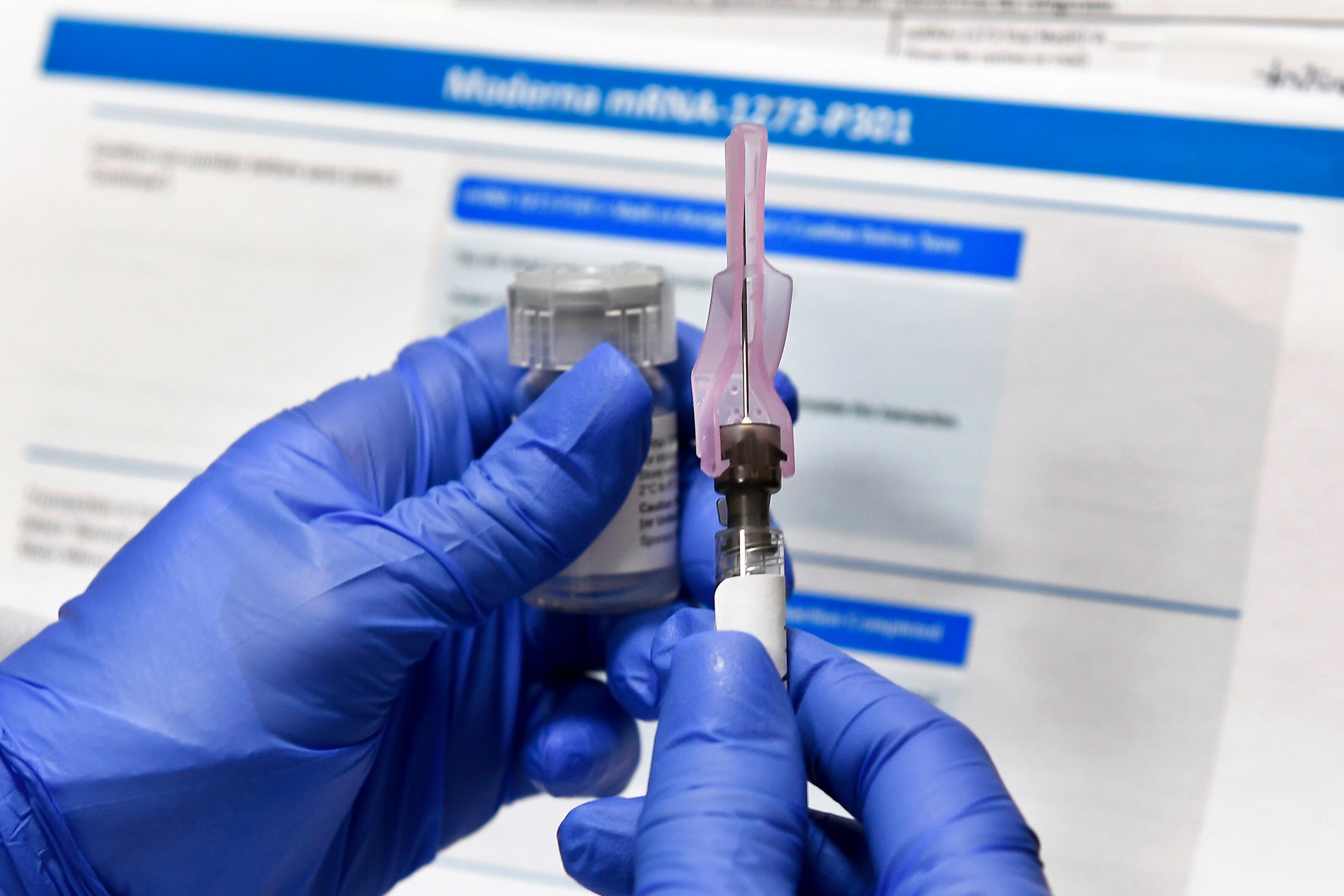
In this Monday, July 27, 2020 file photo, a nurse prepares a shot as a study of a possible COVID-19 vaccine, developed by the National Institutes of Health and Moderna Inc., gets underway in Binghamton, N.Y. On Tuesday, Sept. 8, 2020, the top executives of nine drugmakers likely to produce the first vaccines against the new coronavirus said that they will stick to the highest ethical and scientific standards in testing and manufacturing and will make the well-being of those getting vaccinated their top priority. (AP Photo/Hans Pennink)
By Linda A. Johnson
The top executives of nine drugmakers likely to produce the first vaccines against the new coronavirus signed an unprecedented pledge meant to boost public confidence in any approved vaccines.
The companies said Tuesday that they will stick to the highest ethical and scientific standards in testing and manufacturing and will make the well-being of those getting vaccinated their top priority.
The announcement comes amid worries that the U.S. Food and Drug Administration will be under political pressure to approve a vaccine before tests to prove it is safe and effective are finished.
Meanwhile, public health officials worry that if many Americans don't get the vaccine, it will be harder to reduce the spread of COVID-19.
The pledge was signed by the chief executive officers of American drugmakers Johnson & Johnson, Merck, Moderna, Novavax, and Pfizer, and European companies AstraZeneca, BioNTech, GlaxoSmithKline, and Sanofi. BioNTech has partnered with Pfizer on one of the vaccines now in the final round of human testing.
R.J. Hottovy, Head of Analytical Research at Placer.ai, breaks down restaurant trends, pricing power, and which chains are winning this earnings season.
William Shatner and LifeWave CEO David Schmidt share lessons from his “world’s oldest intern” experience and offer advice for young professionals starting out.
The Live Nation ruling is in. Diana Moss of the Progressive Policy Institute joins us to unpack what it means for competition, consumers, and live music.