From Flamin’ Hot Cheetos to Sweet Heat Starburst, America’s snacks are getting spicier. Now, Coca-Cola wants in on the trend.
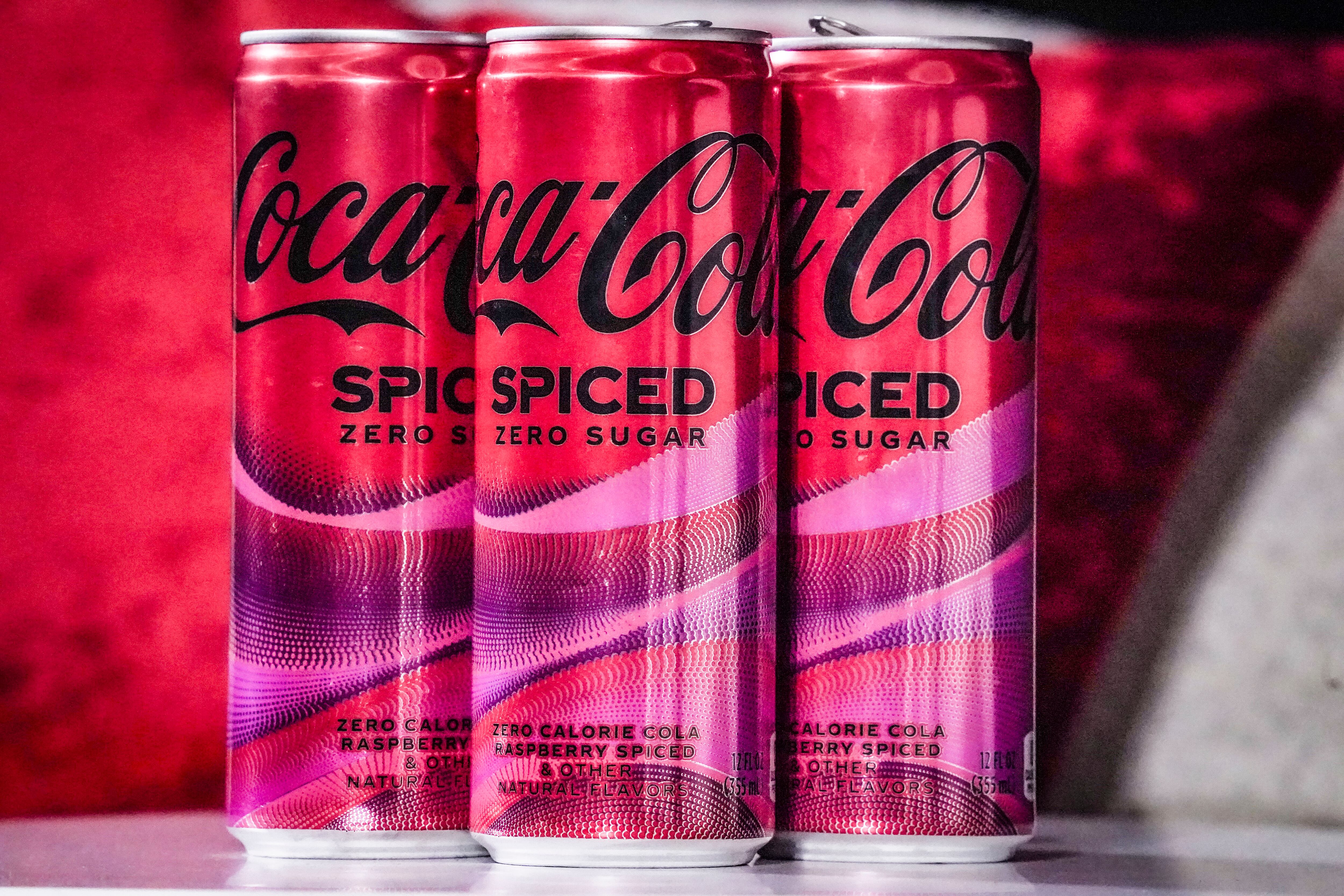
On Wednesday, the Atlanta beverage giant introduced Coca-Cola Spiced, the first new permanent offering to its North American portfolio in three years. Coca-Cola Spiced and Coca-Cola Spiced Zero Sugar will go on sale in the U.S. and Canada on Feb. 19.
Coca-Cola Spiced doesn’t have a lot of heat. The main flavor drinkers will notice is a hint of raspberry. Coke won’t name the spices it added – it guards its recipes closely – but they taste like amped-up versions of the spices in regular Coke.
“If you go to the aisles, you’ll see the amount of spiciness has gone up because consumers’ taste palettes have evolved. We realized that could be an opportunity for us,” Coca-Cola’s North American marketing chief Shakir Moin told The Associated Press in a recent interview. “Can we dial up something which is already part of our formula and bring in a taste profile that is interesting, unique, and brings in the next generation of consumers?”
Coke has been exploring ways to get younger drinkers excited about its signature cola. In 2022, it launched Coca-Cola Creations, a series of eight limited-edition Coke flavors in colorful cans and bottles. Coke experimented with adding hints of coconut, strawberry, watermelon and other flavors to the drinks.
The latest example, Coca-Cola Happy Tears, contains salt and mineral flavors. It will be sold only through TikTok on Feb. 17 in the U.S. and Great Britain.
Moin said customer research for Coca-Cola Creations fed into the development of Coca-Cola Spiced. It usually takes Coca-Cola at least a year to develop a new beverage, he said, but Coca-Cola Spiced took just seven weeks. Moin said the company hopes to replicate that speed with future new products.
“Consumers are moving faster. The market is moving forward faster. We’ve got to be faster than the speed of the market,” he said.