Big pharma stocks rise as Street reacts to latest presidential tariff plan
By Tom Murphy
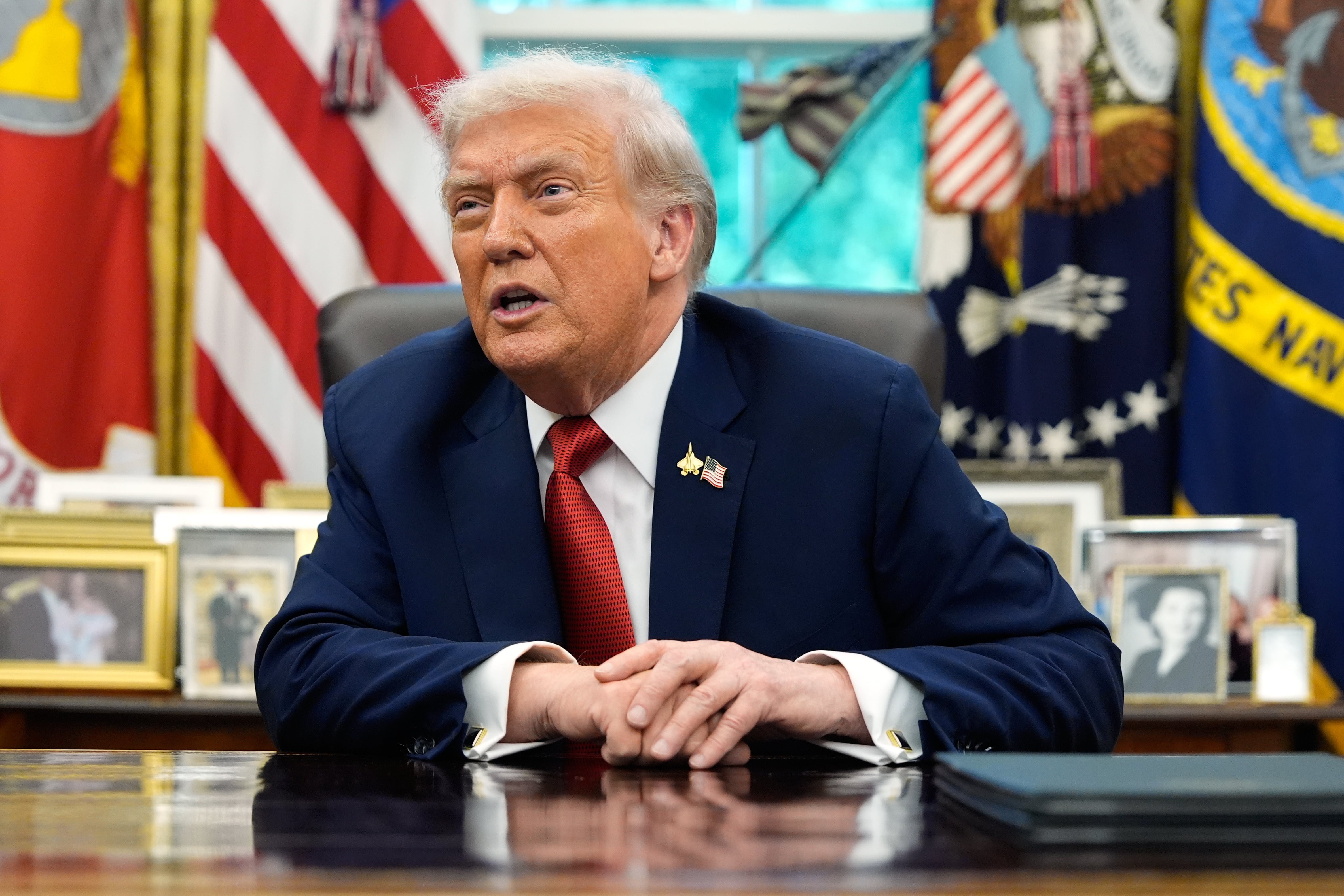
President Donald Trump speaks after signing an executive order regarding TikTok in the Oval Office at the White House, Thursday, Sept. 25, 2025, in Washington. (AP Photo/Alex Brandon)
Shares of some big drugmakers advanced above broader indexes Friday as Wall Street started sorting out President Donald Trump’s latest tariff announcement.
The president said late Thursday that he would place 100% import taxes on branded or patented pharmaceuticals starting Oct. 1, but those tariffs would not apply to companies building U.S. manufacturing plants. He defined that as either “breaking ground” or being “under construction.”
Several big drugmakers like Merck & Co. Inc., Eli Lilly and Co. and Johnson & Johnson have announced U.S. expansion plans.
Trump has talked about pharmaceutical tariffs for months, but he has said he would delay them for a year or a year and a half to give companies time to stockpile medicines here and shift manufacturing.
Analysts have said companies started stockpiling medicines in the U.S. earlier this year.
Jefferies analyst Akash Tewari said in a research note that Thursday’s announcement shouldn’t have a material impact on the big drugmakers, given their construction plans.
Brand-name drug companies also have fat profit margins that can provide some flexibility to make investments and absorb tariff costs. Manufacturers of cheaper generic drugs, which were not mentioned in Thursday’s announcement, do not. Generics account for most U.S. prescriptions.
David Risinger of Leerink Partners said smaller drugmakers may be vulnerable to the new taxes, although he noted that it was hard to predict which ones.
He said several questions remain unanswered after Thursday’s announcement. Those include whether the action will survive legal challenges and how the phrases “breaking ground” and “under construction” are defined for tariff enforcement.
Risinger also questioned whether the new taxes might be a negotiating tactic tied to an investigation the administration launched in the spring over how importing drugs and their ingredients affects national security.
Shares of Merck, Lilly and J&J all rose less than 1% in midday trading Friday, slightly higher than the S&P 500 index.
Bambu Ventures's Kyle Pretsch dives into Lemonaid’s $10M buyout, down from 23andMe’s $400M price tag, and what’s next after Chrome Co.’s dramatic pivot.
Former Cisco Systems CEO John Chambers learned all about technology’s volatile highs and lows as a veteran of the internet’s early boom days during the late 1990s and the ensuing meltdown that followed the mania. And now he is seeing potential signs of the cycle repeating with another transformative technology in artificial intelligence. Chambers is trying take some of the lessons he learned while riding a wave that turned Cisco into the world's most valuable company in 2000 before a crash hammered its stock price and apply them as an investor in AI startups. He recently discussed AI's promise and perils during an interview with The Associated Press.
Grove Collaborative’s CEO shares how the company is reinventing everyday goods with sustainability at the core and working toward a plastic-free future.
Atlanta Mayor Andre Dickens shares plans for affordable housing, community-led growth, and why private and public grocery stores could be key to food equity.
Tesla reported a surprise increase in sales in the third quarter as the electric car maker likely benefited from a rush by consumers to take advantage of a $7,500 credit before it expired on Sept. 30. The company reported Thursday that sales in the three months through September rose 7% compared to the same period a year ago. The gain follows two quarters of steep declines as people turned off by CEO Elon Musk’s foray into right-wing politics avoided buying his company’s cars and even protested at some dealerships. Sales rose to 497,099 vehicles, compared with 462,890 in the same period last year.
Tom’s Guide Editor-in-Chief Mark Spoonauer breaks down Apple & Amazon's latest product drops—what's hot, what's hype, and what really matters for users.