An AI-based drone speeds up the detection and monitoring of wildfires
By Pietro De Cristofaro
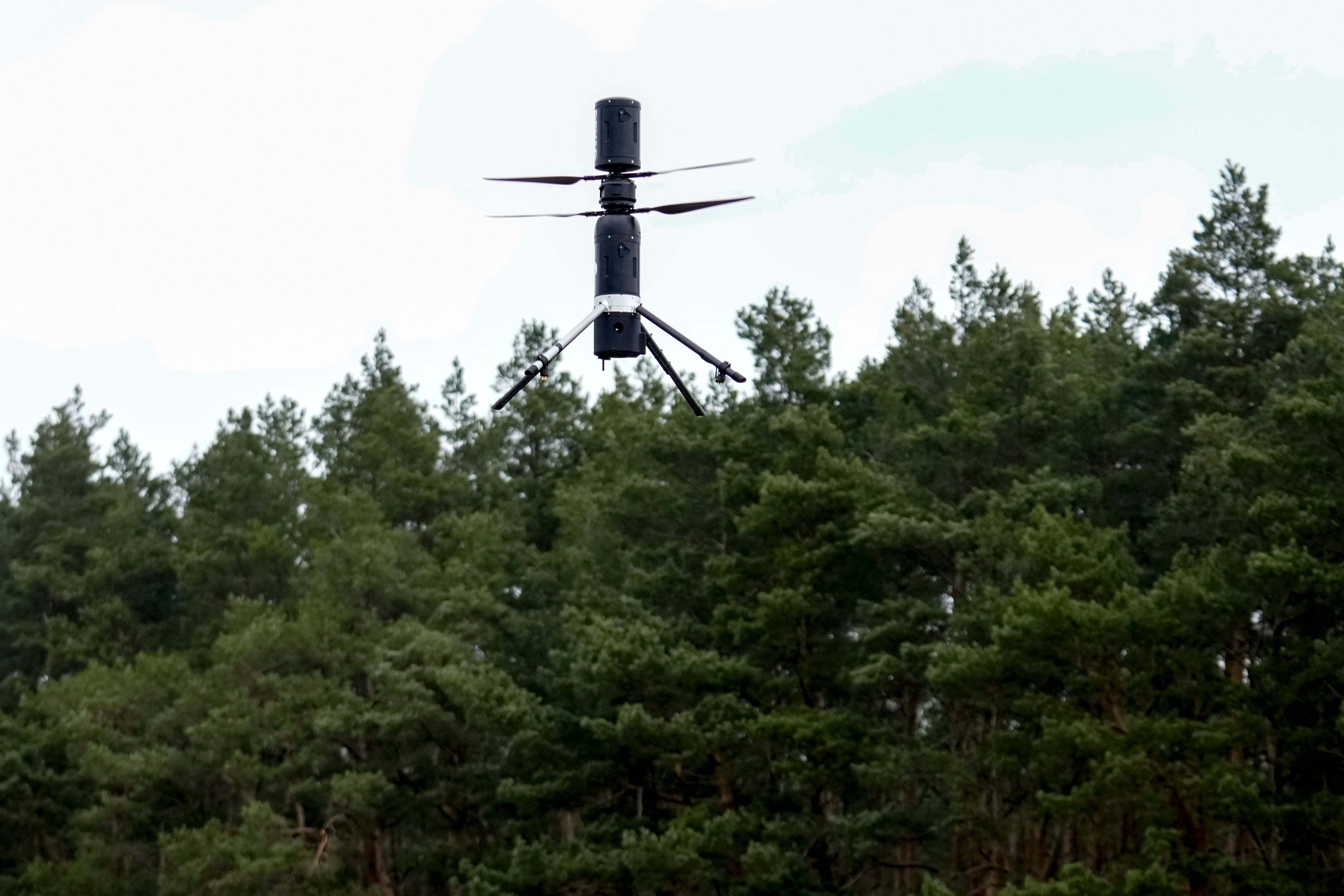
A prototype AI-based drone system with an autonomous Al-based system for early detection of forest fires by Dryad Networks, takes off during the presentation of Silvaguard, in Eberswalde, eastern Germany, Thursday, March 27, 2025. (AP Photo/Ebrahim Noroozi)
EBERSWALDE, Germany (AP) — A company that specializes in early wildfire detection has developed a new, AI-based drone it says will help speed up the detection, location and monitoring of fires.
The Silvaguard drone by Dryard Networks was presented Thursday in Eberswalde outside of Berlin as wildfires driven by extreme heat and climate change are becoming a more common, often deadly phenomenon around the globe.
The drone will deliver infrared images, among other things, and works in combination with a fire detection system that the company developed earlier and that's already being used in several countries. The fire detection system, called Silvanet, is designed to detect wildfires at the smoldering stage using solar-powered gas sensors connected via a wireless network.
Each gas sensor can protect an area the size of a football field and be attached to a tree. The plan is that once Silvanet detects a fire, it will trigger a nearby Silvaguard drone to fly to the location and provide detailed images.
“Today we saw a combination of Silvanet — the solar powered gas sensors that detected the fire within minutes — with Silvaguard, the first prototype of an autonomous, an AI enabled drone that we dispatched in response to a fire," said Carsten Brinkschulte, the CEO and co-founder, Dryad Networks.
The drone “flew autonomously to the location of the sensor, detecting the fire, and delivered overhead infrared and optical video from the point of fire,” he said of the newly developed drone.
The company is still waiting to get the go-ahead for the commercial use of Silvaguard drone from authorities.
The information about the fire, including geographic coordinates, video and infrared images, will then be sent to the firefighters who will then know where the fire is spreading and how big it is, which will help them know how many firefighters need to be deployed.
“When it comes to wildfires, time is of the essence, you cannot be fast enough,” Brinkschulte said.
Holiday shopping heats up as Tom’s Guide editor Kate Kozuch reveals the tech gifts everyone wants, from wellness gadgets to gaming buzz—and how to score deals!
Spain's government has fined Airbnb 64 million euros or $75 million for advertising unlicensed tourist rentals. The consumer rights ministry announced the fine on Monday. The ministry stated that many listings lacked proper license numbers or included incorrect information. The move is part of Spain's ongoing efforts to regulate short-term rental companies amid a housing affordability crisis especially in popular urban areas. The ministry ordered Airbnb in May to remove around 65,000 listings for similar violations. The government's consumer rights minister emphasized the impact on families struggling with housing. Airbnb said it plans to challenge the fine in court.
The Islamic State group and other militant organizations are experimenting with artificial intelligence as a tool to boost recruitment and refine their operations. National security experts say that just as businesses, governments and individuals have embraced AI, extremist groups also will look to harness the power of AI. That means aiming to improve their cyberattacks, breaking into sensitive networks and creating deepfakes that spread confusion and fear. Leaders in Washington have responded with calls to investigate how militant groups are using AI and seek ways to encourage tech companies to share more about how their products are being potentially misused.
President Donald Trump has signed an executive order to block states from regulating artificial intelligence. He argues that heavy regulations could stifle the industry, especially given competition from China. Trump says the U.S. needs a unified approach to AI regulation to avoid complications from state-by-state rules. The order directs the administration to draw up a list of problematic regulations for the Attorney General to challenge. States with laws could lose access to broadband funding, according to the text of the order. Some states have already passed AI laws focusing on transparency and limiting data collection.
Waymo's self-driving taxis have been in the spotlight for both negative and positive reasons. This week, the automated ride-hailing taxis went viral after a San Francisco woman gave birth inside a Waymo taxi while on her way to the hospital. A Waymo spokesperson on Wednesday confirmed the unusual delivery. It said the company's rider support team detected unusual activity inside the vehicle and alerted 911. The taxi arrived safely at the hospital before emergency services. Waymo's popularity is growing despite heightened scrutiny following an illegal U-turn and the death of a San Francisco cat. The company, owned by Alphabet, says it is proud to serve riders of all ages.
OpenAI has appointed Slack CEO Denise Dresser as its first chief of revenue. Dresser will oversee global revenue strategy and help businesses integrate AI into daily operations. OpenAI CEO Sam Altman recently emphasized improving ChatGPT, which now has over 800 million weekly users. Despite its success, OpenAI faces competition from companies like Google and concerns about profitability. The company earns money from premium ChatGPT subscriptions but hasn't ventured into advertising. Altman had recently announced delays in developing new products like AI agents and a personal assistant.