By Angela Charlton and Jeffrey Schaeffer
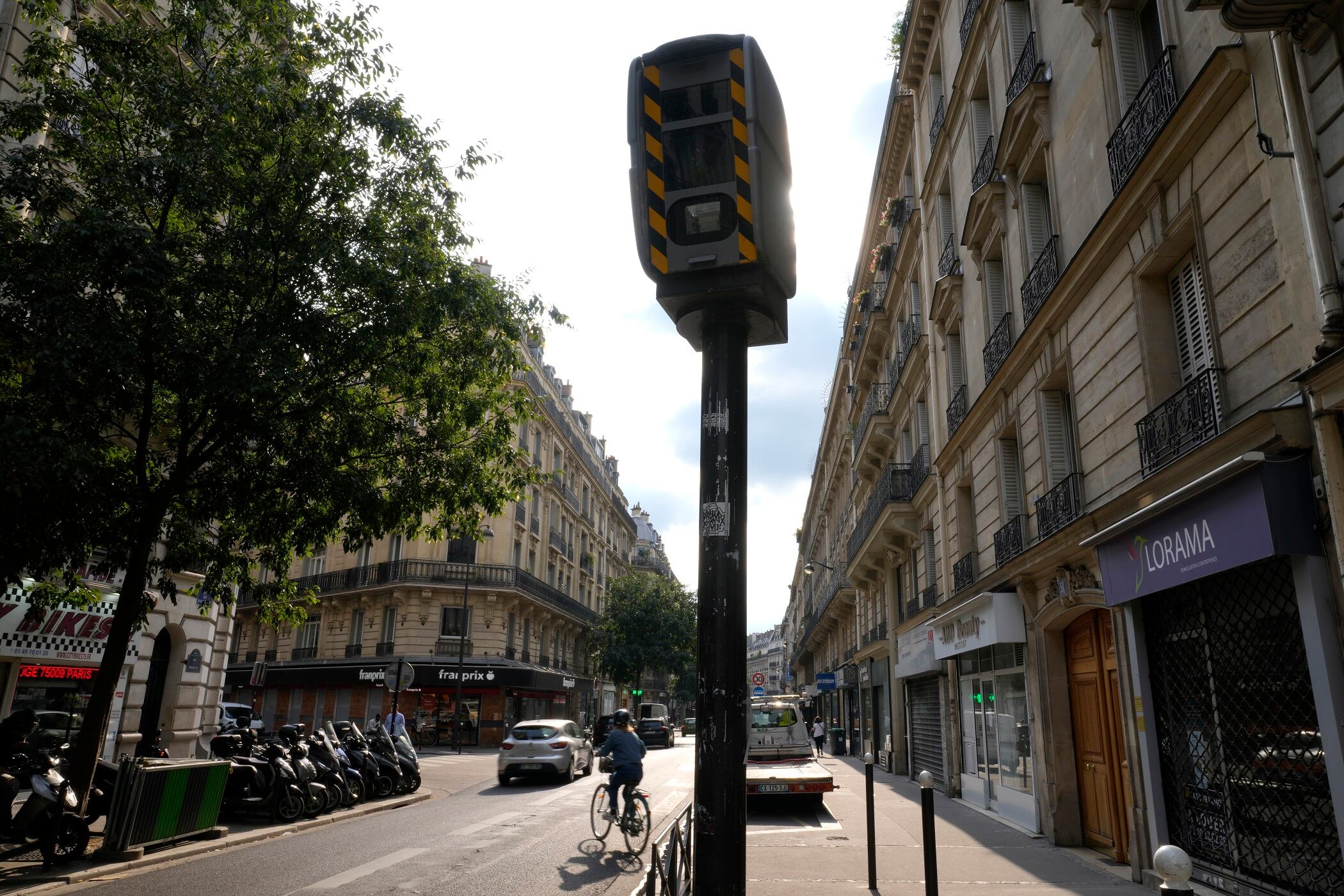
No more zipping past the Eiffel Tower or through the Latin Quarter without slowing down to soak in the sights: Starting Monday, the speed limit in nearly all of Paris is just 30 kph (less than 19 mph).
It’s the latest initiative by a city trying to burnish its climate credentials and transform people’s relationship to their vehicles. City officials say it’s also aimed at reducing accidents and making Paris more pedestrian-friendly.
Car owners and commuters are fuming. Delivery drivers say it will create longer wait times for customers. Taxi drivers say it will drive up rates and hurt business. And some critics say it won't make much of a dent in pollution.
“So if I drive at 30 kph, the client starts complaining. If I drive at 50 kph (about 30 mph), I get arrested by the police. So I don’t know what to do!” exclaimed Karim Macksene, seated in his cab outside the iconic Cafe de Flore on the Left Bank. “People take a cab because they’re in a hurry. At 30 kph, they might as well walk.”
But polls suggest most Parisians support the idea, notably in hopes that it makes the streets safer and quieter.
Already, cyclists often move faster than cars in the densely populated French capital. And only action stars like Tom Cruise in “Mission Impossible” can realistically pick up speed on winding, medieval Parisian streets that are barely more than one car wide.
The new rule includes exceptions for a handful of wide avenues including the famed Champs-Elysees and the bypass circling the historical capital.
Under Socialist Mayor Anne Hidalgo, the Paris city government has already restricted or banned vehicle traffic on several streets and multiplied the number of bike lanes.
Some other French cities and towns have also limited speeds to 30 kph, as do some other European capitals.
Brussels imposed a 30 kph limit on much of the city earlier this year. About 80% of Berlin streets have the same rule. London last year imposed a 20 mph (32 kph) limit on some roads within the city's Congestion Charging Zone.
Madrid imposed such a limit on most of the city center in 2018, and this year Spain put a 30-kph limit on all one-way urban roads, a measure aimed at reducing air and noise pollution and increasing traffic safety.
Residential neighborhoods in Amsterdam, including its historic canal neighborhoods, cap speeds at 30 kph, and the city is proposing to expand that to larger roads, too.
The Van Den Broek family, visiting Paris from the Netherlands, embraced the city's new speed limit.
“We have a lot of problems with nature and everything (such as climate change), and I think that we don’t have to drive in cities," said Francis Van den Broek, riding his bike through the French capital Monday. "And so I think it’s very good that we drive not so fast in cities.”
___
Alex Turnbull in Paris, Geir Moulson in Berlin, Aritz Parra in Madrid, Mike Corder in The Hague, Netherlands, and Sylvia Hui in London, contributed to this report.


