By Raf Casert
The discovery of a new coronavirus variant sent a chill through much of the world Friday as nations raced to halt air travel, markets fell sharply and scientists held emergency meetings to weigh the exact risks, which were largely unknown.
A World Health Organization panel named the variant “omicron” and classified it as a highly transmissible virus of concern, the same category that includes the delta variant. The WHO suggested the variant could pose greater risks than delta, which is the world’s most prevalent variant and has fueled relentless waves of infection on every continent.
Early evidence suggests an increased risk of reinfection compared to other highly transmissible variants, the WHO said. That means people who contracted COVID-19 and recovered could be subject to catching it again.
In response, the United States and Canada joined the European Union and several other countries in instituting travel restrictions on visitors from southern Africa.
The White House said the U.S. will restrict travel from South Africa and seven other countries in the region beginning Monday. It did not give details except to say the restrictions will not apply to returning U.S. citizens or permanent residents, who will continue to be required to test negative before their travel.
Medical experts, including the WHO, warned against any overreaction before the variant that originated in southern Africa was better understood. But a jittery world feared the worst nearly two years after COVID-19 emerged and triggered a pandemic that has killed more than 5 million people around the globe.
“We must move quickly and at the earliest possible moment,” British Health Secretary Sajid Javid told lawmakers.
There was no immediate indication whether the variant causes more severe disease. As with other variants, some infected people display no symptoms, South African experts said. The WHO panel drew from the Greek alphabet in naming the variant omicron, as it has done with earlier, major variants of the virus.
Even though some of the genetic changes appear worrisome, it was unclear if the new variant would pose a significant public health threat. Some previous variants, like the beta variant, initially concerned scientists but did not spread very far.
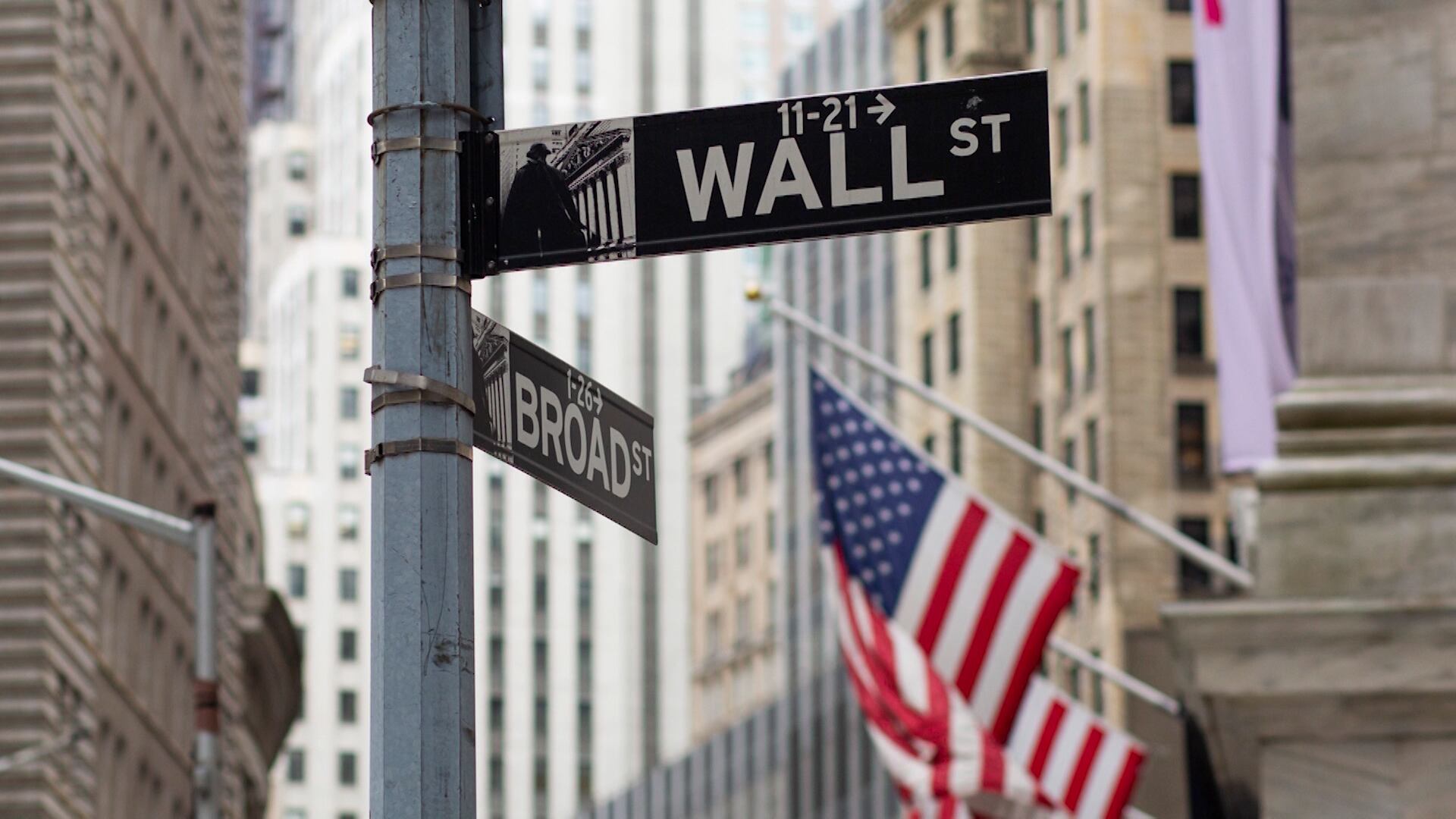
The 27-nation European Union imposed a temporary ban on air travel from southern Africa, and stocks tumbled in Asia, Europe and the United States. The Dow Jones Industrial Average dropped more than 1,000 points. The S&P 500 index was down 2.3%, on pace for its worst day since February. The price of oil plunged nearly 12%.
“The last thing we need is to bring in a new variant that will cause even more problems,” German Health Minister Jens Spahn said. The member nations of the EU have experienced a massive spike in cases recently.
EU Commission President Ursula von der Leyen said flights will have to “be suspended until we have a clear understanding about the danger posed by this new variant, and travelers returning from this region should respect strict quarantine rules.”
She insisted on extreme caution, warning that “mutations could lead to the emergence and spread of even more concerning variants of the virus that could spread worldwide within a few months."
Belgium became the first European Union country to announce a case of the variant.
“It’s a suspicious variant," Health Minister Frank Vandenbroucke said. “We don’t know if it’s a very dangerous variant.”
It has yet to be detected in the United States, said Dr. Anthony Fauci, the U.S. government's top infectious disease expert. Abroad, the variant “seems to be spreading at a reasonably rapid rate,” he told CNN. And although it may be more transmissible and resistant to vaccines than other variants, "we don’t know that for sure right now.”
Showing how complicated the spread of a variant can be, the Belgian case involved a traveler who returned to Belgium from Egypt on Nov. 11 but did not became sick with mild symptoms until Monday, according to professor Marc Van Ranst, who works for the scientific group overseeing the Belgian government's COVID-19 response.
Israel, one of the world's most vaccinated countries, announced Friday that it also detected its first case of the new variant in a traveler who returned from Malawi. The traveler and two other suspected cases were placed in isolation. Israel said all three were vaccinated, but officials were looking into the travelers' exact vaccination status.
After a 10-hour overnight trip, passengers aboard KLM Flight 598 from Capetown, South Africa, to Amsterdam were held on the edge of the runway Friday morning at Schiphol airport for four hours pending special testing. Passengers aboard a flight from Johannesburg were also being isolated and tested.
“It’s ridiculous. If we didn’t catch the dreaded bug before, we're catching it now,” said passenger Francesca de’ Medici, a Rome-based art consultant who was on the flight.
Some experts said the variant's emergence illustrated how rich countries’ hoarding of vaccines threatens to prolong the pandemic.
Fewer than 6% of people in Africa have been fully immunized against COVID-19, and millions of health workers and vulnerable populations have yet to receive a single dose. Those conditions can speed up spread of the virus, offering more opportunities for it to evolve into a dangerous variant.
“This is one of the consequences of the inequity in vaccine rollouts and why the grabbing of surplus vaccines by richer countries will inevitably rebound on us all at some point,” said Michael Head, a senior research fellow in global health at Britain’s University of Southampton. He urged Group of 20 leaders "to go beyond vague promises and actually deliver on their commitments to share doses.”
The new variant added to investor anxiety that months of progress containing COVID-19 could be reversed.
“Investors are likely to shoot first and ask questions later until more is known,” said Jeffrey Halley of foreign exchange broker Oanda.
In a sign of how concerned Wall Street has become, the market’s so-called fear gauge known as the VIX jumped 48% to a reading of 26.91. That’s the highest reading for the volatility index since January, before vaccines were widely distributed.
Speaking before the EU announcement, Dr. Michael Ryan, head of emergencies at the WHO, warned against "knee-jerk responses."
“We’ve seen in the past, the minute there’s any kind of mention of any kind of variation and everyone is closing borders and restricting travel," Ryan said. “It’s really important that we remain open and stay focused.”
The Africa Centers for Disease Control and Prevention agreed and strongly discouraged any travel bans on countries that reported the new variant. It said past experience shows that such travel bans have “not yielded a meaningful outcome.”
Yet the U.S. announced restrictions on visitors from South Africa, Botswana, Zimbabwe, Namibia, Lesotho, Eswatini, Mozambique, and Malawi, hours after governments took similar steps.
The U.K. banned flights from South Africa and five other southern African countries at noon on Friday and announced that anyone who had recently arrived from those countries would be asked to take a coronavirus test.
Canada banned the entry of all foreigners who have traveled to southern Africa in the last two weeks.
The Japanese government announced that Japanese nationals traveling from Eswatini, Zimbabwe, Namibia, Botswana, South Africa and Lesotho will have to quarantine at government-dedicated accommodations for 10 days and take three COVID-19 tests during that time. Japan has not yet opened up to foreign nationals.
Fauci said U.S. public health officials were talking Friday with South African colleagues. "We want to find out scientist to scientist exactly what is going on.”
The WHO’s technical working group says coronavirus infections jumped 11% in the past week in Europe, the only region in the world where COVID-19 continues to rise.
The WHO’s Europe director, Dr. Hans Kluge, warned that without urgent measures, the continent could see an additional 700,000 deaths by the spring.
____
Associated Press writers Lorne Cook in Brussels, Colleen Barry in Milan, Pan Pylas in London, Jamey Keaten in Geneva, Mike Corder in The Hague, Dave McHugh in Frankfurt, Carley Petesch in Dakar, Andrew Meldrum in Johannesburg and Frank Jordans in Berlin contributed to this report.
Updated on November 26, 2021, at 2:38 p.m. ET with the latest details.