By Christina Larson and Seth Borenstein

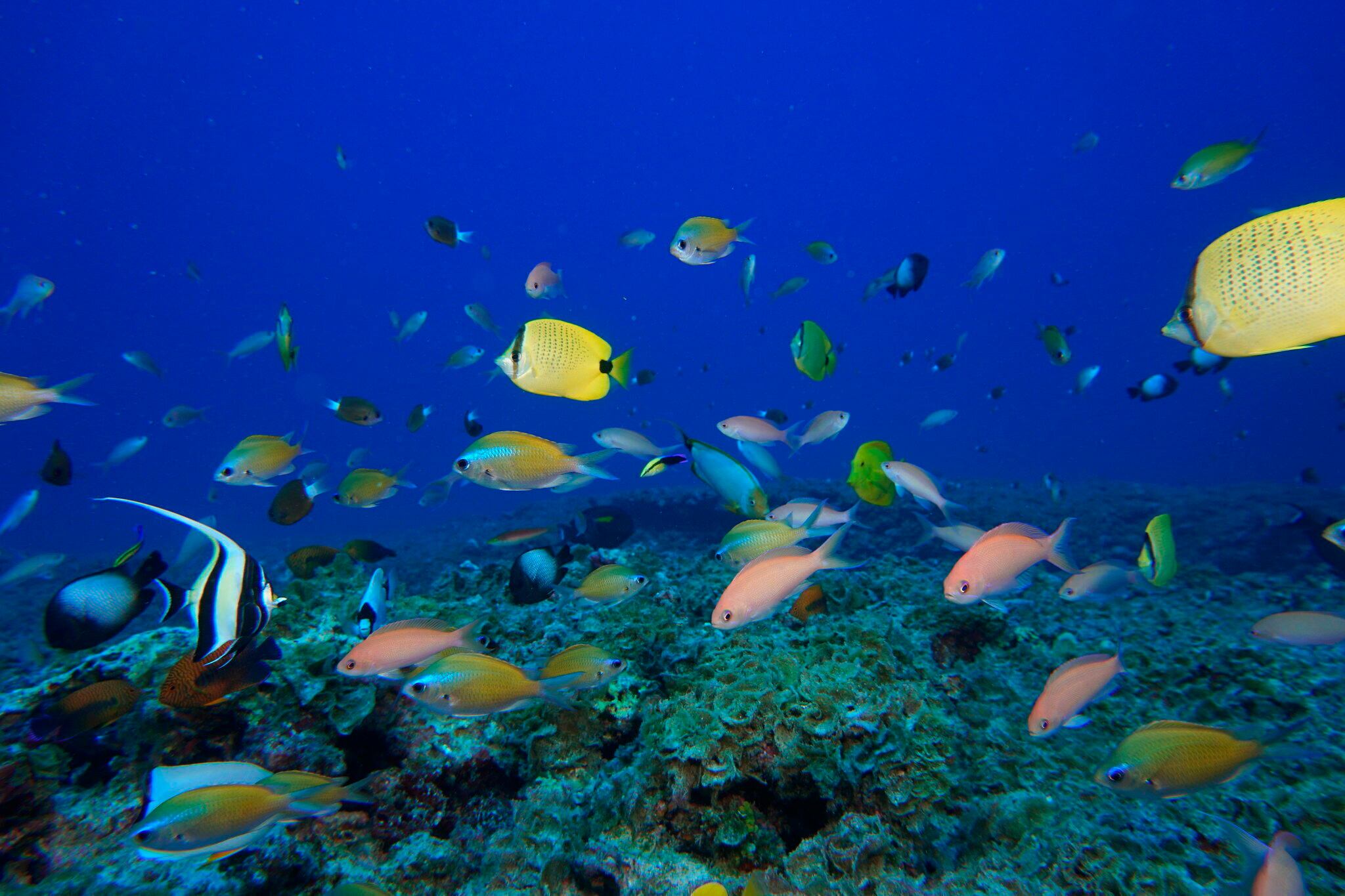
A decade-long global effort to save Earth's disappearing species and declining ecosystems have mostly stumbled, with fragile habitats like coral reefs and tropical forests in more trouble than ever, researchers said in a report Tuesday.

In 2010, more than 150 countries agreed to goals to protect nature, but the new United Nations scorecard found that the world has largely failed to meet 20 different targets to safeguard species and ecosystems.

Six of those 20 goals were "partially achieved," and the rest were not.

If this were a school and these were tests, the world has flunked, said Elizabeth Maruma Mrema, executive secretary of the U.N. Convention on Biological Diversity, which released the report.

Inger Andersen, who leads the U.N. environment program, called it a global failure.

"From COVID-19 to massive wildfires, floods, melting glaciers and unprecedented heat, our failure to meet the Aichi (biodiversity) targets — protect our home — has very real consequences," Andersen said. "We can no longer afford to cast nature to the side."

In a Tuesday interview with The Associated Press, former U.N. Secretary-General Ban Ki-Moon connected the problems to "a lack of global partnership and political leadership." He said multilateralism has been under attack, citing the United States' withdrawal from the Paris climate change agreement as an example.

The U.N. team and report authors said the study is not meant to stoke despair, but to galvanize governments to take stronger actions over the next decade to protect the diversity of life.

"Some progress has been made, but inadequate progress. A lot still needs to be done," Mrema said. "The key is to get the political will and the commitment."

Duke University ecologist Stuart Pimm, who was not involved in the new report, said it's good that countries are getting together to examine their biodiversity goals but some of the targets are nebulous. Reducing "everything on the planet to single scores" obscures the fact that the picture may look different in different places, he said.

For years, conservation activists have used the polar bear as a poster child for species in trouble — especially those threatened by climate change, which the report connects to biodiversity loss. But Mrema and lead author David Cooper said the world should think about a different poster animal: humans.

"A lot of things civilizations depend on are certainly threatened," he said.

The report was originally slated to be released at a U.N. conference to set biodiversity targets for the next decade, but the event in Kunming, China, was postponed until next year due to the pandemic.

Last week, the World Wide Fund for Nature released new research detailing how monitored populations of mammals, birds, amphibians, reptiles and fish have declined, on average, 68 percent, between 1970 and 2016.

"With pandemic deaths surging and wildfires raging across the entire West Coast, never have the consequences of our misuse and abuse of the natural world been more clear," said Julia Baum, a biologist at Canada's University of Victoria who wasn't part of the report.

As countries prepare to restart their economies after combating the coronavirus, there's an opportunity to do better — or much worse — for the planet, Cooper said.

"Some countries are relaxing environmental regulations, but others are investing in a green recovery," he said.

One of the challenges in meeting global biodiversity targets is a mismatch between countries with abundant natural assets — such as large tracts of intact tropical forests — and those with money to enforce protections.

"The biodiversity hotspots tend to be in poorer countries," and wealthy countries need to be willing to provide financial or practical support to help other nations, Cooper said.

Dalhousie University marine biologist Boris Worm, who also wasn't part of the report, said the world is at a crossroads.

"We still have the chance to save most of the world's endangered species and vulnerable ecosystems," Worm said. "Now we face a historic choice to either seize this opportunity, and rebuild what has been lost, or to let the world's species slide further into oblivion."

He said it's striking that Earth's biodiversity took millions of years to evolve, "yet we could destroy much of it in a matter of decades — or safeguard it for generations to come."

"It's our choice," he added.

___

AP writer Elias Meseret contributed from Addis Ababa, Ethiopia.
Share:
More In Science
Study Finds Cannabis Compounds Prevent Cellular Infection by COVID-19 Virus
A new study has been causing a lot of buzz in the cannabis industry. Researchers from Oregon State University found that compounds in cannabis could prevent infection with COVID-19, but that doesn't mean smoking marijuana prevents people from getting infected. CV Sciences medical advisor Dr. Michael Lewis joined Cheddar News' Closing Bell to discuss.
New Study Shows Extensive Damage Pandemic Has on Students' Mental Health
A new study published in "JAMA Pediatrics" looked at how staying home impacted the mental and physical health of students during the pandemic. The results from 11 different countries found across the board that children's mental health was affected, with increased depression and symptoms of anxiety. Cheddar News speaks with clinical psychologist Eileen Kennedy-Moore on how parents can best decide on whether to send their kids back to the classrooms during the surge of Covid-19 cases.
Strella Biotechnology Uses Sensors to Interpret Shelf Life of Produce, Monitor About 15% of U.S. Apples
Food waste is a major contributor to greenhouse gas emissions in the United States. Strella Biotechnology is trying to solve the problem by introducing new technology to a business that's been around for generations -- farming. The 24-year-old CEO created hi-tech sensors that interpret the shelf life of produce and alert farmers when fruits and vegetables are ready to be sent to supermarkets. The company says the process can help farmers make money, reduce food waste and increase the quality of produce. Strella Biotechnology's co-founder and CEO Katherine Sizov and co-founder and COO Jay Jordan joined Cheddar Climate to discuss.
Research Shows Financial Institutions Weakening Fight Against Climate Change
Adele Shraiman, Campaign Representative for the Sierra Club’s Fossil Free Finance Campaign, joins Cheddar Climate, where she explains how Wall Street and climate change are related. She also elaborates on how decisions made by financial institutions are actually hurting the ability to reduce carbon emissions.
2021 is Sixth Hottest Year on Record Amid Billions of Dollars in Climate Disasters
Two reports from NASA and NOAA say that 2021 was the Earth's sixth-hottest year on record, part of a seven-year streak of the hottest years reported since the data has been recorded. Meanwhile, the U.S. experienced 20 separate billion-dollar climate-related disasters, including Hurricane Ida which cost $75 billion in its aftermath. These trends are moving upward at the same time. What could be in store for 2022? Chelsea Harvey, a reporter for E&E News, joins Cheddar Climate to discuss these federal reports, the monetary impact of climate disasters, and more.
Bill Gates' Climate Fund to Invest $15 Billion in Global Clean Tech Initiatives
Breakthrough Energy Catalyst, a private-public fund backed by Bill Gates, is planning to invest up to $15 billion in clean technology initiatives across the U.S., UK, and European Union. It will target four key areas and help fund large projects that otherwise would not be financially possible. Bobby Hollis, Director of Breakthrough Energy Catalyst, joins Cheddar News' Closing Bell to discuss.
Schools Open Across the Nation Amid Omicron Anxiety
Chicago schools opened their doors again following a dispute between the teachers union and the city over as the omicron variant continues to surge, but the safety issues they fought over weren't just limited to the Windy City. Dr. Bayo Curry-Winchell, family medicine and urgent care doctor, joined Cheddar in discussing concerns of parents, teachers, and students as schools try to operate amid COVID and noted what she's been observing as the number of infections among children rises. "I am seeing them contract the illness from so many different aspects," she said. "It could be from a fellow classmate. It could be from a parent. All of those things really play in the effect of transmission as well as contracting the illness."
Terraformation Raised $30 Million to Scale Global Forest Restoration Projects
One startup is working to reverse climate change one seed at a time. Terraformation is a global forest accelerator that provides tools, training, financing, and business support to help scale forest restoration projects worldwide. Forests naturally absorb carbon and Terraformation says that reforestation is a safe, low-cost, and scalable solution to the climate crisis. Yee Lee, VP of growth at Terraformation, joins Cheddar Climate to discuss.
Load More