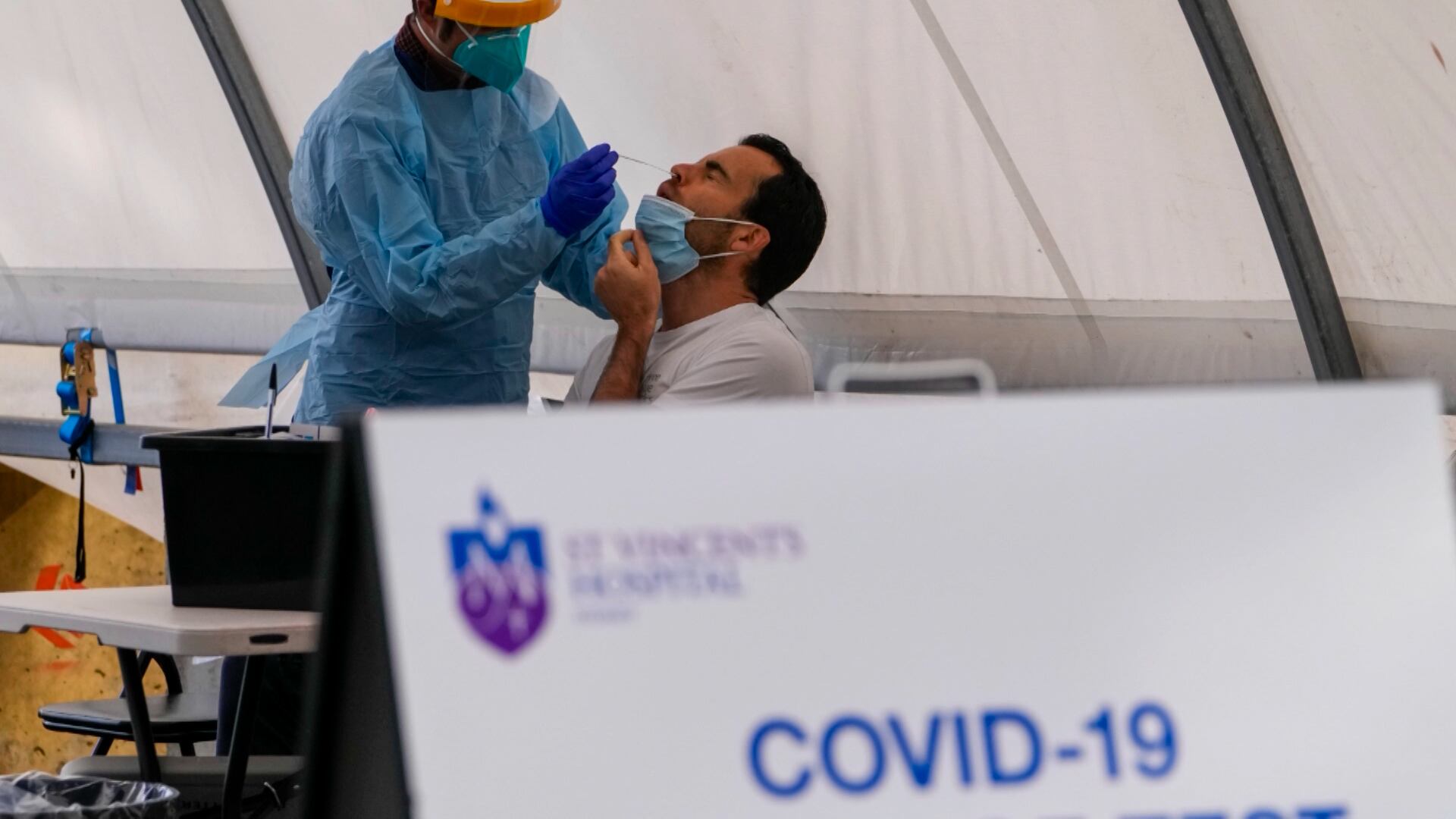
After eight daunting months of battling COVID-19, there may be some light at the end of the tunnel as two potential vaccine candidates recently announced promising test results.
Vaccines from Pfizer and Moderna are similar in that they both use emerging technology called messenger ribonucleic acid (mRNA) to reach nearly 95 percent efficacy. Typically, scientists create vaccines by using live or inactivated virus cells, which puts the actual disease into a person’s body. However, with mRNA technology, Pfizer and Moderna were able to avoid that. MRNA carries coded instructions that tell cells what defenses are necessary by appearing as a threat.
Of Course, There's a Catch
The use of the molecule is groundbreaking for a number of reasons. One is the speed at which the vaccines were developed. The other is that the use of mRNA means the vaccines contain no infectious COVID-19 properties that could get patients sick.
However, there is a drawback to the vaccines: they have to be stored in brutally cold temperatures.
Under normal circumstances, vaccines can survive when stored at around 40 degrees Fahrenheit, but for Moderna, the vials must be stored at -4 degrees.
For Pfizer's vaccine, the threshold for keeping an effective dose is even steeper at a staggering -94 degrees. The icy temperatures are necessary to keep the mRNA molecule intact, otherwise it “begins to fall apart and twist around in ways so that it doesn’t become effective,” a representative for the pharmaceutical giant told Cheddar.
Vaccine Storage & Distribution Roadblock
With the need for cold storage comes the obstacle of how to pull off widespread distribution. Most hospitals in the U.S. do not house facilities that meet the requirements to store either the Moderna or Pfizer vaccines for extended periods. Both vaccines are able to survive in typical storing temperatures of 35 to 46 degrees, but their shelf lives are limited that way.
For Pfizer, the vaccine would no longer be effective after five days in normal storage temperatures. Moderna, meanwhile, shows more promise when it comes to effective distribution as it’s vaccines appear to remain effective for a month while stored 35 degrees.
Pfizer has come up with a plan to ship its vaccine in boxes filled with dry ice. The vials will remain protected for up to 15 days -- but the container can only be opened up to two times per day.
This could be a logistical nightmare for parts of the world that don't have sufficient equipment - or enough dry ice - to keep the vaccines. Even in rural America, many hospitals don't have freezers that can keep doses cold enough, particularly for the Pfizer vaccine.
Getting Vaccinated
So what does this mean for you? Once the FDA approves emergency use authorization of either one or both of the vaccines, it looks like they will likely be distributed first among populations that need it the most: frontline healthcare workers, the elderly, and those suffering from underlying health conditions.
Like several existing vaccinations for other conditions, both Pfizer and Moderna require two rounds of treatment in order for the body to build up complete immunity. For those receiving the Pfizer vaccine, patients will need to return for a second dose after three weeks and for those getting the Moderna vaccine, they'll have to go back for round two after four weeks.
Video produced by Ali Larkin. Article written by Lawrence Banton.
On this episode of Cheddar Innovates: Yat Labs Co-Founder breaks down how a 'Yat' is changing the way people think about their online identities; Scythe Robotics CEO explains how it's bringing innovation to the landscaping industry with its autonomous, all-electric mowers; Founder of California Cowboy discusses how its creating clothing designed for creating in-person connections with others with features like a beverage pocket, bottle opener, and conversation cards; Cheddar gets a look at Curiosity Stream's 'Beyond the Spotlight' biography series.
Amazon founder Jeffrey Bezos took to the stage at the U.N.'s COP26 Climate Summit to unveil a new plan to combat climate change, but some say it might do more harm than good. Justine Calma, Science Reporter at The Verge, joined Cheddar to discuss.
Pfizer has asked the FDA to expand authorization of COVID booster shots for all adults. The agency is expected to grant the request in the coming weeks, allowing vaccinated Americans as young as 18 to get boosted before the holidays. Dr. Bayo Curry-Winchell, Regional Clinical Director at Carbon Health, joined Cheddar to discuss.
Wood modification technology company Kebony recently raised $34 million in its latest funding round. The company's patented technology transformed sustainable softwood using leftover materials and makes it into a product that behaves like premium hardwood. The process has the potential to transform the global construction industry, as it is cost-effective and eco-friendly. Kebony CEO Norman Willemsen joined Cheddar News' Closing Bell to discuss.
Emma Searson, an author on the just-released Renewables on the Rise report and the director, 100% Renewable Campaign at Environment America, joined Cheddar to discuss the rapidly growing renewable energy sector. Between 2011 and 2020, the report shows that wind, solar, and geothermal energy production grew about 15 percent annually and that wind and solar alone account for 11 percent of electricity in the country. "There are a few really important drivers of the renewable energy progress that we're seeing all across the country," Searson said, highlighting falling prices, technology improvements, and supportive policies.
On this episode of 'Cheddar Reveals', Lydia McMullen-Laird and Samuel McMullen, co-founders of Live Zero Waste, discuss the sum of humanity's 'trash addiction' and lifestyle changes people can make to help reduce their individual trash output; Ryan Lupberger, Sustainability Pioneer and CEO of Cleancult, breaks down how Cleancult is redefining cleaning products and solutions to reduce their impact on the planet; Cheddar gets a look at Curiosity Stream's 'Going Circular.'
The U.S. has reopened its borders for fully vaccinated international visitors, ending a ban on foreign travelers that started more than a year ago. It's a welcome change for families separated by the pandemic and a sign of hope for the battered travel industry. Steve Shur, president of the The Travel Technology Association, discusses the new rules and how they could propel the travel industry into a post-pandemic boom.