After eight daunting months of battling COVID-19, there may be some light at the end of the tunnel as two potential vaccine candidates recently announced promising test results.
Vaccines from Pfizer and Moderna are similar in that they both use emerging technology called messenger ribonucleic acid (mRNA) to reach nearly 95 percent efficacy. Typically, scientists create vaccines by using live or inactivated virus cells, which puts the actual disease into a person’s body. However, with mRNA technology, Pfizer and Moderna were able to avoid that. MRNA carries coded instructions that tell cells what defenses are necessary by appearing as a threat.
Of Course, There's a Catch
The use of the molecule is groundbreaking for a number of reasons. One is the speed at which the vaccines were developed. The other is that the use of mRNA means the vaccines contain no infectious COVID-19 properties that could get patients sick.
However, there is a drawback to the vaccines: they have to be stored in brutally cold temperatures.
Under normal circumstances, vaccines can survive when stored at around 40 degrees Fahrenheit, but for Moderna, the vials must be stored at -4 degrees.
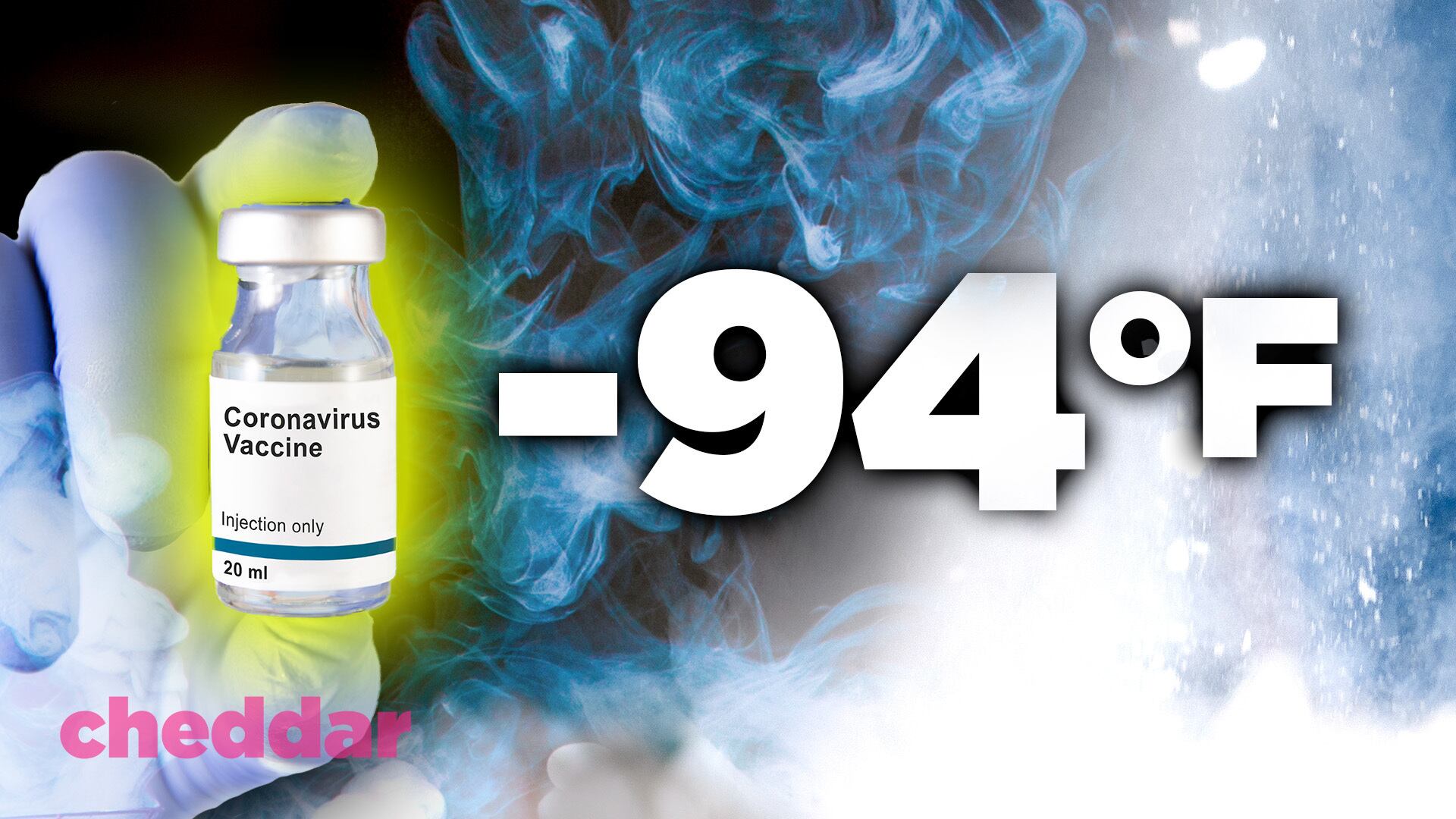
For Pfizer's vaccine, the threshold for keeping an effective dose is even steeper at a staggering -94 degrees. The icy temperatures are necessary to keep the mRNA molecule intact, otherwise it “begins to fall apart and twist around in ways so that it doesn’t become effective,” a representative for the pharmaceutical giant told Cheddar.
Vaccine Storage & Distribution Roadblock
With the need for cold storage comes the obstacle of how to pull off widespread distribution. Most hospitals in the U.S. do not house facilities that meet the requirements to store either the Moderna or Pfizer vaccines for extended periods. Both vaccines are able to survive in typical storing temperatures of 35 to 46 degrees, but their shelf lives are limited that way.
For Pfizer, the vaccine would no longer be effective after five days in normal storage temperatures. Moderna, meanwhile, shows more promise when it comes to effective distribution as it’s vaccines appear to remain effective for a month while stored 35 degrees.
Pfizer has come up with a plan to ship its vaccine in boxes filled with dry ice. The vials will remain protected for up to 15 days -- but the container can only be opened up to two times per day.
This could be a logistical nightmare for parts of the world that don't have sufficient equipment - or enough dry ice - to keep the vaccines. Even in rural America, many hospitals don't have freezers that can keep doses cold enough, particularly for the Pfizer vaccine.
Getting Vaccinated
So what does this mean for you? Once the FDA approves emergency use authorization of either one or both of the vaccines, it looks like they will likely be distributed first among populations that need it the most: frontline healthcare workers, the elderly, and those suffering from underlying health conditions.
Like several existing vaccinations for other conditions, both Pfizer and Moderna require two rounds of treatment in order for the body to build up complete immunity. For those receiving the Pfizer vaccine, patients will need to return for a second dose after three weeks and for those getting the Moderna vaccine, they'll have to go back for round two after four weeks.
Video produced by Ali Larkin. Article written by Lawrence Banton.
After two decades of engineering, over $10 billion, and a series of delays, the most powerful telescope built by NASA is finally scheduled to launch on Saturday. The James Webb Space Telescope was built to provide a fresh look at the universe by detecting light that is invisible to the human eye and to reveal new information about the universe's oldest stars and galaxies. Lou Strolger, observatory scientist and deputy head of instruments division, space telescope, joins Cheddar News.
Carlo and Baker kick off the weirdest week of the year with all the news you missed over the holiday weekend, including calls for the CDC to shorten its isolation window as Omicron sweeps through the country.
The 2022 Winter Olympics will be without some of hockey's biggest players. The NHL and the NHL Player's Association have agreed to not participate in the men's hockey tournament at the Games in Beijing next year. The league has been forced to postpone some games because of a rise in COVID-19 cases among players. Washington Post sports reporter Samantha Pell joins Cheddar News' Closing Bell to discuss what this could mean for the Winter Olympics and the sport of hockey.
The National Highway Traffic Safety Administration has opened a formal investigation into Tesla. The agency is looking into about 580,000 Tesla vehicles, and a feature called 'Passenger Play' which allows drivers to play video games on the center touch screen. The feature previously only worked when a vehicle was in park; but, the NHTSA says it has confirmed that the feature has been available while vehicles are in motion since December of 2020. iSeeCars.com executive analyst Karl Brauer joins Cheddar News' Closing Bell to discuss.
Baron Davis and Kate Hudson want you to bring cannabis home for the holidays. The cannabis-infused seltzer brand Cann released a new spot featuring the actress and former NBA player. The campaign comes hand in hand with Cann's launch of a new holiday bundle, which includes its product with Hudson's King Street Vodka. Davis and Hudson are also Cann investors. Cheddar cannabis reporter Chloe Aiello spoke to Davis about his involvement with the company and its new campaign.
Healthcare workforce management platform ShiftMed
recently announced a $45 million funding round.
The company's platform connects nurses and healthcare professionals to hospitals and other healthcare providers.
ShiftMed's new funding comes amid widespread labor shortages in the healthcare sector. The company's CEO Todd Walrath joins Cheddar News' Closing Bell to discuss.
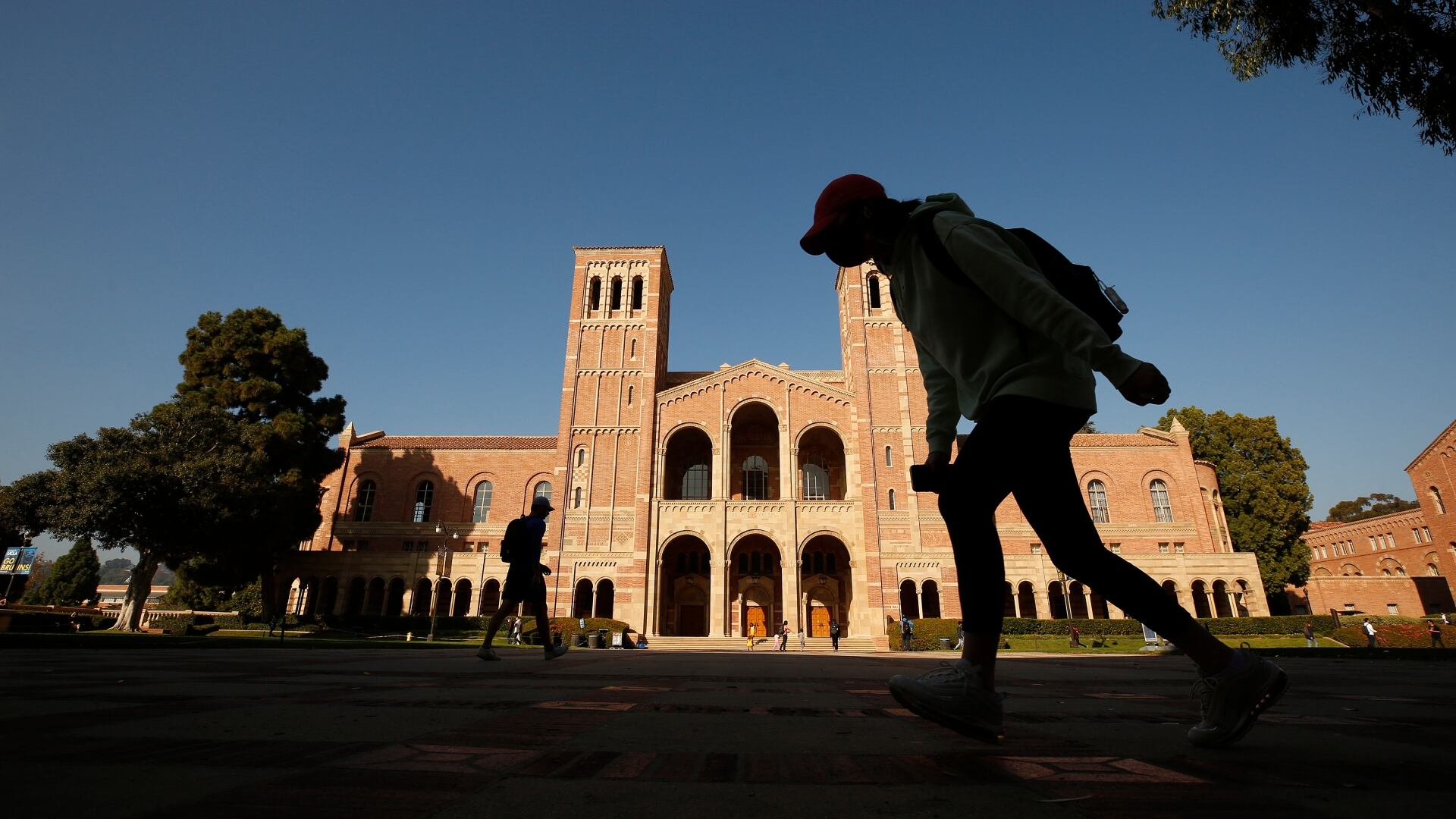
Universities like UCLA, Yale, and Duke have announced they're implementing remote learning amid the COVID omicron variant surge, despite President Biden recommending that K-12 schools should continue in-person education. Jared C. Bass, senior director for Higher Education at American Progress, joined Cheddar to break down what institutions of higher education might be considering differently. "I think some universities are allowing periods of a bit of a respite to allow students to get testing and make sure when they do return back to campus that they're healthy," he noted.
Supply chain issues have become one of the biggest roadblocks for the U.S. EV market, with production woes likely to stunt the industry's growth in 2022. Rich Steinberg, electric vehicle expert and industry advisor, told Cheddar that the Biden administration investing in domestic mining for essential minerals used in battery manufacturing — such as lithium — could help alleviate the bottlenecks. "Some of those same materials are available domestically, they just haven't been prioritized," he said, noting the paradox between green tech and "dirty" mining. "The good news is that there are ways to extract those materials cleanly."
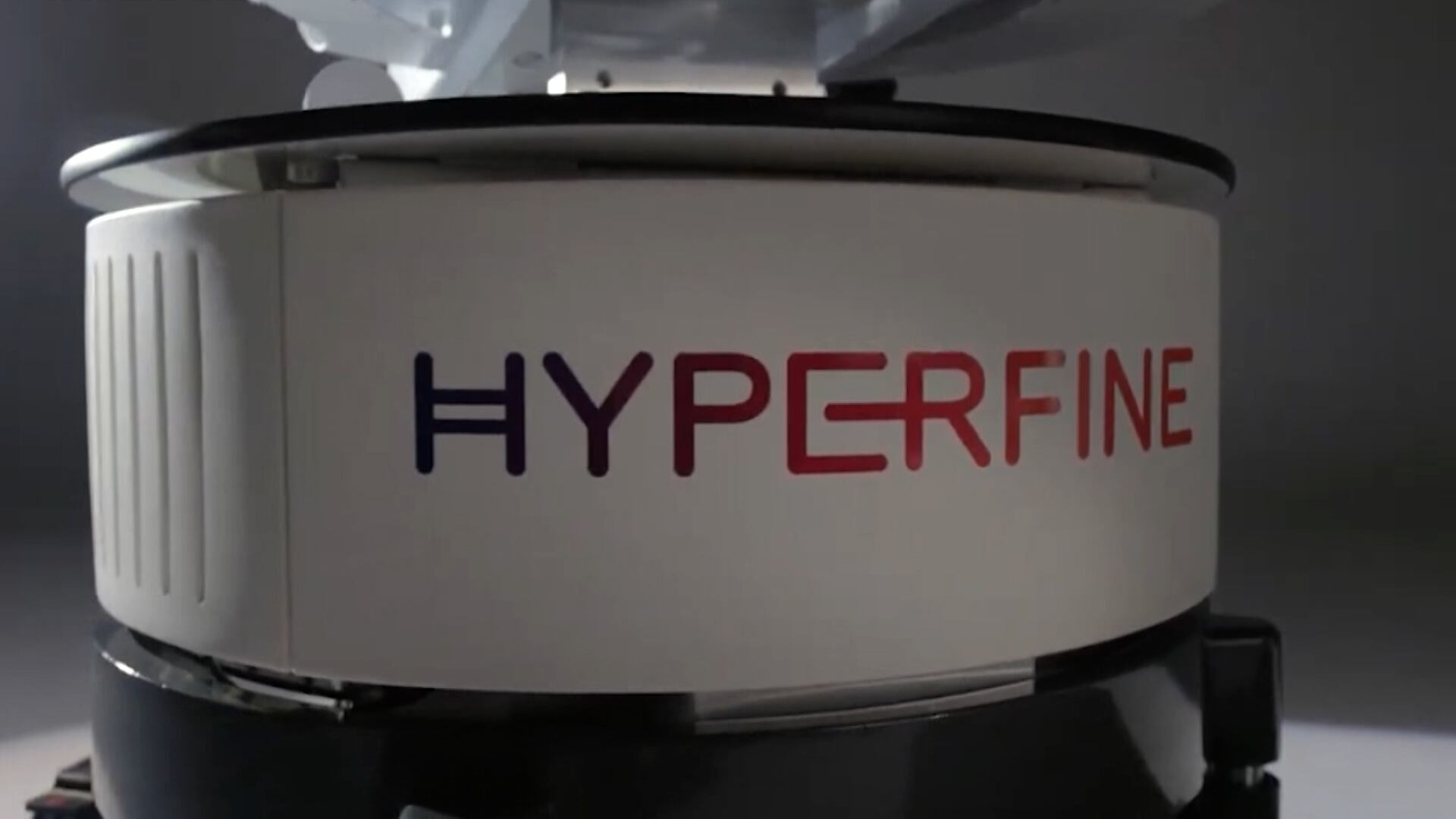
Hyperfine, the pioneer of the very first FDA-approved portable MRI device, made its public debut on the Nasdaq via a SPAC merger. CEO Dave Scott joined Cheddar's "Opening Bell" to discuss the IPO launch, the company's valuation at $580 million, and the impact of its machine called Swoop. "We can roll an MRI system, our MRI Swoop system, right into the room where you are, right up to your patient bedside, and scan you right there and get an image in less than an hour," he explained.
Dr. Rob Davidson, Executive Director of the Committee to Protect Health Care and an ER Physician in West Michigan, joins Cheddar News to break down the expectations of Pfizer's new COVID-19 treatment pill.