The Biden administration on Wednesday announced a new program under the Bipartisan Infrastructure Law that aims to expand the infrastructure needed to keep electric vehicles charged.
Here are some of the biggest takeaways:
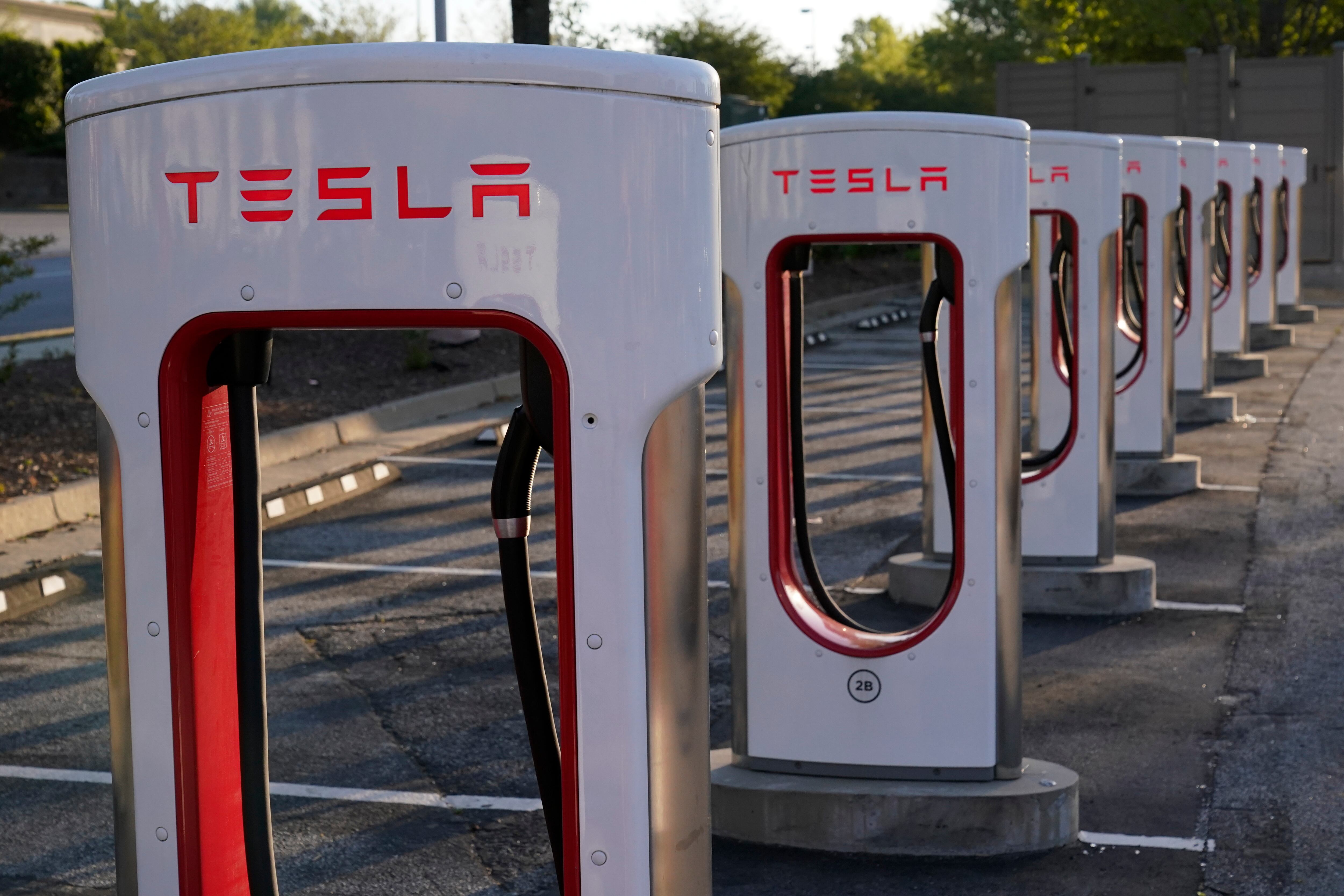
The White House also highlighted actions from several companies to help expand access to EV chargers, including Tesla's decision to open at least 7,500 stations in its U.S. Supercharger and Destination Charger network to non-Tesla vehicles by the end of 2024.
"All EV drivers will be able to access these stations using the Tesla app or website," the White House said in a statement. "Additionally, Tesla will more than double its full nationwide network of Superchargers, manufactured in Buffalo, New York."
Hertz and bp, meanwhile, plan to build a national network of fast-charging stations designed to serve rideshare, tax drivers, car rental customers, and the general public near "high-demand locations, such as airports."
The White House also championed efforts by companies such as General Motors, Mercedes-Benz, Volvo Cars, and Starbucks to expand the EV charging network.
The administration said all of these initiatives support President Joe Biden's goal of making electric vehicles 50 percent of all auto sales by 2030. In 2022, they made up about 10 percent of all sales.
Parallel Systems has been selected to receive $4.5 million from the Department of Energy for an advanced testing program of its autonomous, battery-electric rail vehicles. The startup, which has raised more than $53 million to date, was founded by former SpaceX engineers to reimagine the rail system by creating a more efficient, decarbonized freight network. Matt Soule, Co-founder & CEO of Parallel Systems, joined Cheddar's Opening Bell to discuss what the company hopes to achieve.
A bipartisan bill introduced by U.S. Senators Amy Klobuchar (D-MN) and Cynthia Lummis (R-WY) aims to tackle the spread of misinformation on social media platforms, as well as the addictive nature of the sites and negative mental health impacts they have on users. The 'Nudge Act' would require studies to find and compile potential interventions that platforms could use to encourage people to think before they share a post, or log off after spending too much time on an app. The FTC would create rules based on these findings, and hold the platforms accountable. But will it work? Jesse Lehrich, co-founder of Accountable Tech, joins Closing Bell to discuss the bill, whether real results and regulations could come from it, and more.