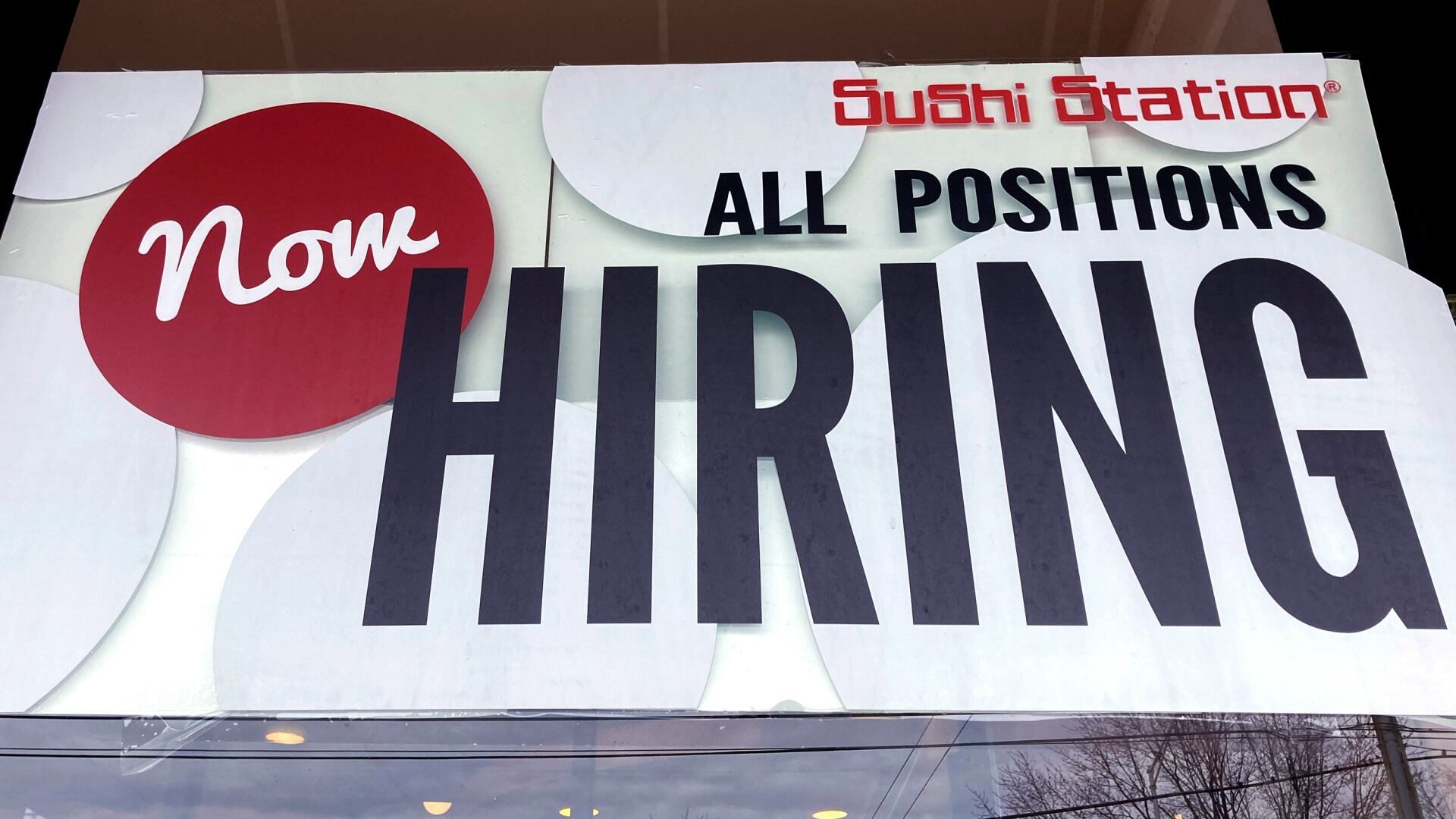
A hiring sign is displayed at a restaurant in Rolling Meadows, Ill., Tuesday, Dec. 27, 2022. On Thursday, the Labor Department reports on the number of people who applied for unemployment benefits last week. (AP Photo/Nam Y. Huh, File)
By Matt Ott
Fewer Americans filed for jobless benefits last week despite efforts by the Federal Reserve to loosen the labor market with higher interest rates as it tries to cool the economy.
Applications for jobless aid in the U.S. for the week ending Feb. 11 fell by 1,000 last week to 194,000, from 195,000 the previous week, the Labor Department reported Thursday. It’s the fifth straight week claims were under 200,000.
Jobless claims generally represent the number of U.S. layoffs.
The four-week moving average of claims, which smooths out some of the weekly ups and downs, rose by 500 to 189,500. It’s the fourth straight week that the four-week moving average has been below 200,000.
Earlier this month, the Fed raised its main lending rate by 25 basis points, its eighth rate hike in less than a year. The central bank’s benchmark rate is now in a range of 4.5% to 4.75%, its highest level in 15 years. Chair Jerome Powell appeared to suggest that he foresees two additional quarter-point rate hikes.
So far, the Fed’s hawkish interest rate policy has tempered inflation, but has had less impact on a resilient U.S. job market.
Two weeks ago, the government reported that employers added a better-than-expected 517,000 jobs in January and that the unemployment rate dipped to 3.4%, the lowest level since 1969. Analysts were expecting job gains of around 185,000.
Job openings rose to 11 million in December, up from 10.44 million in November and the highest since July. For 18 straight months, employers have posted at least 10 million openings — a level never reached before 2021 in Labor Department data going back to 2000. In December, there were about two vacancies for every unemployed American.
Though the U.S. labor market remains robust, layoffs have been mounting in the technology sector, where many companies overhired after a pandemic boom. IBM, Microsoft, Amazon, Salesforce, Facebook parent Meta, Twitter and DoorDash have all announced layoffs in recent months.
The Fed’s interest rate hikes have hit the real estate sector the hardest, largely due to higher mortgage rates — currently above 6% — that have slowed home sales for 11 straight month s. That’s almost step-in-step with the Fed’s rate hikes that began last March.
About 1.7 million people were receiving jobless aid the week that ended Feb. 4, an increase of 16,000 from the week before.
Former Cisco Systems CEO John Chambers learned all about technology’s volatile highs and lows as a veteran of the internet’s early boom days during the late 1990s and the ensuing meltdown that followed the mania. And now he is seeing potential signs of the cycle repeating with another transformative technology in artificial intelligence. Chambers is trying take some of the lessons he learned while riding a wave that turned Cisco into the world's most valuable company in 2000 before a crash hammered its stock price and apply them as an investor in AI startups. He recently discussed AI's promise and perils during an interview with The Associated Press.
Grove Collaborative’s CEO shares how the company is reinventing everyday goods with sustainability at the core and working toward a plastic-free future.
Atlanta Mayor Andre Dickens shares plans for affordable housing, community-led growth, and why private and public grocery stores could be key to food equity.
Tesla reported a surprise increase in sales in the third quarter as the electric car maker likely benefited from a rush by consumers to take advantage of a $7,500 credit before it expired on Sept. 30. The company reported Thursday that sales in the three months through September rose 7% compared to the same period a year ago. The gain follows two quarters of steep declines as people turned off by CEO Elon Musk’s foray into right-wing politics avoided buying his company’s cars and even protested at some dealerships. Sales rose to 497,099 vehicles, compared with 462,890 in the same period last year.
Tom’s Guide Editor-in-Chief Mark Spoonauer breaks down Apple & Amazon's latest product drops—what's hot, what's hype, and what really matters for users.
InnerPlant CEO Shely Aronov reveals how engineered crops like soybeans and corn emit signals when stressed—offering farmers early warnings to boost yields.