By Valerie Gonzalez and Julie Watson
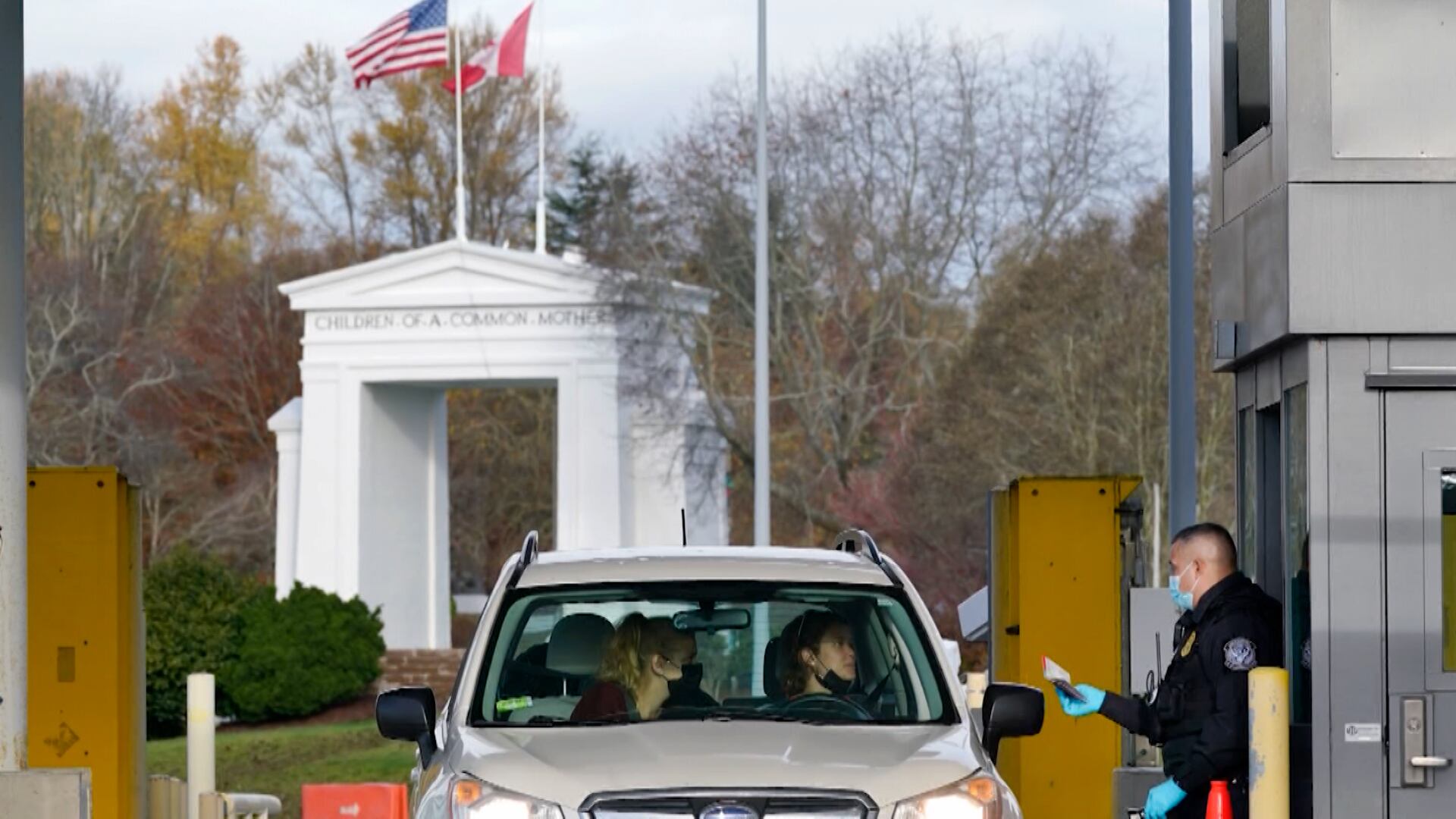
The Biden administration has stopped taking mobile app appointments to admit asylum-seekers at a Texas border crossing that connects to a notoriously dangerous Mexican city after advocates warned U.S. authorities that migrants were being targeted there for extortion.
U.S. Customs and Border Protection gave no explanation for its decision to stop scheduling new appointments via the CBP One app for the crossing in Laredo, Texas.
Several asylum-seekers told The Associated Press that Mexican officials in Nuevo Laredo, across the border from Laredo, Texas, had threatened to hold them and make them miss their scheduled asylum appointments unless they paid them. Humanitarian groups in Laredo say they had recently warned CBP of the problems and that certain groups were controlling access to the international crossing on the Mexican side.
Migrant advocates say the situation in Nuevo Laredo, which is plagued by cartel fighting and other problems, casts doubt on the administration’s argument that Mexico is a safe place for the record number of people fleeing violence in Central America and elsewhere.
Rafael Alvarez, 29, who fled Venezuela, said that after he landed in Nuevo Laredo in early June, Mexican immigration authorities at the airport seized his travel documents, including a printout of the email confirming his CBP One appointment, and demanded he pay 1,000 Mexican pesos, about $57. He was held with other migrants.
“They would tell us covertly, ‘You’re going to put the money in this envelope and pass it to us,’” Alvarez said, recalling what officials told him and other migrants.
The officials, he said, threatened to hold them so they would have their appointments canceled. Alvarez, whose appointment was the next day, said he refused to pay and was eventually released, but five Russians who were held with him paid a total of 5,000 pesos, about $290. They initially were asked to fork over double that amount, but they told officials they did not have that much, he said.
Alvarez said other Venezuelan friends who flew to Nuevo Laredo in late May also paid to have their documents returned.
Thousands of asylum-seekers are stuck in Mexican border towns, waiting until they can get an appointment to seek refuge in the United States after being blocked during the COVID-19 pandemic by a public health restriction called Title 42 that was lifted last month.
Though the government opened some new avenues for immigration, the fate of many people is largely left to the CBP One app that is used for scheduling an appointment at a port of entry.
The government said it would continue to open 1,250 appointments daily by reallocating the slots for Laredo to the seven other crossings along the U.S.-Mexico border. It vowed to honor online appointments issued for the Laredo crossing before the June 3 change. The government schedules appointments two weeks out.
CBP gives priority to people with an app appointment, though people can try to be admitted by going in person without one. Anyone who has an acute medical condition or is under an immediate threat of kidnapping or death also can ask to be admitted in person.
Laredo was among the least busy crossings for asylum appointments, seeing only a fraction of appointments compared to San Diego and Brownsville.
There have been widespread complaints by migrants about being forced to pay bribes to Mexico’s immigration sector, where corruption is deeply ingrained.
Earlier this month, the Mexican newspaper El Universal published video it obtained that was taken through a bus window, showing a federal agent taking bills from migrants and stuffing them in his pocket as he checked passports in the Pacific coast state of Jalisco. The agency said it had suspended two of its agents there and that it does not tolerate the rights of migrants being violated.
The newspaper also obtained government documents through a freedom of information request that showed the agency had opened 119 investigations against agents between 2017 and 2023 for misconduct.
Rebecca Solloa of Catholic Charities in Laredo said her organization and others met with CBP officials in person and on Zoom to warn them that migrants have told them that groups in Nuevo Laredo control the bridge and extort migrants there but she did not know who they are.
She said CBP “obviously received some sort of intel, or descriptions, or information from migrants coming through (about) what has happened to them."
"I’m kind of glad they did," she said, adding that the government's actions might have come because “this is happening way too much here at this border.”
It was unclear if the problem was isolated to Nuevo Laredo and if so, why.
Narsher Nuñez, 29, flew to Nuevo Laredo in early June with her 6-month-old son, husband and adult nephew after securing an appointment in Mexico City through the app. She said she and her family were extorted at the airport.
The Venezuelan woman said Mexican officials took their documents and demanded they pay 1,500 pesos, or $86, to get them back. They were held for hours with a group of Chinese migrants, she said. Her husband said one official told them: “If I have a good heart, I’ll send you to Guatemala. But if you catch me in a bad mood, I’ll send you to Venezuela.”
Eventually they paid and were released, she said. The next day, Nuñez and her family went to their appointment and were admitted to the United States.
“All the immigrants who were caught there, they took money from us,” said Nuñez, who is staying with her family for now at a shelter in Laredo.
The Department of Homeland Security said in an email to the AP that CBP One has been instrumental in creating a more efficient and orderly system at the border “while cutting out unscrupulous smugglers who profit from vulnerable migrants.”
Neither the U.S. nor the Mexican governments addressed questions from the AP regarding the reports of migrants who use the app being extorted.
The app was criticized for technological problems when it started Jan. 12. The government has made improvements in recent weeks, but demand has far outstripped supply, prompting many to consider crossing the border illegally or giving up.
The administration has said anyone who does not use legal channels will be deported back to their homeland and face being barred from be able to seek asylum in the U.S. for five years.
Watson reported from San Diego. Associated Press writer Mark Stevenson in Mexico City contributed to this report.