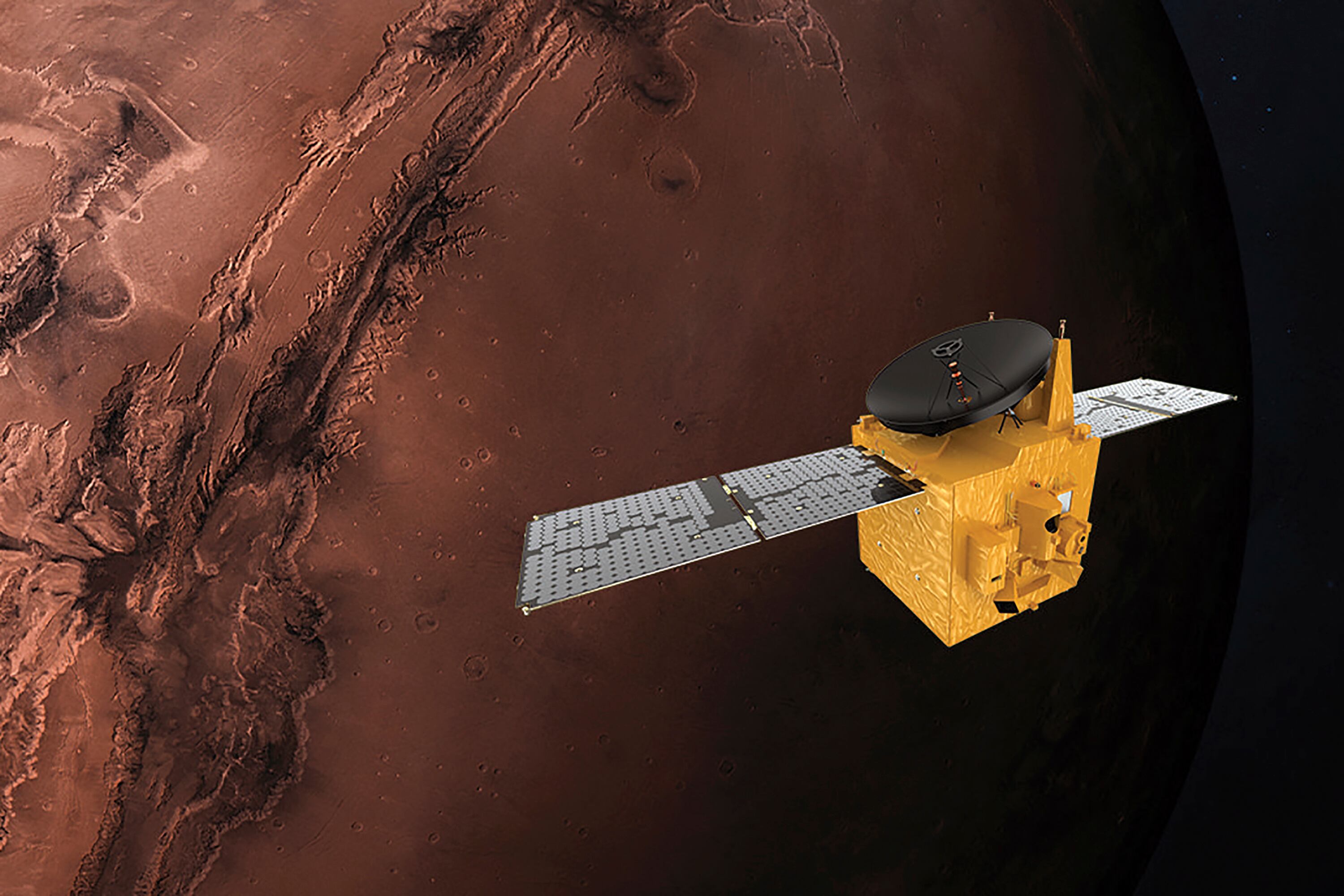
This June 1, 2020, rendering provided by Mohammed Bin Rashid Space Centre shows the Hope probe. The U.S., China and the United Arab Emirates are sending spacecraft to Mars in quick succession beginning this week. (MBRSC via AP)
By Mari Yamaguchi
The liftoff of the United Arab Emirates' Mars orbiter was postponed until Friday due to bad weather at the Japanese launch site.
The orbiter named Amal, or Hope, is the Arab world's first interplanetary mission. The launch was scheduled for Wednesday from the Tanegashima Space Center in southern Japan, but the UAE mission team announced the rescheduled date on Twitter.
Mitsubishi Heavy Industries' H-IIA rocket will carry UAE's craft into space. Mitsubishi launch official Keiji Suzuki had said on Monday a postponement was possible as intermittent lightning and rain were forecast over the next few days.
Heavy rain has fallen for more than a week in large areas of Japan, triggering mudslides and floods and killing more than 70 people, most of them on the southern main island of Kyushu.
Hope is set to reach Mars in February 2021, the year the UAE celebrates 50 years since its formation. A successful Hope mission would be a major step for the oil-dependent economy seeking a future in space.
Hope carries three instruments to study the upper atmosphere and monitor climate change and is scheduled to circle the red planet for at least two years.
Emirates Mars Mission Project Director Omran Sharaf, who joined Monday’s briefing from Dubai, said the mission will provide a complete view of the Martian atmosphere during different seasons for the first time.
Two other Mars missions are planned in the coming days by the U.S. and China. Japan has its own Martian moon mission planned in 2024.
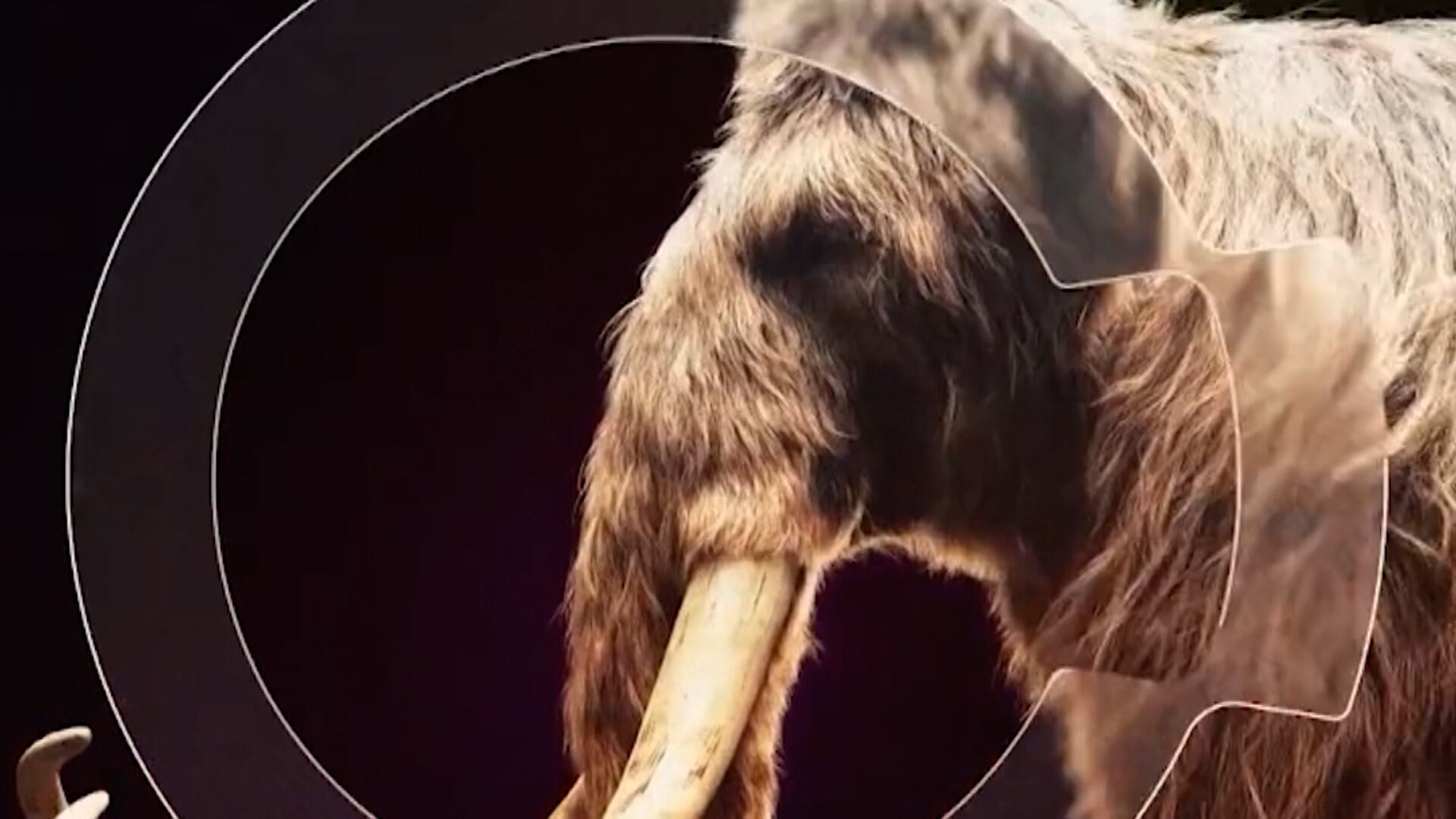
Bioscience and genetic engineering company, Colossal, raised $60 million in a Series A funding round. Colossal is focused on developing new technologies and genetic tools to restore extinct species, and protect critically endangered species. One of the startup's long-term goals is to resurrect the woolly mammoth, and return it back to the arctic. Colossal also says it is developing technology that expands beyond animals, and has the potential to advance human health. Ben Lamm, co-founder and CEO of Colossal, joins Cheddar News' Closing Bell to discuss.
Residents were cleaning their homes Thursday after a 7.4-magnitude earthquake struck off the coast of Fukushima in northern Japan, smashing furniture, knocking out power and killing four people.
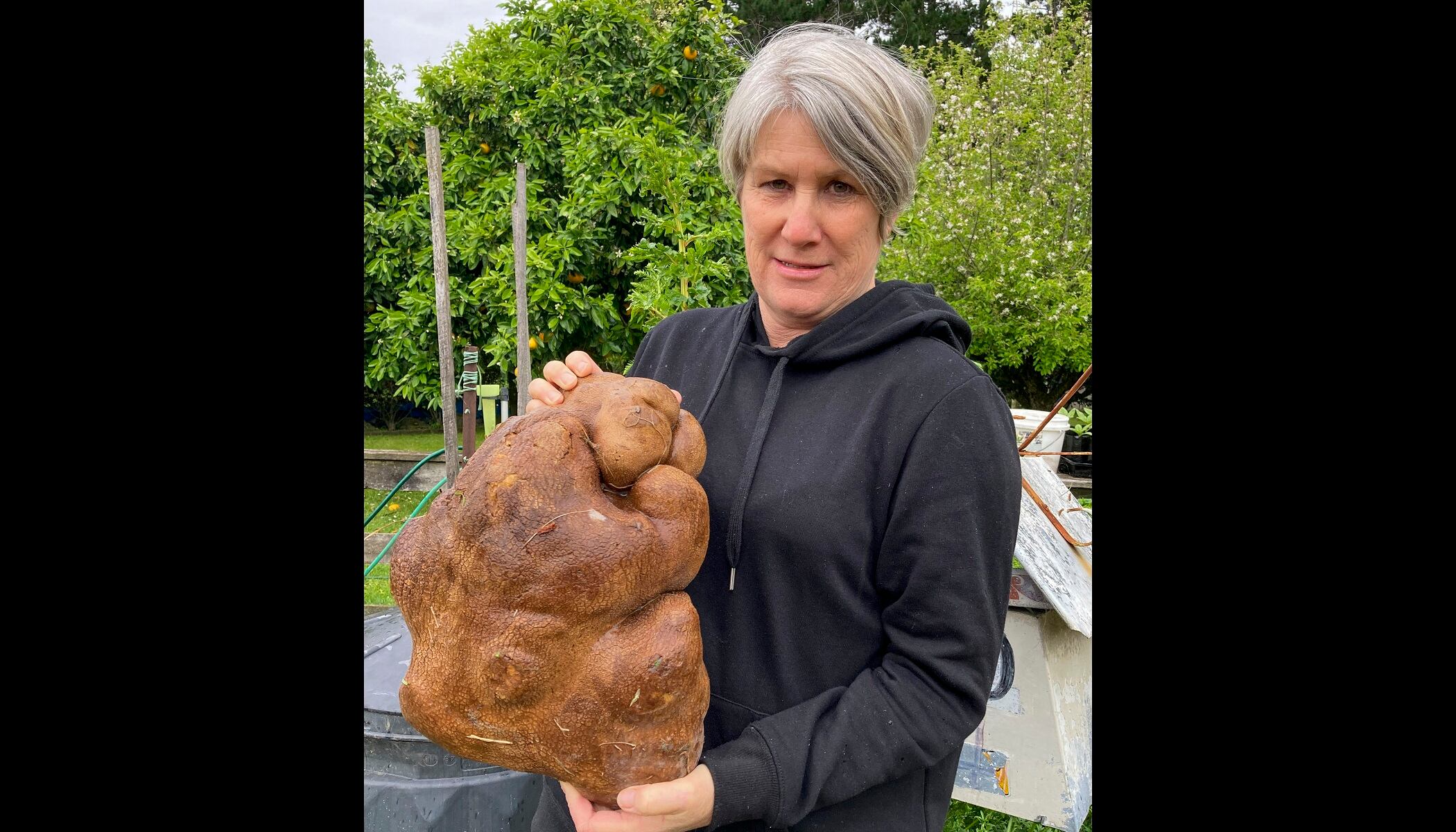
A New Zealand couple who believed they had dug up the world’s largest potato had their dreams turned to mash after Guinness World Records wrote to say that scientific testing had found it wasn’t, in fact, a potato after all.
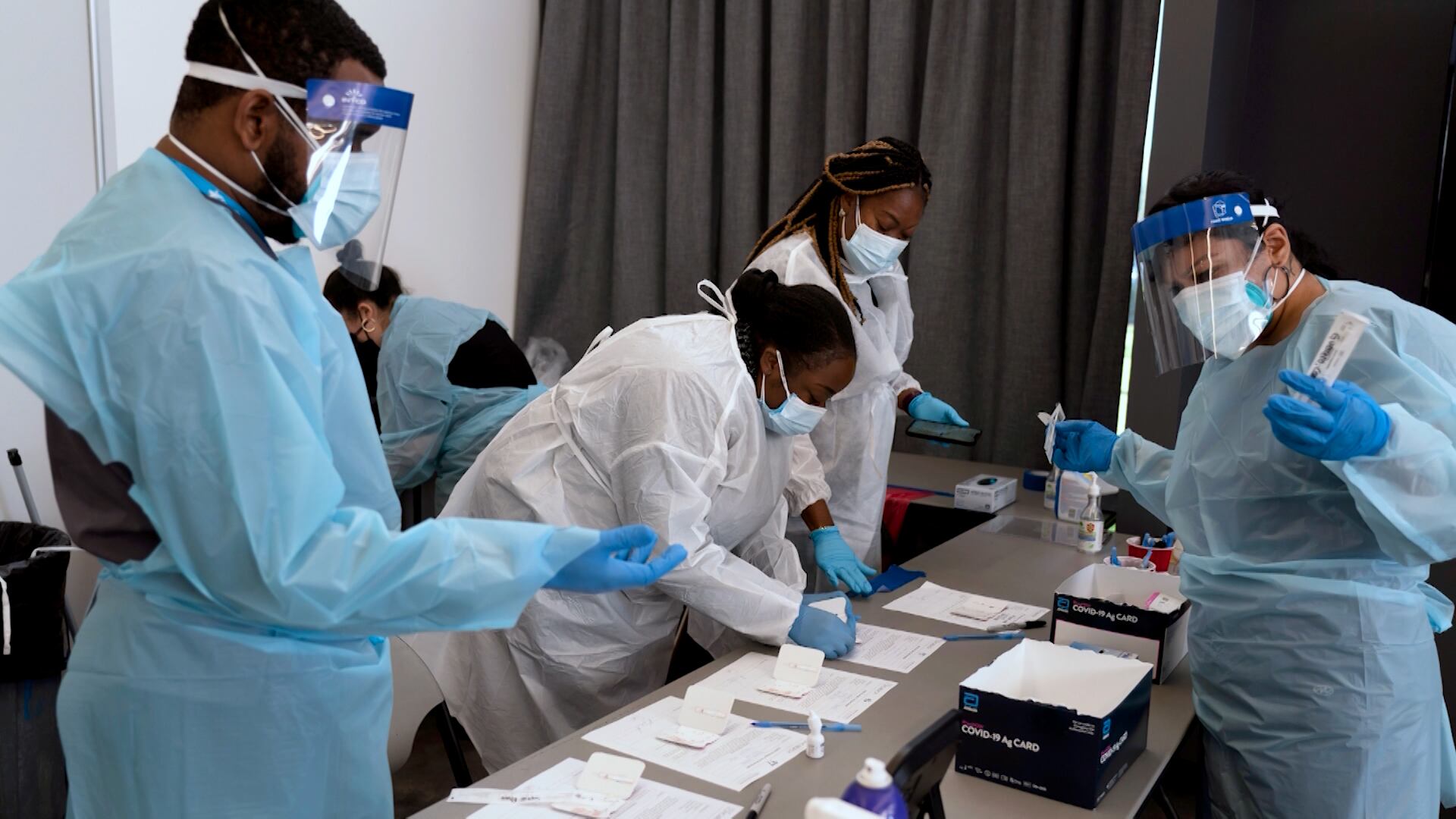
Two years into the pandemic, many of us have regained a sense of normalcy. However, those in the healthcare industry are still confronting the virus every day, dealing with the physical, mental and psychological stress of the ongoing pandemic. Ben Mirtes, CFO of Ingenovis Health and Lydia Mobley, a travel nurse with Faststaff, who has spent the last two years going from hotspot to hotspot, joined Cheddar’s Opening Bell to reflect on their experiences in healthcare, and discuss why they are optimistic about a path forward.
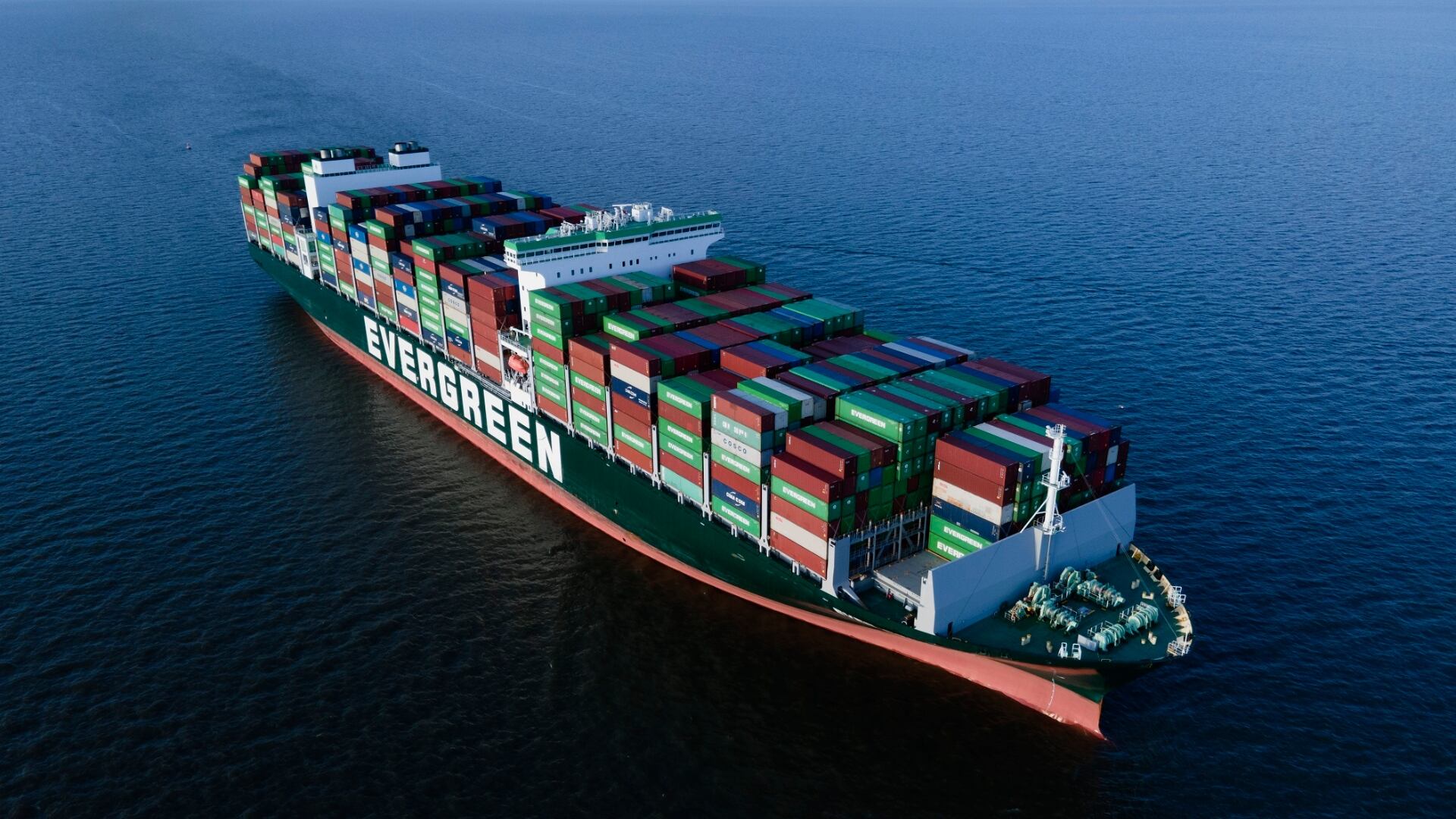
Catching you up on what you Need to Know on March 16, 2022, with updates on Ukraine and Russia, a container ship gets stuck in the Chesapeake Bay, Disney employees stage a walkout over the "Don't Say Gay" law in Florida, and NASA completes its first spacewalk of 2022.
Food technology startup Tender Food raised $12 million in a seed round led by Chris Sacca's Lowercarbon Capital. Tender says it specializes in creating alternative meats with an authentic texture and is on a mission to make alternative meats so delicious, nutritious, and affordable, that eating meat from animals will no longer make sense. Christophe Chantre, co-founder & CEO of Tender Food, joins Cheddar News' Closing Bell to discuss.
Ryan Shearman, chief alchemist and co-founder at Aether, and Henry Elkus, founder of Helena, join Cheddar News to talk about the completion of an $18 million Series A funding round led by Helena.
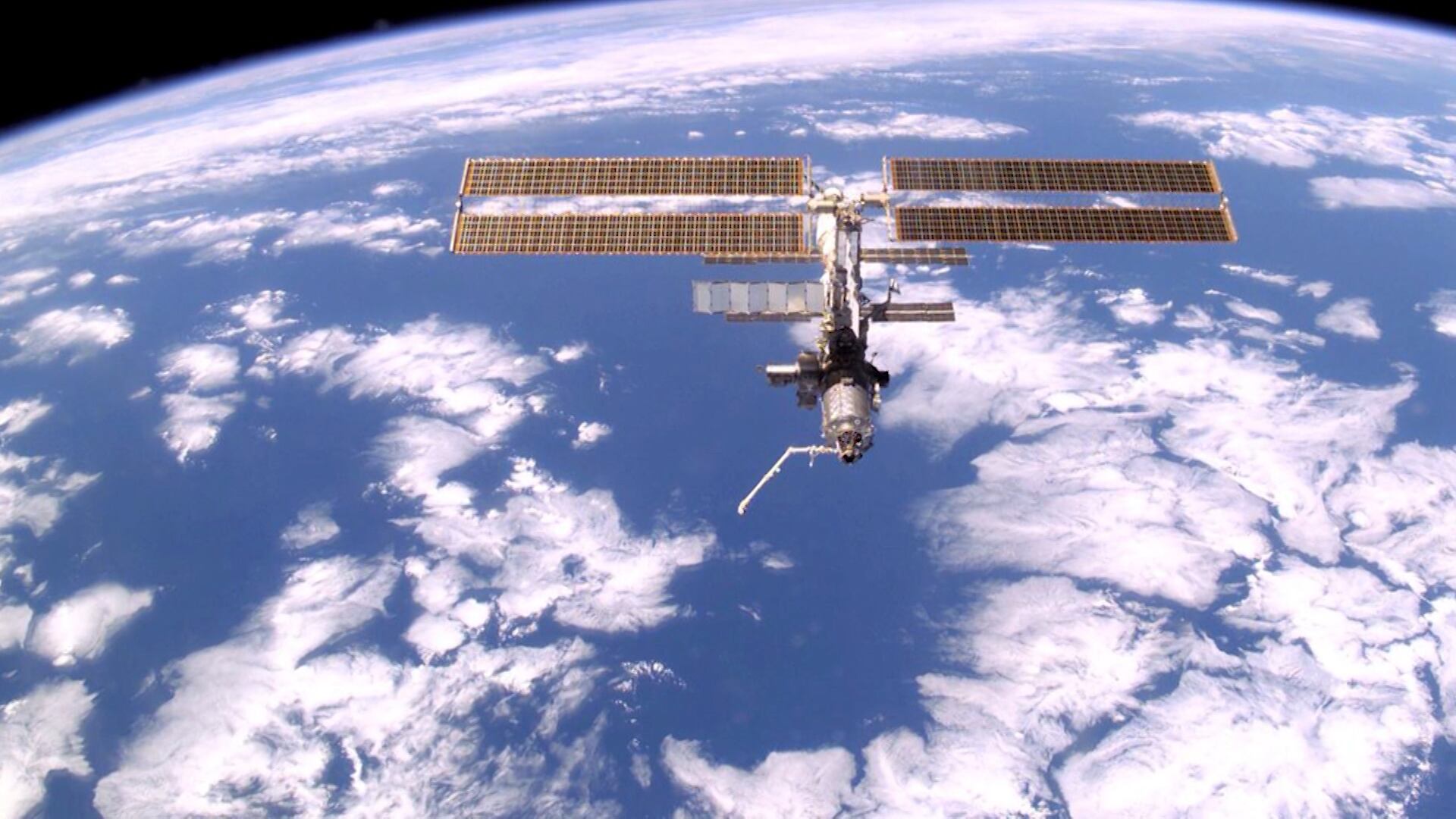
As the Russia-Ukraine conflict continues to grow, so do concerns over the impact it could have on the international space community, and more specifically, the International Space Station. Those concerns come after Dmitry Rogozin, the director of Russia's state space agency, posted several tweets over the last few weeks in which he threatened to 'destroy Russia's cooperation on the ISS.' Olympia LePoint, rocket scientist and author of 'Answers Unleashed II: The Science of Attracting What You Want,' joined Cheddar News' Closing Bell to discuss.