Astronomers have discovered the farthest star yet, a super-hot, super-bright giant that formed nearly 13 billion years ago at the dawn of the cosmos.
By Marcia Dunn
Astronomers have discovered the farthest star yet, a super-hot, super-bright giant that formed nearly 13 billion years ago at the dawn of the cosmos.
But this luminous blue star is long gone, so massive that it almost certainly exploded into bits just a few million years after emerging. Its swift demise makes it all the more incredible that an international team spotted it with observations by the Hubble Space Telescope. It takes eons for light emitted from distant stars to reach us.
“We’re seeing the star as it was about 12.8 billion years ago, which puts it about 900 million years after the Big Bang,” said astronomer Brian Welch, a doctoral student at Johns Hopkins University and lead author of the study appearing in Wednesday’s journal Nature.
“We definitely just got lucky.”
He nicknamed it Earendel, an Old English name which means morning star or rising light — “a fitting name for a star that we have observed in a time often referred to as `Cosmic Dawn.′ ”
The previous record-holder, Icarus, also a blue supergiant star spotted by Hubble, formed 9.4 billion years ago. That’s more than 4 billion years after the Big Bang.
In both instances, astronomers used a technique known as gravitational lensing to magnify the minuscule starlight. Gravity from clusters of galaxies closer to us — in the foreground — serve as a lens to magnify smaller objects in the background. If not for that, Icarus and Earendel would not have been discernible given their vast distances.
While Hubble has spied galaxies as far away as 300 million to 400 million years of the universe-forming Big Bang, their individual stars are impossible to pick out.
“Usually they’re all smooshed together ... But here, nature has given us this one star — highly, highly magnified, magnified by factors of thousands — so that we can study it,” said NASA astrophysicist Jane Rigby, who took part in the study. “It’s such a gift really from the universe.”
Vinicius Placco of the National Science Foundation’s NOIRlab in Tucson, Arizona, described the findings as “amazing work.” He was not involved in the study.
Placco said based on the Hubble data, Earendel may well have been among the first generation of stars born after the Big Bang. Future observations by the newly launched James Webb Space Telescope should provide more details, he said, and “provide us with another piece of this cosmic puzzle that is the evolution of our universe.”
Current data indicate Earendel was more than 50 times the size of our sun and an estimated 1 million times brighter, outsizing Icarus. Earendel’s small, yet-to-mature home galaxy looked nothing like the pretty spiral galaxies photographed elsewhere by Hubble, according to Welch, but rather “kind of an awkward-looking, clumpy object.” Unlike Earendel, he said, this galaxy probably has survived, although in a different form after merging with other galaxies.
“It's like a little snapshot in amber of the past,” Rigby said.
Earendel may have been the prominent star in a two-star, or binary, system, or even a triple- or quadruple-star system, Welch said. There’s a slight chance it could be a black hole, although the observations gathered in 2016 and 2019 suggest otherwise, he noted.
Regardless of its company, the star lasted barely a few million years before exploding as a supernova that went unobserved as most do, Welch said. The most distant supernova seen by astronomers to date goes back 12 billion years.
The Webb telescope — 100 times more powerful than Hubble — should help clarify how massive and hot the star really is, and reveal more about its parent galaxy.
By studying stars, Rigby said: “We are literally understanding where we came from because we’re made up of some of that stardust.”
___
The Associated Press Health and Science Department receives support from the Howard Hughes Medical Institute’s Department of Science Education. The AP is solely responsible for all content.
After the latest school shooting in Uvalde, Texas, it wouldn't be a surprise if the traumatic event takes a toll on your mental health — or that of your children. Amy Morin, the editor-in-chief of Verywell Mind and licensed psychotherapist, joined Cheddar News to share coping skills and offer advice about how to talk to your children about these increasingly common tragic events. “I think its important for parents to know what the school’s plan is, what the teacher's plan is, and then we can have our own plans with kids too," she noted. "It's so important for us to talk to kids about how they're feeling — guaranteed they've heard something about it, so ask them what they know already, use age-appropriate language, and rather than just dismissing their fears by saying don't worry about it or I'm sure you'll be safe, talk to them about their feelings."
An recently conducted AP-NORC poll found that majorities of the Black and Hispanic populations in the U.S. still find themselves either somewhat worried or extremely worried over the pandemic, while more than half of white Americans responded with either being not too worried or not worried at all. Dr. Chris Pernell, the chief strategic integration and health equity officer at University Hospital, joined Cheddar News to talk about how perceptions of COVID-19 differ between groups of Americans. "We’re still seeing people get infected, and because of the toll of the disproportionate impact, we have concerns among the Black and brown community about whether or not they have an increased risk of exposure because of where they work, because of the use of public transportation, because they live in homes that they may not be able to safely quarantine and or isolate in, and because they have at baseline chronic health conditions that may make coronavirus more severe in those persons," she said.
Judith Enck, a former regional administrator for the EPA and the president of Beyond Plastics, joined Cheddar News to talk about the role of plastics in the climate crisis and California's investigation of ExxonMobil and other oil companies for misleading the public on the ability to recycle plastics. "The reason why petrochemical companies like Exxon have gotten away with selling more and more plastic is that they've lied to the public and told us don't worry about all those negative upstream impacts and downstream impacts of plastics. Just be sure to recycle it. Well, guess what? Plastics largely are not recycled," Enck said.
Catching you up on what you need to know on April 29, 2022, with President Biden asking Congress for a $33 billion aid package for Ukraine, a shrinking GDP potentially leading to a recession, Beijing banning weddings and funerals while closings schools amid COVID, and more.
Virtual care and digital medicine provider Biofourmis recently raised $300 million in a Series D round led by General Atlantic and with participation from CVS Health. Biofourmis offers at-home care and digital therapies backed by artificial intelligence, which can remotely monitor patients while they are at home. The company says it hopes its technology can improve patient outcomes while reducing the cost and burden of care. Kuldeep Signh Rajput, Founder and CEO of Biofourmis, joins Cheddar News' Closing Bell to discuss.
Moderna is asking the FDA to consider emergency use authorization for its COVID vaccine to be used with children under 6 years old. Dr. Christina Johns, a senior medical advisor at PM Pediatrics, joined Cheddar News to talk about the pharmaceutical company's research into the safety and efficacy of the vaccine for the very youngest of children. "This is very exciting news because children met that goal in their neutralizing antibody response in this age group — means that we really can extrapolate a lot from what we know about data in adults," she said. "I will say that there's a caveat that we have not seen yet the full dataset released, so I'm waiting for that and my fingers are crossed for next week."
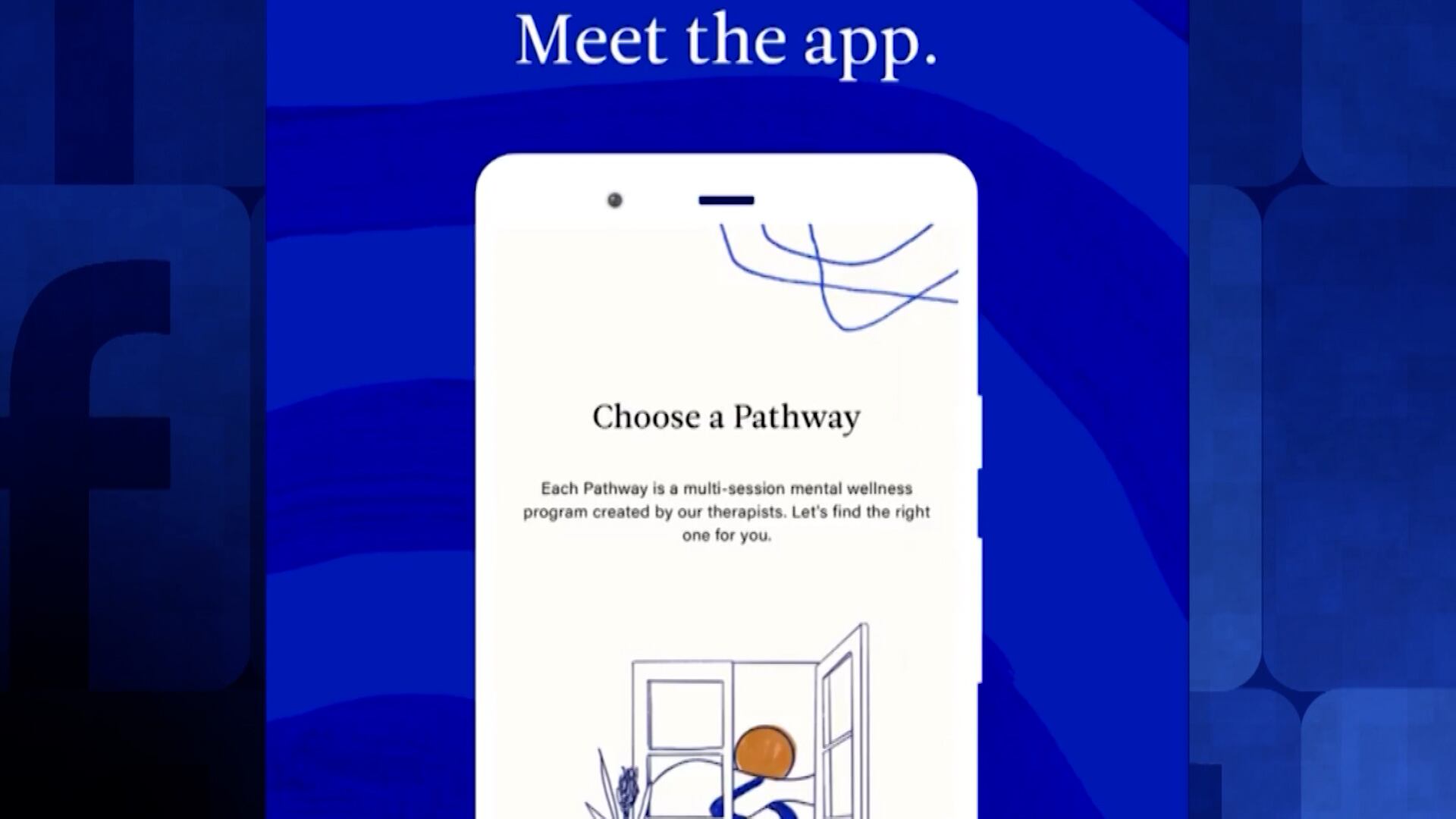
Mental health platform Real recently raised $37 million in a Series B round led by Owl Ventures. Through its mobile app, Real says it provides mental health care at a lower cost than traditional therapy and aims to make mental wellness a part of everyone's daily routine. The company also announced that U.S. soccer star Megan Rapinoe will serve as an adviser to the company. Ariela Safira, Founder & CEO of Real, joins Cheddar News' Closing Bell to discuss.
Catching you up on what you need to know on April 28, 2022, with Elon Musk mocking Twitter's top legal exec Vijaya Gadde on the platform itself, a probe in George Floyd's death finding discrimination within the Minneapolis police force, the latest California drought leading to new water restrictions, and more.