The Trump administration last week rescinded a Obama-era rule that asked HUD recipients to measure and consider fixes to racial segregation in their communities.
President Donald Trump then followed up the decision with a tweet that critics say was an explicit appeal to white, suburban voters.
"His tweet was aimed at a strategy of appealing to racial resentment and really people's worst ideas about how our communities should be structured," David Sanchez, director of research and development for the National Community Stabilization Trust, told Cheddar. "Attitudes like that are a big reason why we have such severe segregation by race, class, and opportunity in this country, and unfortunately the president is trying to use those fears to benefit himself politically."
The loss of the rule itself has gotten less attention, in part due to its low profile as more of a regulatory tweak than an aggressive federal policy.
The Affirmatively Furthering Fair Housing Rule that Trump's HUD eliminated asked municipalities and housing authorities to account for racial bias in their communities by writing a report and issuing recommendations, but it did not force municipalities to address segregation directly.
"It was about gathering data," Sanchez said. "It was about getting people talking about segregation. But it wasn't about forcing communities to do anything."
In the long-term, though, he added that cutting the rule will only contribute to the ongoing economic divide between the suburbs and cities.
"It's going to continue to concentrate economic resources, social privilege in certain people who can afford to live in high-opportunity communities," Sanchez said. "In the same way the COVID crisis has supercharged inequality in this country, this is just another step in that direction."
As explosions and gunfire thundered outside, Sudanese huddled in their homes for a third day Monday in the capital Khartoum and other cities, while the army and a powerful rival force battled in the streets for control of the country.
Norwegian battery startup Freyr is planning its next factory in an Atlanta suburb because a new U.S. clean energy law offers generous tax credits for local production.
Next month, the IRS will release the first in a series of reports looking into how a publicly run system might be created.
Without citing a reason, the Delaware judge overseeing a voting machine company’s $1.6 billion defamation lawsuit against Fox News announced late Sunday that he was delaying the start of the trial until Tuesday.
“This has been an unspeakable week of tragedy for our city,” said mayor Craig Greenberg.
The Supreme Court said Friday it was temporarily keeping in place federal rules for use of an abortion drug, while it takes time to more fully consider the issues raised in a court challenge.
President Joe Biden announced Thursday that hundreds of thousands of immigrants brought to the U.S. illegally as children will be able to apply for Medicaid and the Affordable Care Act's health insurance exchanges.
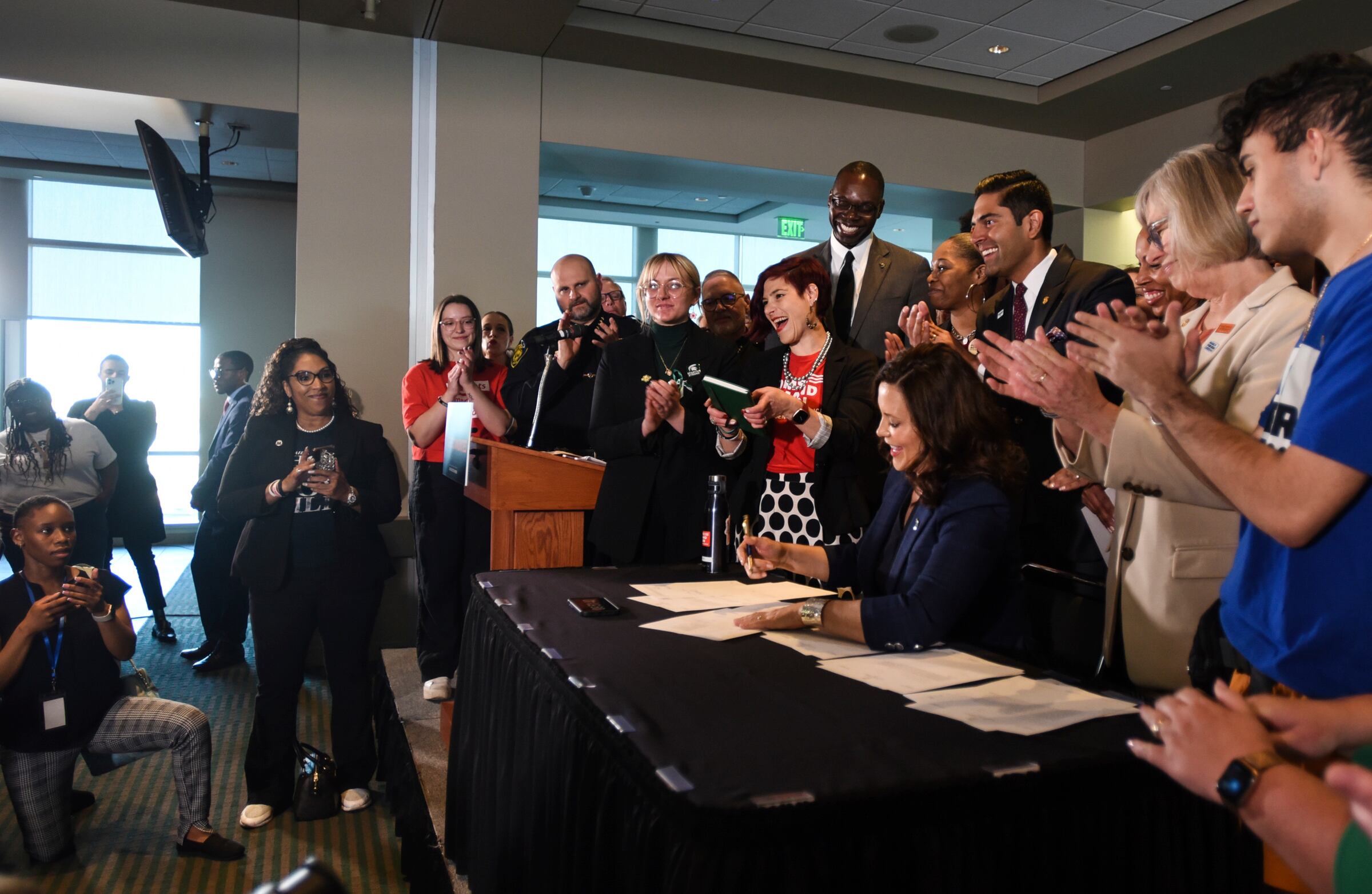
Anyone who wants to buy a gun in Michigan will have to undergo a background check, and gun owners will be required to safely store all firearms and ammunition when around minors under new laws signed Thursday by Gov. Gretchen Whitmer.
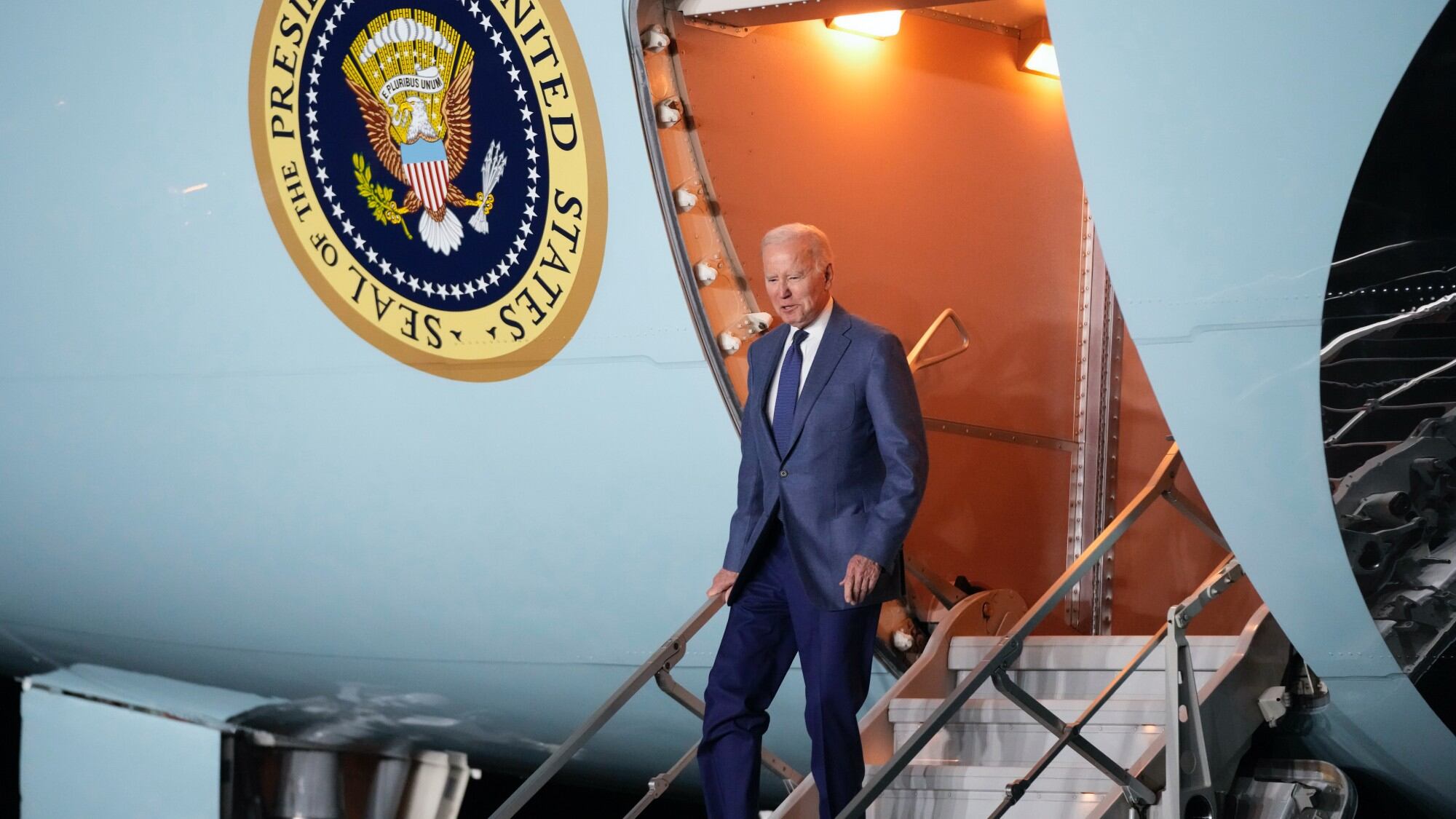
In Ireland this week, well-wishers have lined the streets to catch a mere glimpse of President Joe Biden. Photos of his smiling face are plastered on shop windows, and one admirer held a sign reading, “2024 — Make Joe President Again.”
A Massachusetts Air National Guardsman has appeared in court, accused in the leak of highly classified military documents.