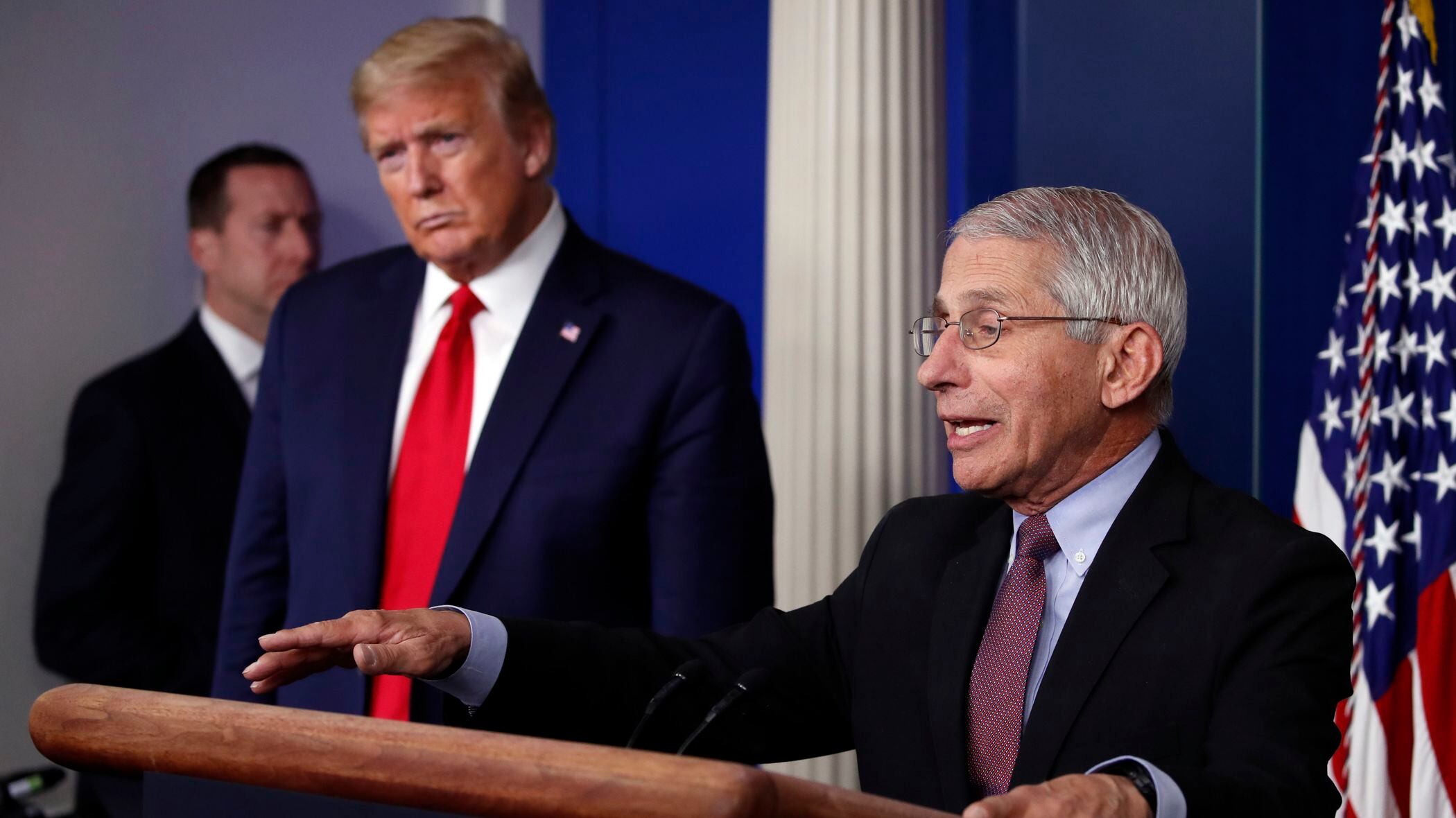
In this April 22, 2020, file photo, President Donald Trump listens as Dr. Anthony Fauci, director of the National Institute of Allergy and Infectious Diseases, speaks about the coronavirus in the James Brady Press Briefing Room of the White House in Washington. (AP Photo/Alex Brandon, File)
President Donald Trump is suggesting that he will fire Dr. Anthony Fauci after Tuesday’s election, as his rift with the nation’s top infectious disease expert widens while the nation sees its most alarming outbreak of the coronavirus since the spring.
Speaking at a campaign rally in Opa-locka, Florida, Trump expressed frustration that the surging cases of the virus that has killed more than 231,000 people in the United States this year remains prominent in the news, sparking chants of “Fire Fauci” from his supporters.
“Don’t tell anybody but let me wait until a little bit after the election,” Trump replied to thousands of supporters early Monday, adding he appreciated their “advice.”
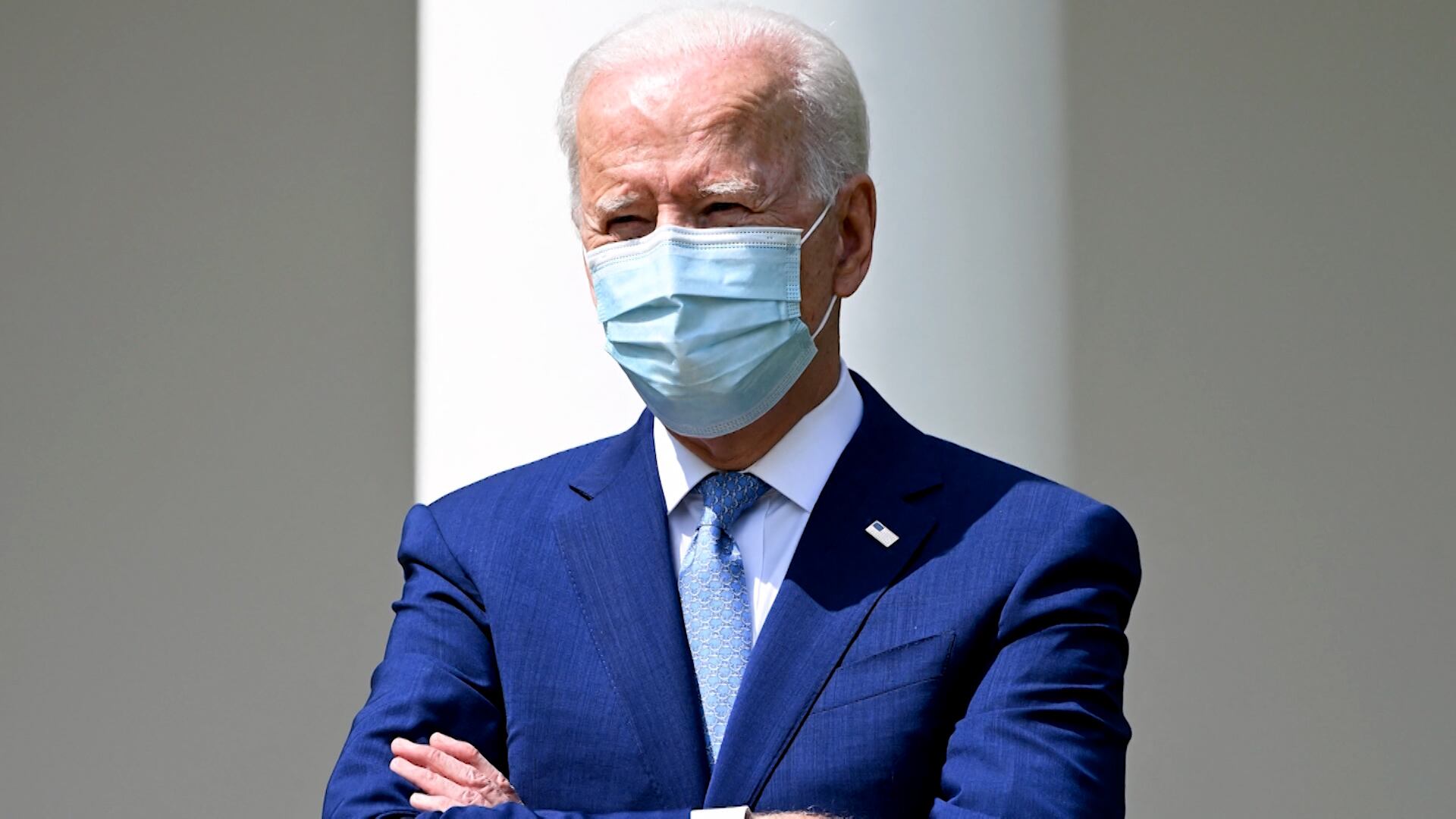
As he prepared to fly to a campaign stop in Ohio hours later, Democratic presidential nominee Joe Biden tweeted, “We need a president who actually listens to experts like Dr. Fauci.”
Biden has sought to keep the presidential campaign focused on what he says was a disastrous federal response to the pandemic. Trump is countering by using the race’s final hours to accuse his opponent of wanting to force the country back into a lockdown to slow the spread of the virus.
Still, Trump's comments on Fauci less than 48 hours before polls close likely ensure the pandemic will remain front and center heading into Election Day.
It’s the most direct Trump has been in suggesting he was serious about trying to remove Fauci from his position. He has previously expressed that he was concerned about the political blowback of removing the popular and respected doctor before the election.
The latest flare-up follows Fauci making his sharpest criticism yet of the White House’s response to the coronavirus and Trump’s public assertion that the nation is “rounding the turn."
Fauci has grown outspoken that Trump has ignored his advice for containing the virus, saying he hasn’t spoken with Trump in more than a month. He has raised alarm that the nation was heading for a challenging winter if more isn’t done soon to slow the spread of the disease.
In an interview with The Washington Post this weekend, Fauci cautioned that the U.S. will have to deal with “a whole lot of hurt” in the weeks ahead due to surging coronavirus cases.
Fauci said the U.S. “could not possibly be positioned more poorly” to stem rising cases as more people gather indoors during the colder fall and winter months. He says the U.S. will need to make an “abrupt change” in public health precautions.
Fauci added that he believed Democratic presidential candidate Joe Biden “is taking it seriously from a public health perspective,” while Trump is “looking at it from a different perspective.” Fauci, who’s on the White House coronavirus task force, said that perspective emphasizes “the economy and reopening the country.”
In response, White House spokesman Judd Deere said Trump always puts people’s well-being first and Deere charges that Fauci has decided “to play politics” right before Tuesday’s election. Deere said Fauci “has a duty to express concerns or push for a change in strategy” but instead is “choosing to criticize the president in the media and make his political leanings known.”
Trump had already stepped up his attacks on Biden in recent days for pledging to heed the advice of scientists in responding to the pandemic. As Trump charges that Biden's measures to slow the pandemic could keep Americans home and hurt the economy, the former vice president has countered that the only way out of the health crisis is to heed the warnings of Fauci and other medical professionals. Biden has also been careful not to endorse another national lockdown.
Trump has recently relied on the advice of Stanford doctor Scott Atlas, who has no prior background in infectious diseases or public health, as his lead science adviser on the pandemic. Atlas has been a public skeptic about mask wearing and other measures widely accepted by the scientific community to slow the spread of the virus.
Other members of the White House coronavirus task force have grown increasingly vocal about what they see as a dangerous fall spike in the virus.
Trump's aggressive approach to Fauci carries some risks with the election looming.
A Kaiser Family Foundation poll in September showed 68% of Americans have a great deal or a fair amount of trust in Fauci to provide reliable information on the coronavirus. That compares with 52% of Americans who trusted Biden to do that and just 40% for Trump.
Terrell Jermaine Starr, senior fellow with the Atlantic Council and host of the Black Diplomats podcast joins Cheddar News to discuss Russia's attempt to invade Ukraine.
With an increasing number of teachers and staff calling out sick by the day, the state of Oklahoma is turning to an unusual solution. Republican Governor Kevin Stitt has issued an executive order that permits state employees to work as substitute teachers. Shaily Baranwal, founder and CEO of Elevate K-12, joins Cheddar News to discuss.
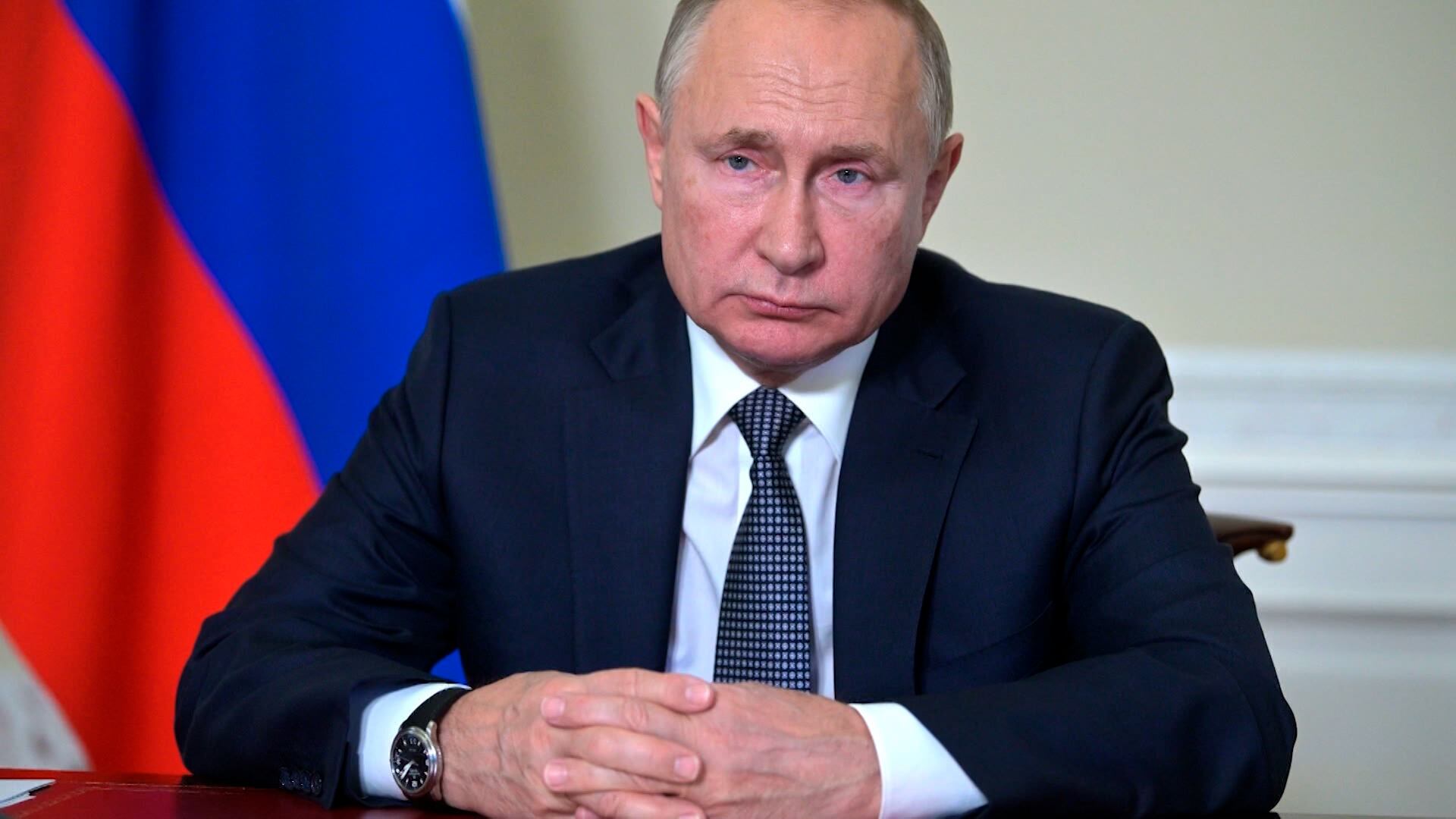
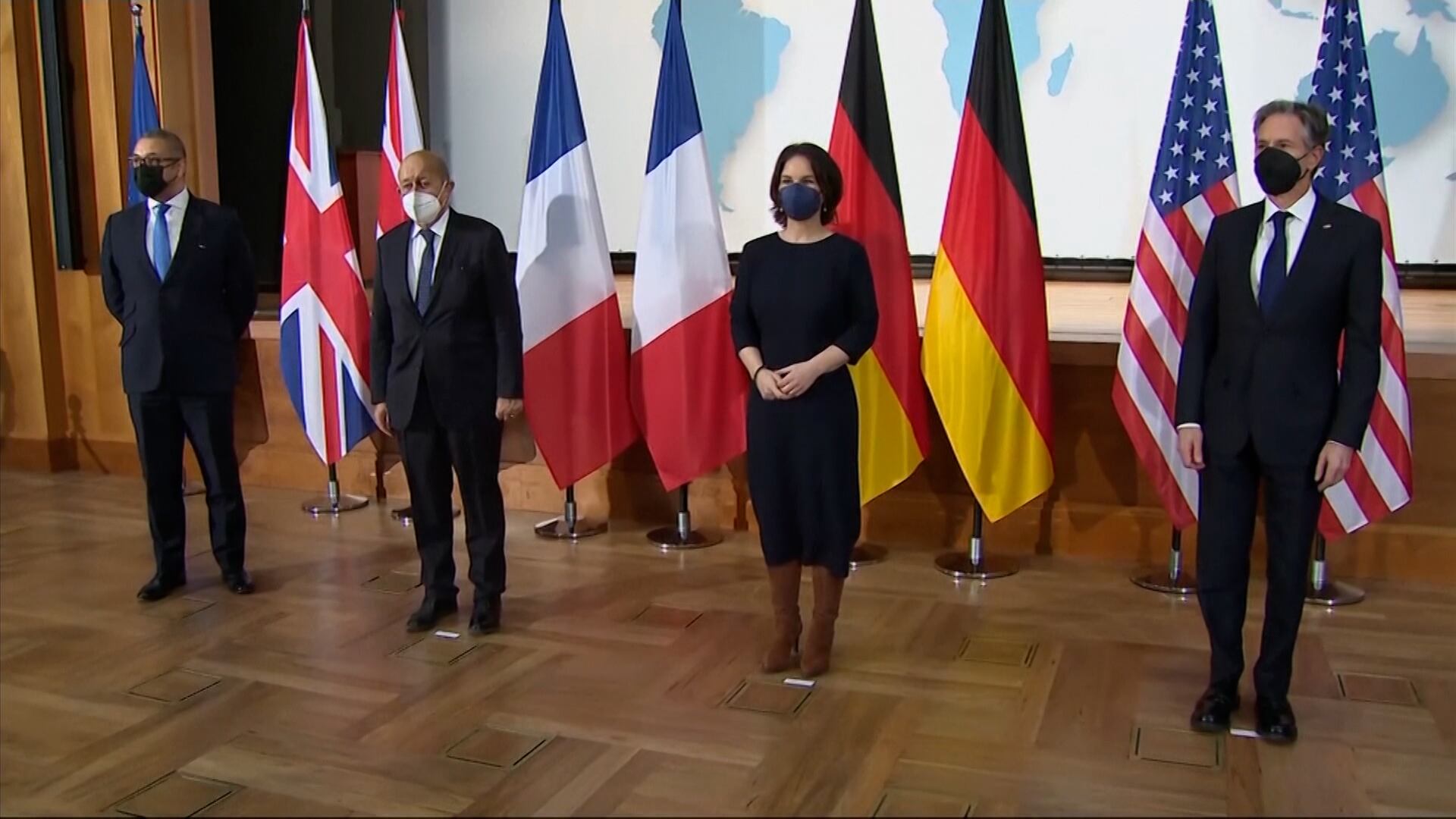
On Thursday, Secretary of State Antony Blinken addressed the stance of the U.S. and its allies should Russia make any forays into Ukraine, a seeming response to President Biden's remarks that should Putin engage in something short of a full invasion, there might be some indecision among allied nations regarding what to do. Ariel Cohen, a senior fellow at the think tank Atlantic Council, joined Cheddar to discuss the difficulty faced by Blinken wrangling unity as tensions run high in the region. "There'll be a smaller incursion, and the president implied, there'll be a weaker response because our European allies have created this horrible situation where they are dependent on Moscow for their gas supply," Cohen explained.
During a nearly two-hour press conference on Wednesday, President Biden spoke on his accomplishments and challenges from the first year of his presidency, and what his administration hopes to accomplish in the coming year. However, his approval ratings are underwater as COVID remains a big concern for voters — as does inflation, noted Tom Bevan, co-founder and president of polling aggregator RealClearPolitics. "The public thinks [inflation] is priority number one, and the administration is concerned about it, they talk about it, but they're not spending enough time on it as far as the public is concerned," said Bevan.
The drama surrounding tennis star Novak Djokovic continues after he was deported from Australia over the weekend due to the nation's COVID-19 vaccine requirements. Djokovic was forced to leave the country on the eve of what was to be his first match in defense of his Australian Open title after three judges ruled in favor of his removal and revealed their reasoning for doing so. Adding to his woes, a law recently passed in France is putting his chances of defending his French Open title in jeopardy. The director of Marist's Center for Sports Communication, Jane McManus, joined Cheddar to discuss the ongoing fallout.
As the midterm elections get ever closer, candidates have been getting creative with their campaigns to stick out and to connect with voters. Gary Chambers, a Democratic candidate for the U.S. Senate from Louisiana, has definitely attracted attention with an advertisement featuring him smoking a blunt, making a point about the inequity of anti-cannabis laws. "We wanted to bring the seriousness of the moment," he said of the ad. "But we also wanted to make sure that people understand that there are 19 states that are legal right now but Black people and brown people are being over-incarcerated in mostly Southern and Midwestern states in America for cannabis possession."
If some members of Congress have their way, there might finally be a 'TLDR' on sites' terms of service, introduced by the terms-of-service labeling, design, and readability act – or TLDR for short. With this act, users will actually understand what they're agreeing to or the many ways in which their data is being used before pressing 'accept.' J.D. sat down with co-sponsor of the bill and Senator Bill Cassidy, to discuss.
President Joe Biden's first year in office is wrapping up. What has he achieved, and what else remains on the table while the Democrats have control of Washington? Amid an ongoing pandemic and rising inflation, Biden's approval rating is at an all-time low and his party is plagued by infighting. Will he be able to continue pushing key parts of his agenda? Paul Glastris, former Bill Clinton speechwriter & Editor-in-chief of 'Washington Monthly,' joins Cheddar News' Closing Bell to discuss the president's achievements in his first year, where he's fallen short, and what he must do in order to get more of his agenda signed into law.
Tech giants Meta, Amazon, Alphabet, and Apple are faced with a bipartisan antitrust legislation effort underway in the Senate Judiciary Committee. The companies stand accused of promoting their own goods and services over smaller competitors on their platforms, holding too much monopolistic power via their app stores and services. Adam Kovacevich, founder and CEO of Chamber of Progress, a technology industry trade group, joined Cheddar to argue that the bills that are being debated currently could end up hurting consumers, rather than helping.