The U.S. infant mortality rate rose 3% last year — the largest increase in two decades, according to the Centers for Disease Control and Prevention.
White and Native American infants, infant boys and babies born at 37 weeks or earlier had significant death rate increases. The CDC's report, published Wednesday, also noted larger increases for two of the leading causes of infant deaths — maternal complications and bacterial meningitis.
“It’s definitely concerning, given that it’s going in the opposite direction from what it has been,” said Marie Thoma, a University of Maryland researcher who studies maternal and infant mortality.
Dr. Eric Eichenwald, a Philadelphia-based neonatologist, called the new data “disturbing,” but said experts at this point can only speculate as to why a statistic that generally has been falling for decades rose sharply in 2022.
RSV and flu infections rebounded last fall after two years of pandemic precautions, filling pediatric emergency rooms across the country. “That could potentially account for some of it,” said Eichenwald, who chairs an American Academy of Pediatrics committee that writes guidelines for the medical care of newborns.
Infant mortality is the measure of how many babies die before they reach their first birthday. Because the number of babies born in the U.S. varies from year to year, researchers instead calculate rates to better compare infant mortality over time. The U.S. infant mortality rate has been worse than other high-income countries, which experts have attributed to poverty, inadequate prenatal care and other possibilities. But even so, the U.S. rate generally gradually improved because of medical advances and public health efforts.
The national rate rose to 5.6 infant deaths per 1,000 live births in 2022, up from 5.44 per 1,000 the year before, the new report said.
The increase may seem small, but it’s the first statistically significant jump in the rate since the increase between 2001 and 2002, said Danielle Ely, the CDC report's lead author. She also said researchers could not establish whether the 2022 rise was a one-year statistical blip — or the beginning of a more lasting trend.
Overall in the U.S., the death rate fell 5% in 2022 — a general decrease that's been attributed to the waning impact of the COVID-19 pandemic, especially on people 65 and older. U.S. maternal deaths also fell last year.
More than 30 states saw at least slight rises in infant mortality rates in 2022, but four states had statistically significant increases — Georgia, Iowa, Missouri and Texas.
In numbers, U.S. infant deaths surpassed 20,500 in 2022 — 610 more than the year before nationwide. But Georgia had 116 more infant deaths than the year before, and Texas had 251 more.
“It would appear that some of the states could be having a larger impact on the (national) rate,” Ely said, adding that smaller increases elsewhere also have an effect — and that it’s hard to parse out exactly what places, policies or other factors are behind the national statistic.
The Associated Press Health and Science Department receives support from the Howard Hughes Medical Institute’s Science and Educational Media Group. The AP is solely responsible for all content.
Brightseed Co-Founder Sofia Elizondo breaks down what plant bioactives are, and how they're using the latest technology to study human's biological connections with plants.
On this episode of Cheddar Innovates: Brightseed Co-Founder breaks down what plant bioactives are, and how they're using the latest technology to study human's biological connections with plants; Esper Bionics CEO breaks down how they re creating a mind-controlled bionic hand that guest smarter the more you use it; Cheddar gets a look at Curiosity Stream's 'Capturing A Black Hole In Our Milky Way.'
Hilary Kearney, Founder of Girl Next Door Honey, joined Closing Bell to discuss her partnership with Comvita to save the important pollinators, as bee colonies are on the decline across the United States.
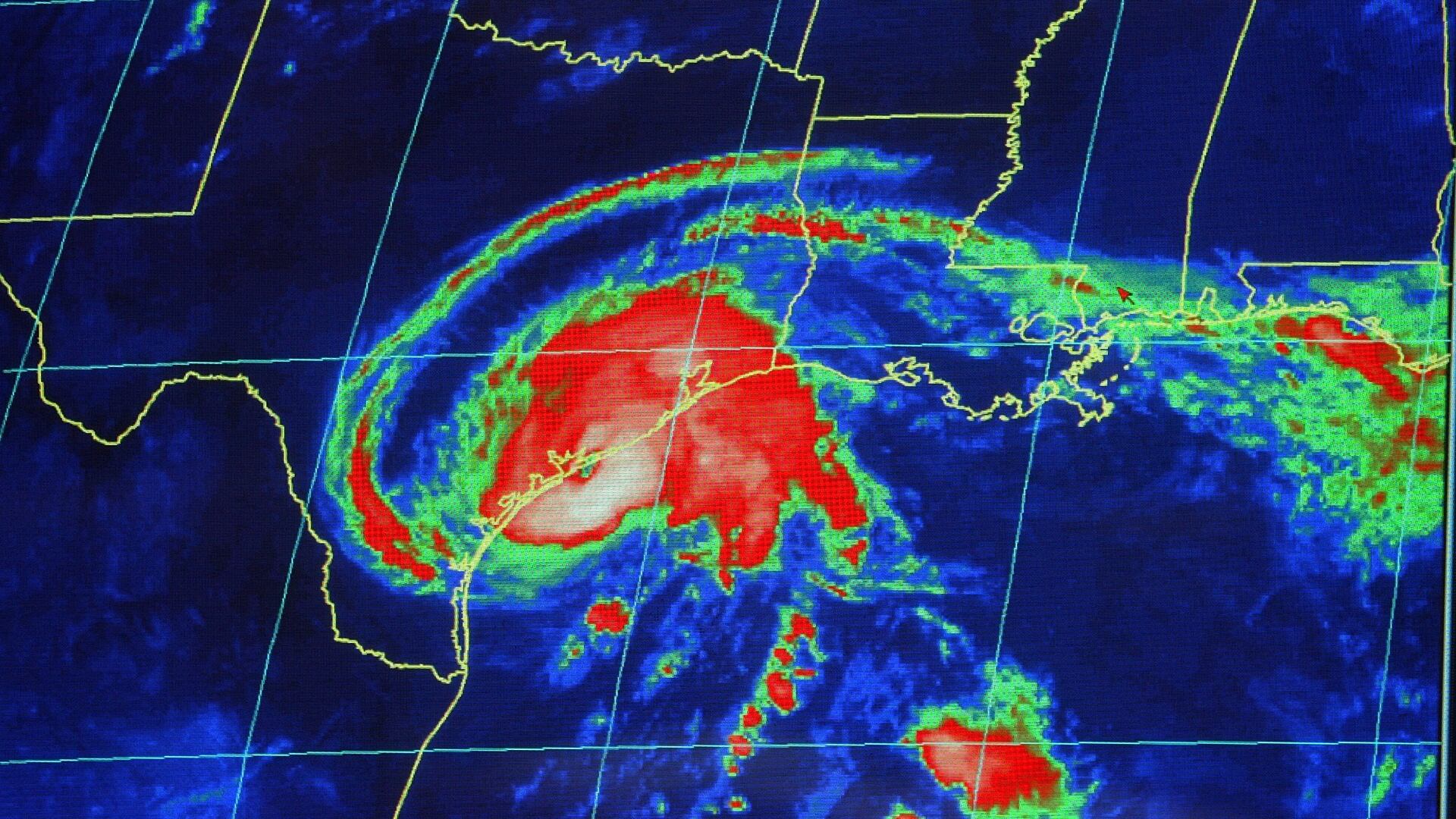
Hurricane climatologist Jill Trepanier joined Cheddar News to discuss NOAA's announced prediction for an above-normal hurricane season and what it might mean for people in the United States. "I think it's important that people who maybe haven't been used to having extreme weather events related to say tropical cycles and tropical systems, like thinking New Jersey, Northeastern seaboard, that area may get more action than they're used to in the past," she said.
Dr. Jarrad Aguirre, Co-Founder and CEO of Miga Health, joins Cheddar News' Closing Bell, where he says his company is looking to establish the future of heart health and points to how 80% of premature heart attacks and strokes are preventable.
On this episode of Cheddar Reveals, David Keith, Professor of Applied Physics at the Harvard School of Engineering and Applied Sciences and Professor of Public Policy at the Harvard Kennedy School, and founder of Carbon Engineering outlines the viability of solar geoengineering as a solution to help reverse the effects of global warming; Lena Geraghty, Sustainability & Urban Innovation Director at National League of Cities, discusses which U.S. cities are safest from global warming and how the real estate market will be impacted from the effects of climate change; Cheddar gets a look at Curiosity Stream's 'Changing Ocean Asia.'
David Keith, Professor of Applied Physics at the Harvard School of Engineering and Applied Sciences and Professor of Public Policy at the Harvard Kennedy School, and founder of Carbon Engineering joins Cheddar Reveals to outline the viability of solar geoengineering as a solution to help reverse the effects of global warming.
Lena Geraghty, Sustainability & Urban Innovation Director at National League of Cities, joins Cheddar News to discuss which U.S. cities are safest from global warming and how the real estate market will be impacted from the effects of climate change.
Peggy Whitson, Director of Human Space Flight, Axiom Space, joins Cheddar Innovates to discuss Axiom's involvement in the first fully-private mission to the ISS, and her experience spending 665 days in space.
On this episode of Cheddar Innovates, Peggy Whitson, Director of Human Space Flight, Axiom Space, breaks down Axiom's involvement in the first fully-private mission to the ISS, and her experience spending 665 days in space; William Li and Danielle Chang, co-founders of The Hao Life, discuss how they're shaking up the $71 billion supplement industry by putting a modern spin on traditional natural Chinese remedies; Cheddar gets a look at Curiosity Stream's 'Sagrada Familia: Gaudi's Challenge.'