By Tara Copp
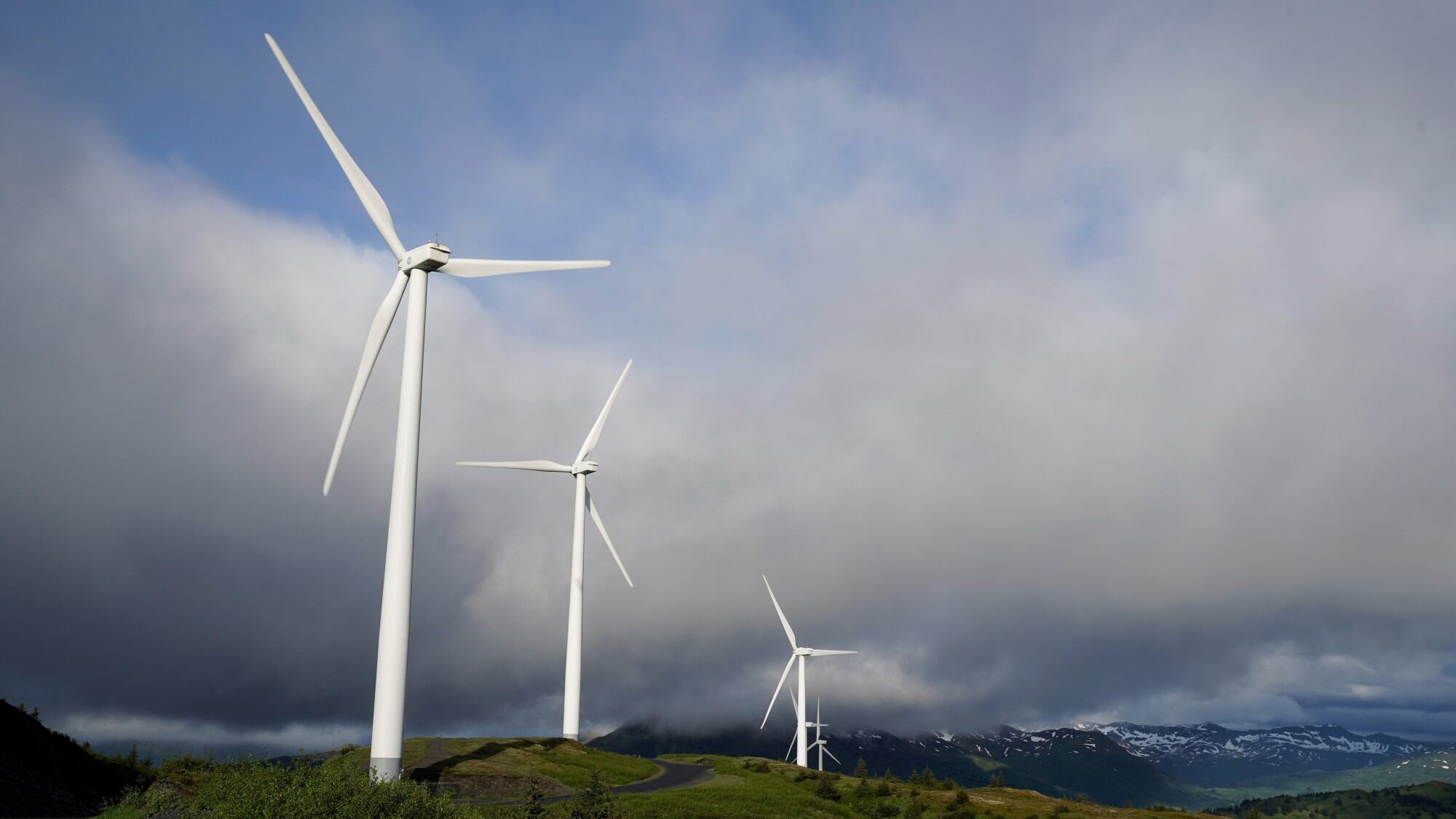
The Air Force's vast fields of underground nuclear missile silos are rarely disturbed by more than the occasional wandering cow or floating spy balloon. But the service is now asking Congress to help with another unexpected danger: towering wind turbines, which are growing in number and size and are edging closer to the sites each year.
The silos share space on vast private farmlands with the turbines. Whereas the nuclear launch sites are almost undetectable — just small, rectangular plots of land marked only by antennae, a chain-link fence and a flat 110,000-ton (100,000-metric tonne) concrete silo blast door — the turbines are hundreds of feet high, with long, sweeping blades that have parts so large and long they dwarf the 18-wheeler flatbed trucks that transport them to new sites.
As nearby populations have grown, so have energy needs, and so have the number and size of the turbines. It's a boon for farmers and landowners, who can lease space on their lands to support both the military needs and wind power companies.
But the growth is making it dangerous for military helicopter crews. When an alarm triggers at a site, the UH-1 Huey crews fly in low and fast, often with security teams on board.
“When you think about a wind turbine, and even fields of wind turbines, they’ll stretch for miles,” said Staff Sgt. Chase Rose, a UH-1 Huey flight engineer at Malmstrom Air Force Base in Montana. “They’re monstrous, and then you have gigantic blades spinning on them as well. Not only is that a physical obstacle, but those turbines, they create the hazards like turbulence as well. That can be really dangerous for us to fly into. So it’s a very complex situation, when you have to deal with those.”
So the Air Force is asking Congress to pass legislation to create a 2-nautical-mile buffer zone around each site. The legislation has the support of wind energy advocates, but they caution against a one-size-fits-all approach. There are hundreds of underground silos spread across the U.S., in Nebraska, Colorado, North Dakota, Montana and Wyoming.
“The wind industry recognizes the nuclear missile silo mission is unique," said Jason Ryan, a spokesman for the American Clean Power Association, which worked with the Air Force and lawmakers on drafting language for a buffer zone. "However, one-size-fits-all setbacks do not make sense for other (Department of Defense) missions or assets as site-specific and mission-specific evaluations are necessary to ensure military readiness.”
Jo Dee Black, a spokeswoman for NorthWestern Energy, which operates some of the towers near Malmstrom's launch sites, did not say whether the firm is in support of the buffer zone but said “we have always and continue to support the critical role Malmstrom Air Force Base has in our nation’s security."
“NorthWestern Energy and the U.S. Air Force have a long, successful history of collaboration that supports our missions of national security and providing safe, reliable energy service,” Black said.
Language to create a setback was included in the Senate version of the 2024 National Defense Authorization Act. The language is not in the House version of the bill and would need to be negotiated in conference.
Under the legislation, current towers would be unaffected, unless a company decided to refurbish an existing tower to make it taller.
That could still be a problem for the air crews. Some of the modern turbines have towers as tall as 650 feet, or nearly 200 meters, “which is twice the height of the Statue of Liberty,” Air Force Lt. Gen. John Lutton, who oversees all 450 missile silo sites, said earlier this year. Some rotor diameters, the width of the circle swept by the rotating blades, can be as much as 367 feet (112 meters), the distance from home plate to the left field pole at the Colorado Rockies' baseball stadium.
Of the 450 sites, 46 are “severely” encroached upon, which the Air Force defines as having more than half of the routes to the launch site closed due to obstructions.
But the service acknowledges the difficult position it is in. The farmers who have allowed it to use their lands for decades benefit from the income from the turbine leases, and the service does not want to appear to push back on environmental energy alternatives.
The Air Force continues to “support renewable energy efforts to include wind turbines, and we continue to work with energy industry partners to ensure the country’s green energy needs are met,” said Air Force Maj. Victoria Hight, a spokeswoman for F.E. Warren Air Force Base in Wyoming. However, she said, “the encroaching turbines limit safe helicopter transit and nuclear security operations."