By Seth Borenstein

Yelling that the future and their lives depend on ending fossil fuels, tens of thousands of protesters on Sunday kicked off a week where leaders will try once again to curb climate change primarily caused by coal, oil and natural gas.

But protesters say it's not going to be enough. And they aimed their wrath directly at U.S. President Joe Biden, urging him to stop approving new oil and gas projects, phase out current ones and declare a climate emergency with larger executive powers.

“We hold the power of the people, the power you need to win this election,” said 17-year-old Emma Buretta of Brooklyn of the youth protest group Fridays for Future. “If you want to win in 2024, if you do not want the blood of my generation to be on your hands, end fossil fuels.”

The March to End Fossil Fuels featured such politicians as Rep. Alexandria Ocasio-Cortez and actors Susan Sarandon, Ethan Hawke, Edward Norton, Kyra Sedgewick and Kevin Bacon. But the real action on Broadway was where protesters crowded the street, pleading for a better but not-so-hot future. It was the opening salvo to New York’s Climate Week, where world leaders in business, politics and the arts gather to try to save the planet, highlighted by a new special United Nations summit Wednesday.

Many of the leaders of countries that cause the most heat-trapping carbon pollution will not be in attendance. And they won’t speak at the summit organized by U.N. Secretary-General Antonio Guterres in a way that only countries that promise new concrete action are invited to speak.

Organizers estimated 75,000 people marched Sunday.

“We have people all across the world in the streets, showing up, demanding a cessation of what is killing us,” Ocasio-Cortez told a cheering crowd. “We have to send a message that some of us are going to be living on, on this planet 30, 40, 50 years from now. And we will not take no for an answer.”

This protest was far more focused on fossil fuels and the industry than previous marches. Sunday’s rally attracted a large chunk, 15%, of first-time protesters and was overwhelmingly female, said American University sociologist Dana Fisher, who studies environmental movements and was surveying march participants.

Of the people Fisher talked to, 86% had experienced extreme heat recently, 21% floods and 18% severe drought, she said. They mostly reported feeling sad and angry. Earth has just gone through the hottest summer on record.

Among the marchers was 8-year-old Athena Wilson from Boca Raton, Florida. She and her mother Maleah, flew from Florida for Sunday's protest.

“Because we care about our planet,” Athena said. “I really want the Earth to feel better.”

People in the South, especially where the oil industry is, and the global south, “have not felt heard,” said 23-year-old Alexandria Gordon, originally from Houston. “It is frustrating.”

Protest organizers emphasized how let down they felt that Biden, who many of them supported in 2020, has overseen increased drilling for oil and fossil fuels.

“President Biden, our lives depend on your actions today,” said Louisiana environmental activist Sharon Lavigne. “If you don't stop fossil fuels our blood is on your hands.”

Nearly one-third of the world’s planned drilling for oil and gas between now and 2050 is by U.S. interests, environmental activists calculate. Over the past 100 years, the United States has put more heat-trapping carbon dioxide in the atmosphere than any other country, though China now emits more carbon pollution on an annual basis.

"You need to phase out fossil fuels to survive our planet,” said Jean Su, a march organizer and energy justice director for the Center for Biological Diversity.

Marchers and speakers spoke of increasing urgency and fear of the future. The actress known as V, formerly Eve Ensler, premiered the anthem “Panic” from her new climate change oriented musical scheduled for next year. The chorus goes: “We want you to panic. We want you to act. You stole our future and we want it back.”

Signs included “Even Santa Knows Coal is Bad" and “Fossil fuels are killing us” and “I want a fossil free future” and “keep it in the ground.”

That's because leaders don't want to acknowledge “the elephant in the room,” said Ugandan climate activist Vanessa Nakate. “The elephant is that fossil fuels are responsible for the crisis. We can’t eat coal. We can’t drink oil, and we can’t have any new fossil fuel investments.”

But oil and gas industry officials said their products are vital to the economy.

“We share the urgency of confronting climate change together without delay; yet doing so by eliminating America’s energy options is the wrong approach and would leave American families and businesses beholden to unstable foreign regions for higher cost and far less reliable energy,” said American Petroleum Institute Senior Vice President Megan Bloomgren.

Activists weren't having any of that.

“The fossil fuel industry is choosing to rule and conquer and take and take and take without limit,” Rabbi Stephanie Kolin of Congregation Beth Elohim of Brooklyn said. “And so waters are rising and the skies are turning orange (from wildfire smoke) and the heat is taking lives. But you Mr. President can choose the other path, to be a protector of this Earth.”

___

Follow AP’s climate and environment coverage at https://apnews.com/hub/climate-and-environment

___

Follow Seth Borenstein on Twitter at @borenbears

Associated Press climate and environmental coverage receives support from several private foundations. See more about AP’s climate initiative here. The AP is solely responsible for all content.

Share:
More In Science
3D Printed, D2C Prosthetics; Future of Human-Robot Collaboration
On this episode of Cheddar Innovates: Founder of Unlimited Tomorrow breaks down how he is creating completely 3D printed prosthetics to make them more affordable, customizable, and accessible; Chief Technology Officer of Zebra Technologies explains what the future of collaboration between robots and humans may look like; A look at Curiosity Stream's 'Mystery of the Roman Skulls.'
The Promise of 'Treg' Cells In ALS Treatments
Each year about 5,000 people are diagnosed with ALS. This is such an important conversation. A disease that can weaken a patient's muscles and impact physical function. However, one research company says that could all change soon. Coya Therapeutics has developed a way to isolate a patient problematic T-cells in order to help ultimately slow the decline of not just ALS, but potentially Alzheimer's and other neurodegenerative diseases as well. Founder and Chief Executive Officer at Coya Therapeutics, Dr. Howard Berman, joined Cheddar to discuss more.
Hydrogen Expected to Play Important Part in Achieving Net-Zero Future
In the fight against climate change, much of the conversation revolves around reducing greenhouse gases like carbon dioxide or methane - and attempting to raise oxygen levels. But there's another gas - hydrogen - that could play a big role in the fight for the climate. Marco Alvera, CEO of Italian energy infrastructure company Snam and author of the book, 'The Hydrogen Revolution,' joined Cheddar Climate to explain the role hydrogen plays in helping achieve a net-zero future.
Walmart, Kroger Raise At-Home COVID-19 Test Prices
Americans looking to purchase at-home COVID-19 tests will now have to shell out a bit more money after an agreement expired between the White House and companies to sell the tests at cost. The price of Abbot's BinaxNow test kit from October to December was $14 apiece; on Tuesday, Walmart's website listed the test for $19.88, and Kroger listed the tests for $23.99. Carbon Health Regional Clinical Director Dr. Bayo Curry-Winchell joined Cheddar News' Closing Bell to discuss the impact higher prices will have as the nation experiences another surge in cases.
Kids Head Back To School As Omicron Surges In NYC
As millions of kids go back to school, districts across the country are determined to keep class in person, despite a surge in COVID cases. In New York City, Mayor Eric Adams has vowed to keep the nation's largest school system open amid Omicron, citing the disastrous effect of remote learning on students. Oswald Feliz, NYC council member who sits on the health and education committee, joined Cheddar to discuss the city's plan to combat the recent surge and keep kids in school.
How Schools Are Preparing For Omicron
Schools across the country are determined to keep class in session, despite the rapidly-spreading Omicron variant. While many parents prefer in-person learning, they also worry whether the current public health guidelines will be enough to protect their kids. Erin Richards, national education reporter for USA Today, joined Cheddar to discuss how are schools are preparing for the surge to avoid another round of remote learning.
HP on New Products at CES 2022, Challenge of Reaching Carbon Net Zero by 2040
With the annual CES convention underway amid COVID, HP unveiled rolled out a number of new products virtually this year, including new gaming PCs and 4K display monitors. But as industries look toward a greener future, HP is working with the climate crisis in mind. James McCall, chief sustainability officer at HP, joined Cheddar's Kristen Scholer to discuss the company's climate goals, which includes reducing its carbon footprint to net-zero by 2040. He admitted that reaching the ambitious goal will be difficult because much of the company's emissions totals come from third parties. "A large part of our footprint is outside of HP's direct control. A lot of it comes either from our incoming supply chain, the materials, our manufacturing process, or about 30 to 40 percent of it comes from our consumer-use base," McCall told Cheddar.
Pfizer, BioNTech to Develop mRNA Shingles Vaccine
Pfizer and BioNTech are working to develop an mRNA-based shingles vaccine following the success of the COVID-19 shot. This latest collaboration will mark the third time the pharmaceutical companies have worked together on a vaccine.
Researchers Travel to "Doomsday" Thwaites Glacier to Test Ocean Temperature
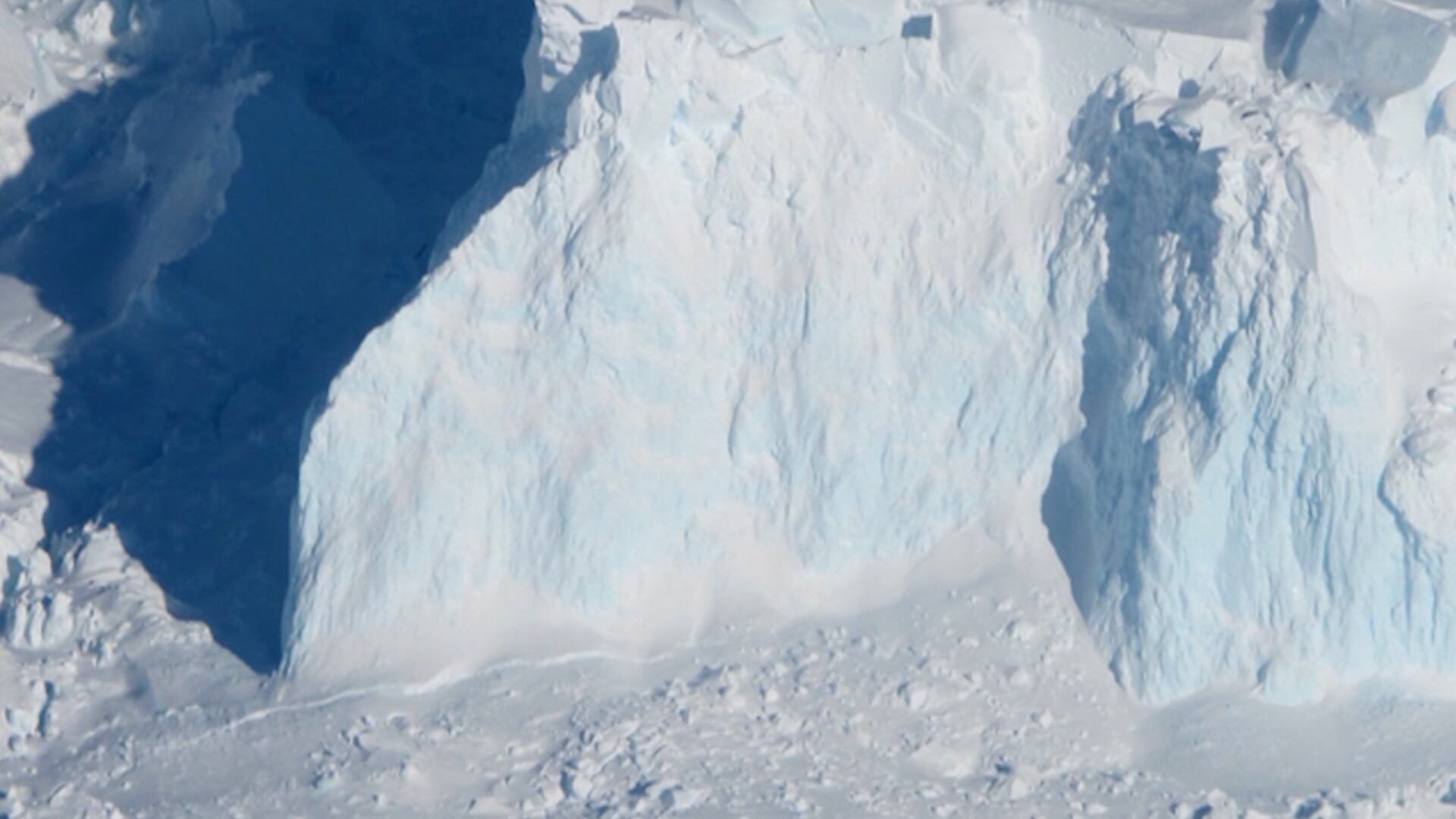
The potential collapse of the Thwaites glacier in Antarctica has been deemed a potential "doomsday event" — researchers and scientists say its melting and collapse could raise global sea levels by at least two feet, enough to destroy coastal communities around the world. One team of scientists is traveling to the Thwaites glacier to drill below in order to gauge current ocean temperatures and attempt to model possible outcomes. David Holland, professor at NYU and Principal Investigator for the International Thwaites Glacier Collaboration, joins Cheddar Climate to discuss the glacier's potential collapse, his team's research plan, and more.
Schools Prepare to Reopen Despite Rising Covid Cases
As winter break wraps up and COVID-19 cases hit record levels, the majority of school districts are returning to in-person classes. While some public schools in large cities have shifted to remote learning for the beginning of the year, the schools that are reopening campuses are determined to avoid the academic, social, and logistical challenges that come with a virtual classroom. Cheddar News is joined by Keith Powers, NYC Council Member, to discuss.
Load More