By Jessica Gresko
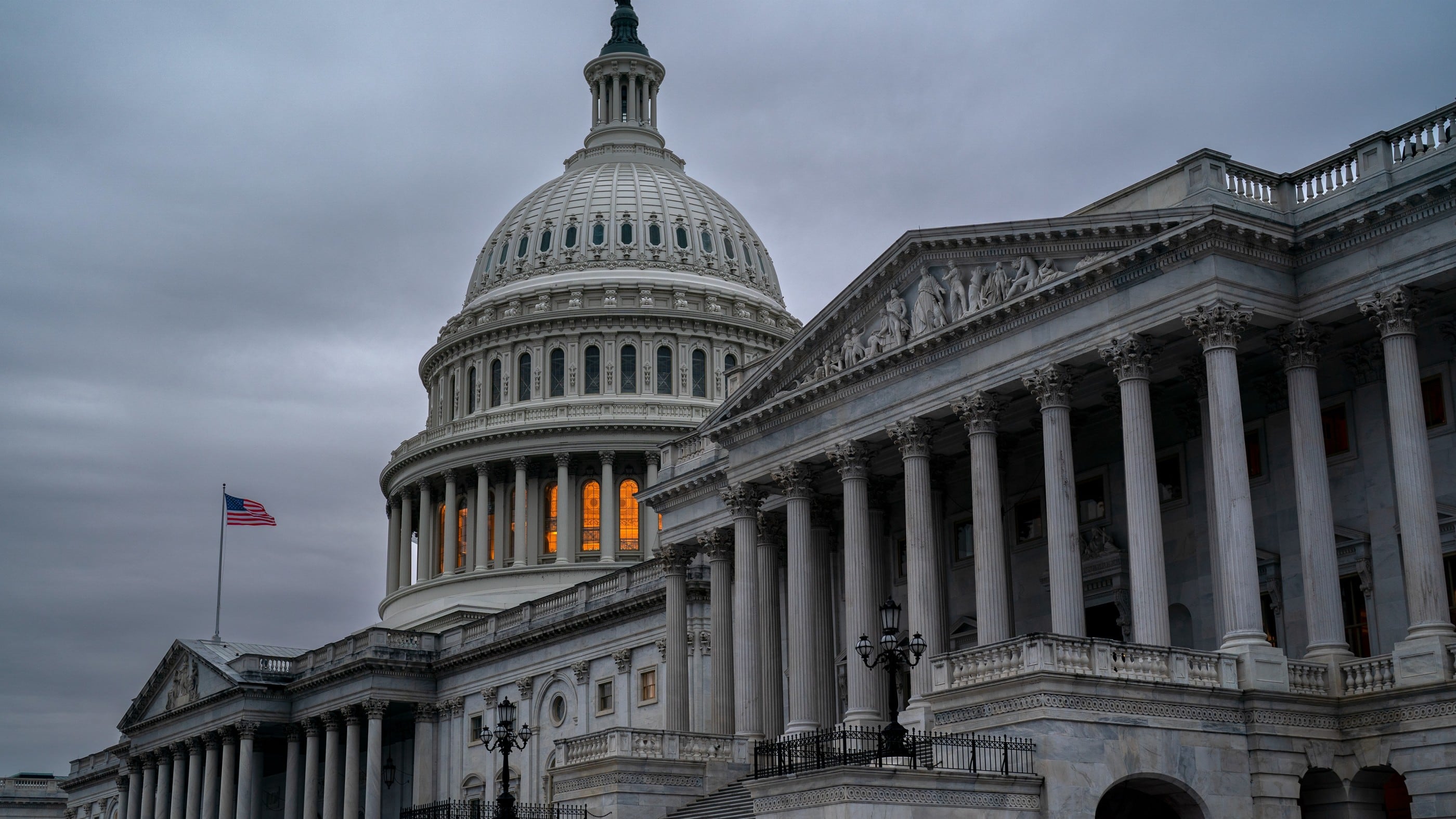
In a defeat for gay rights, the Supreme Court's conservative majority ruled on Friday that a Christian graphic artist who wants to design wedding websites can refuse to work with same-sex couples. One of the court's liberal justices wrote in a dissent that the decision's effect is to “mark gays and lesbians for second-class status” and that the decision opens the door to other discrimination.
The court ruled 6-3 for designer Lorie Smith, saying that she can refuse to design websites for same-sex weddings despite a Colorado law that bars discrimination based on sexual orientation, race, gender and other characteristics. The court said forcing her to create the websites would violate her free speech rights under the Constitution's First Amendment.
The decision suggests that artists, photographers, videographers and writers are among those who can refuse to offer what the court called expressive services if doing so would run contrary to their beliefs. But that's different from other businesses not engaged in speech and therefore not covered by the First Amendment, such as restaurants and hotels.
Justice Neil Gorsuch wrote for the court’s six conservative justices that the First Amendment “envisions the United States as a rich and complex place where all persons are free to think and speak as they wish, not as the government demands.” Gorsuch said that the court has long held that “the opportunity to think for ourselves and to express those thoughts freely is among our most cherished liberties and part of what keeps our Republic strong.”
The decision is a win for religious rights and one in a series of cases in recent years in which the justices have sided with religious plaintiffs. Last year, for example, the court ruled along ideological lines for a football coach who prayed on the field at his public high school after games. And on Thursday the court in a unanimous decision used the case of a Christian mail carrier who did not want to deliver Amazon packages on Sundays to solidify protections for workers who ask for religious accommodations.
The decision is also a retreat on gay rights for the court. For nearly three decades, the court has expanded the rights of LGBTQ people, most notably giving same-sex couples the right to marry in 2015 and announcing five years later in a decision written by Gorsuch that a landmark civil rights law also protects gay, lesbian and transgender people from employment discrimination.
In the latest decision, however, Gorsuch said that a ruling against Smith would allow the government “to force all manner of artists, speechwriters, and others whose services involve speech to speak what they do not believe on pain of penalty.” For example, a gay website designer could be forced to design websites for an organization that advocates against same-sex marriage, he wrote. “Countless other creative professionals, too, could be forced to choose between remaining silent, producing speech that violates their beliefs, or speaking their minds and incurring sanctions for doing so.”
The court’s dissenting liberal justices led by Justice Sonia Sotomayor warned that the decision will allow a range of businesses to discriminate.
“Today, the Court, for the first time in its history, grants a business open to the public a constitutional right to refuse to serve members of a protected class," Sotomayor wrote in a dissent joined by Justice Elena Kagan and Justice Ketanji Brown Jackson.
Sotomayor, who read a summary of her dissent in court to underscore her disagreement, said that the decision's logic “cannot be limited to discrimination on the basis of sexual orientation or gender identity.” A website designer could refuse to create a wedding website for an interracial couple, a stationer could refuse to sell a birth announcement for a disabled couple, and a large retail store could limit its portrait services to “traditional” families, she wrote.
President Joe Biden said in a statement that the ruling was “disappointing," adding that it "weakens long-standing laws that protect all Americans against discrimination in public accommodations – including people of color, people with disabilities, people of faith, and women.”
Sotomayor referenced the court's history with the issue of gay rights in her dissent, writing: “The LGBT rights movement has made historic strides, and I am proud of the role this Court has recently played in that history. Today, however, we are taking steps backward.”
"Today is a sad day in American constitutional law and in the lives of LGBT people. ... the immediate, symbolic effect of the decision is to mark gays and lesbians for second-class status," she wrote at another point.
Even as it has expanded gay rights, however, the court has been careful to say those with differing religious views needed to be respected. The belief that marriage can only be between one man and one woman is an idea that “long has been held — and continues to be held — in good faith by reasonable and sincere people here and throughout the world,” Justice Anthony Kennedy wrote in the court's gay marriage decision.
The court returned to that idea five years ago when it was confronted with the case of a Christian baker who objected to designing a cake for a same-sex wedding. The court issued a limited ruling in favor of the baker, Jack Phillips, saying there had been impermissible hostility toward his religious views in the consideration of his case. Phillips' lawyer, Kristen Waggoner, of the Alliance Defending Freedom, also brought the most recent case to the court. On Friday, she said the Supreme Court was right to reaffirm that the government cannot compel people to say things they do not believe.
“Disagreement isn’t discrimination, and the government can’t mislabel speech as discrimination to censor it,” she said in a statement.
Smith, who owns a Colorado design business called 303 Creative, does not currently create wedding websites. She has said that she wants to but that her Christian faith would prevent her from creating websites celebrating same-sex marriages. And that’s where she ran into conflict with state law.
Colorado, like most other states, has a law forbidding businesses open to the public from discriminating against customers. And about half of the states have laws explicitly prohibiting discrimination based on sexual orientation and gender identity. Colorado said that under its so-called public accommodations law, if Smith offers wedding websites to the public, she must provide them to all customers, regardless of sexual orientation. Businesses that violate the law can be fined, among other things. Smith argued that applying the law to her violates her First Amendment rights, and the Supreme Court agreed.
The case is 303 Creative LLC v. Elenis, 21-476.
Updated with additional details.
Read the full decision: