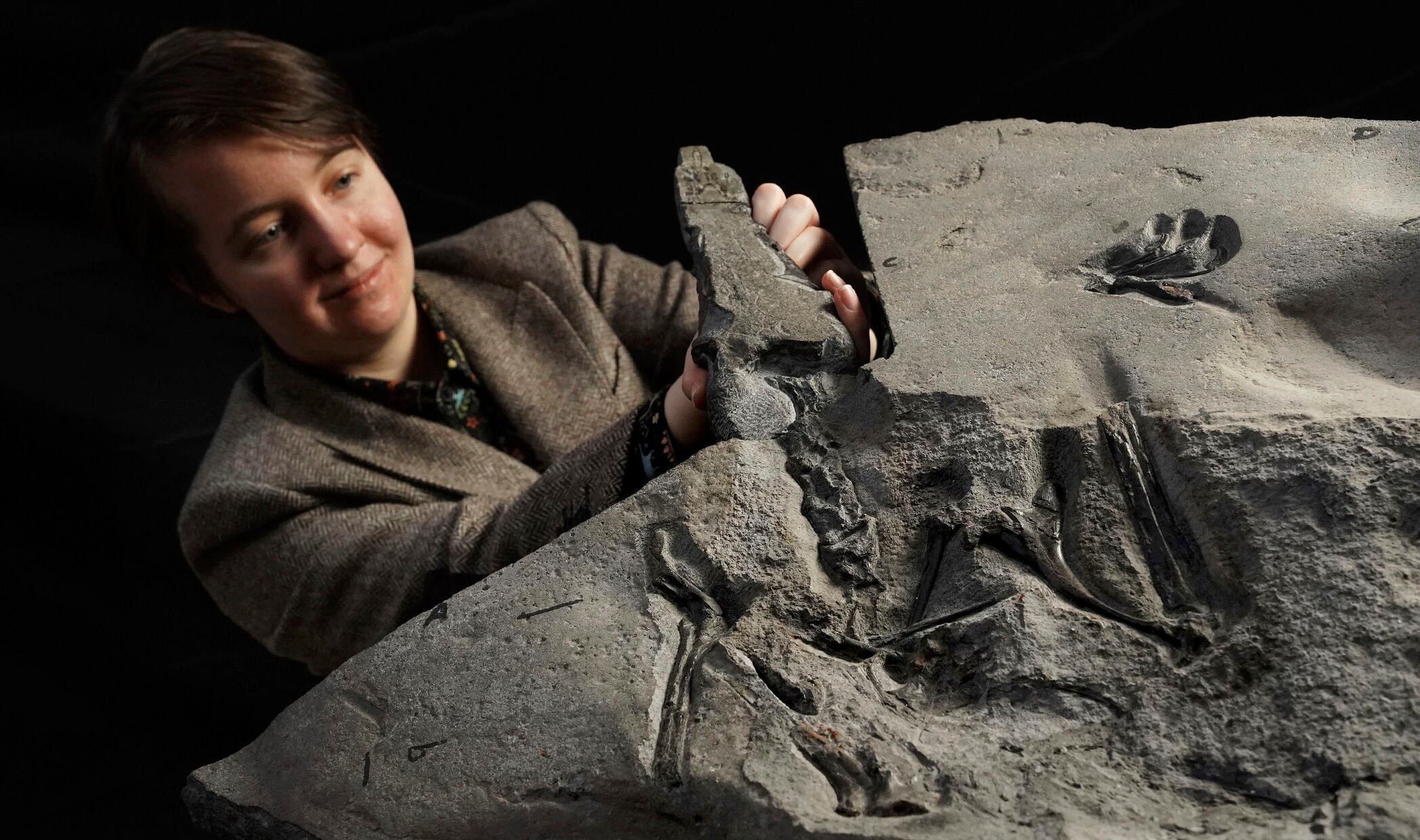
In this undated photo issued by the National Museums Scotland on Tuesday, Feb. 22, 2022, University of Edinburgh PhD student Natalia Jagielska poses for a photo with the world's largest Jurassic pterosaur unearthed on the Isle of Skye. The fossil of a 170-million-year-old pterosaur, more popularly known as pterodactyl, billed as the world’s best-preserved skeleton of the prehistoric winged reptile, has been found on the Isle of Skye in remote Scotland. The National Museum of Scotland said the fossil of the pterosaur is the largest of its kind ever discovered from the Jurassic period. (Stewart Attwood/National Museums Scotland via AP)
By Sylvia Hui
The fossil of a 170 million-year-old pterosaur, described as the world’s best-preserved skeleton of the prehistoric winged reptile, has been found on the Isle of Skye in Scotland, scientists said Tuesday.
The National Museum of Scotland said the fossil of the pterosaur, more popularly known as pterodactyls, is the largest of its kind ever discovered from the Jurassic period. The reptile had an estimated wingspan of more than 2.5 meters (8.2 feet), similar to that of an albatross, the museum said.
The fossil was discovered in 2017 by PhD student Amelia Penny during a field trip on the Isle of Skye in remote northwestern Scotland, when she spotted the pterosaur’s jaw protruding from rocks. It will now be added to the museum’s collection.
“Pterosaurs preserved in such quality are exceedingly rare and are usually reserved to select rock formations in Brazil and China. And yet, an enormous superbly preserved pterosaur emerged from a tidal platform in Scotland,” said Natalia Jagielska, a doctoral student at the University of Edinburgh who is the author of a new scientific paper describing the find.
Steve Brusatte, a professor of palaeontology at Edinburgh University, said the discovery was the best one found in Britain since the early 1800s, when celebrated fossil hunter Mary Anning uncovered many significant Jurassic fossils on the southern English coast.
He said the fossil had “feather light” bones, “as thin as sheets of paper,” and it took several days to cut it from rock using diamond-tipped saws as his team battled against encroaching tides.
It “tells us that pterosaurs got larger much earlier than we thought, long before the Cretaceous period when they were competing with birds, and that’s hugely significant,” Brusatte added.
The pterosaur has been given the Gaelic name Dearc sgiathanach, which translates as “winged reptile."
Pterosaurs were the first vertebrates to fly, some 50 million years before birds. They lived as far back as the Triassic period, about 230 million years ago. They were previously thought to have been much smaller during the Jurassic period.
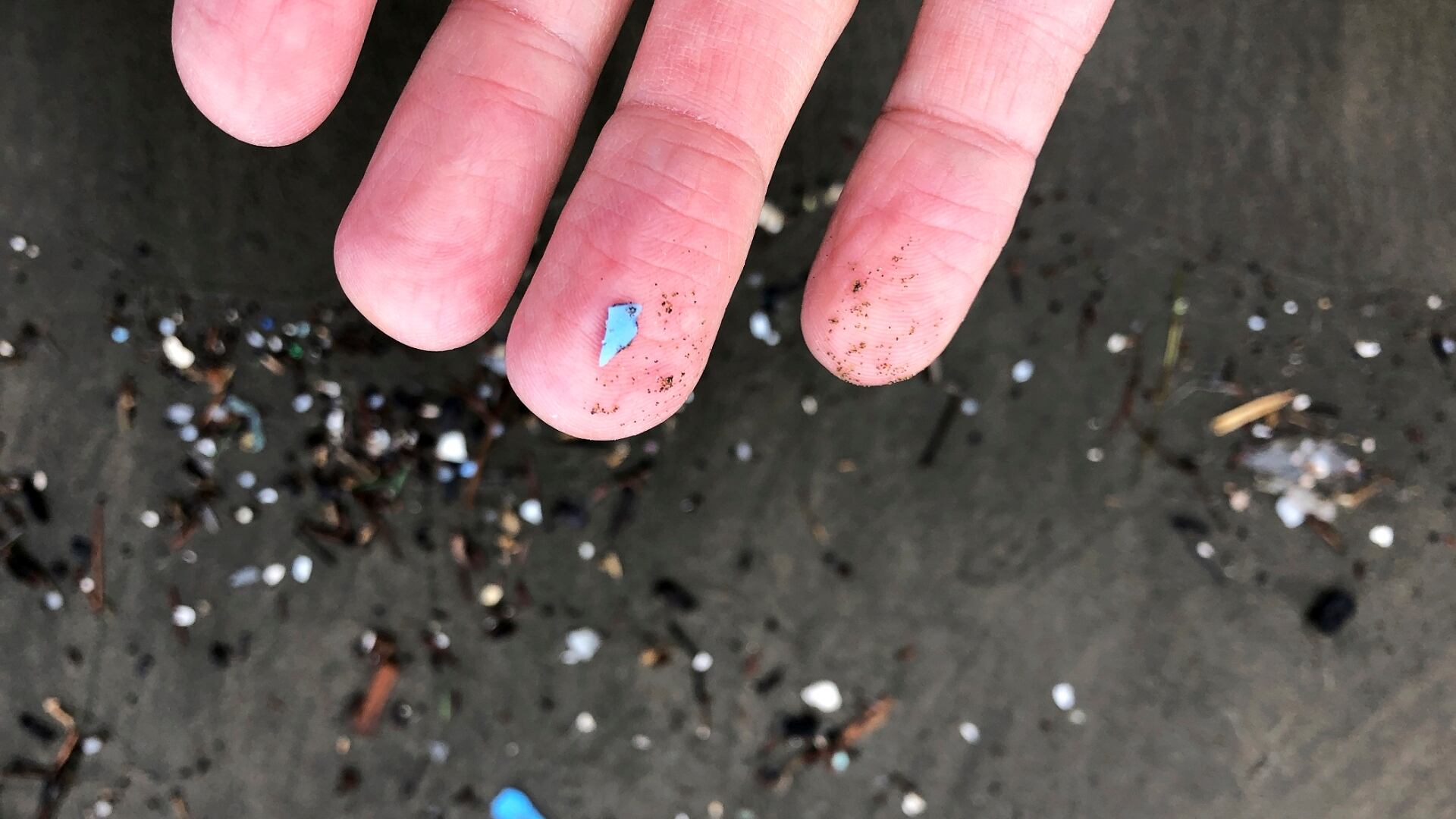
For the first time microplastics have been found deep in the lungs of living humans. The trace materials potentially came from everyday items such as plastic bottles and bags. Dr. Jessica Shepherd, the chief medical officer at Verywell Health, joined Cheddar News to talk about the report's findings and to discuss the possible risks people might face. "The study’s most important part is we need to decrease our pollution, and we need to think about different ways to consume outside of plastic," she said.
An estimated five billion people lack access to affordable and safe surgical care around the world. For World Health Day, Cheddar News spoke with Kristie Magee Porcaro of Operation Smile, a nonprofit organization assisting with cleft lip and palate surgeries, about how they work to better it around the globe.
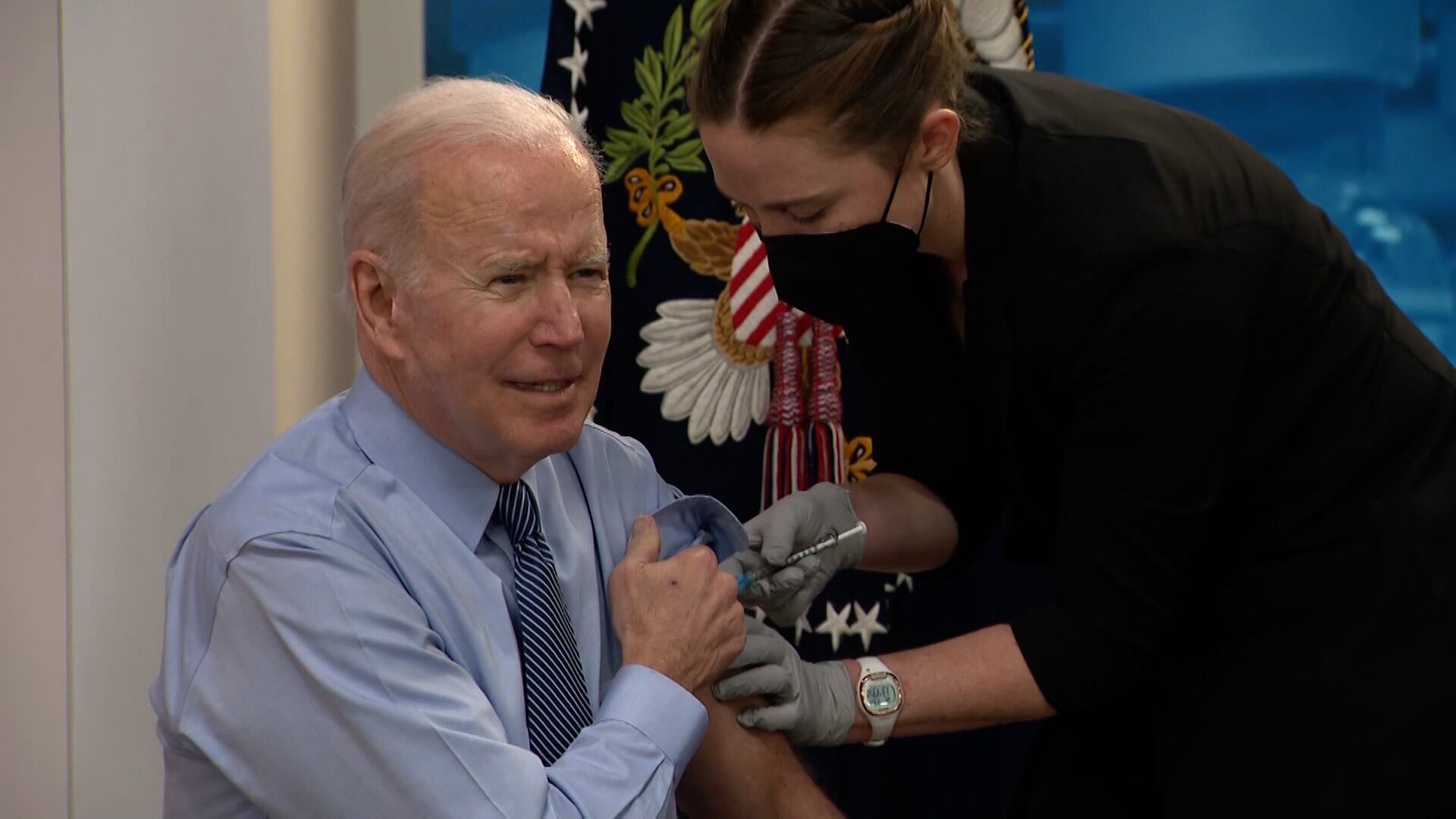
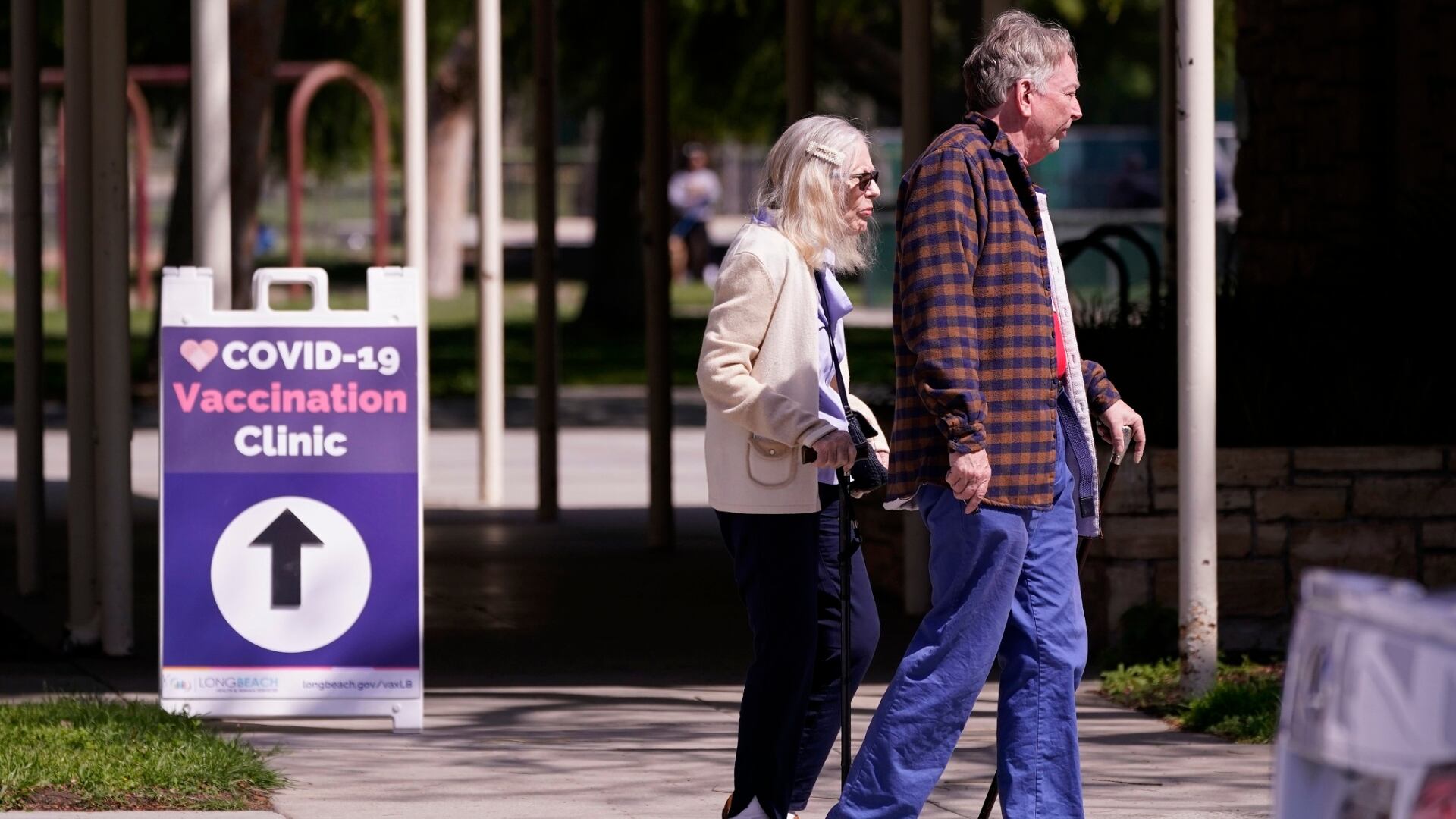
There has been notable disagreement in the medical community about a fourth COVID-19 vaccine dose. The FDA last week authorized a second booster dose for older and immunocompromised individuals, as some agency officials did not support the idea. The FDA made the decision without meeting with its advisory committee, as it had ahead of its recommendations on the previous COVID-19 vaccine doses.
The CDC followed in the footsteps of the FDA and authorized a fourth dose as well. Reports say the agency also did not discuss the move with its own advisory team of vaccine experts. Now, a growing number of doctors are speaking out against the decisions - leaving people confused about whether they should get another vaccine dose. Dr. Julie Morita, a member of the CDC's advisory committee to the director, and the executive vice president of the Robert Wood Johnson Foundation, joins Cheddar News' Closing Bell to discuss.
Talmon Marco, CEO of H2Pro, joins Cheddar Innovates to discuss how to bring environmentally friendly hydrogen to scale, and what this means for hydrogen's many use cases.
Catching you up on what you need to know on April 7, 2022, with updates on Ukraine urging NATO for military aid for their war with Russia, the SEC investigating Amazon, microplastics being found deep inside human lungs for the first time, and more.
Patients who have grown frustrated with lingering COVID-19 symptoms and unanswered questions are now not only the subjects of "long covid" research, but also partners in pushing this research forward. Harlan Krumholz, professor of medicine at Yale University, joins Cheddar News to discuss.
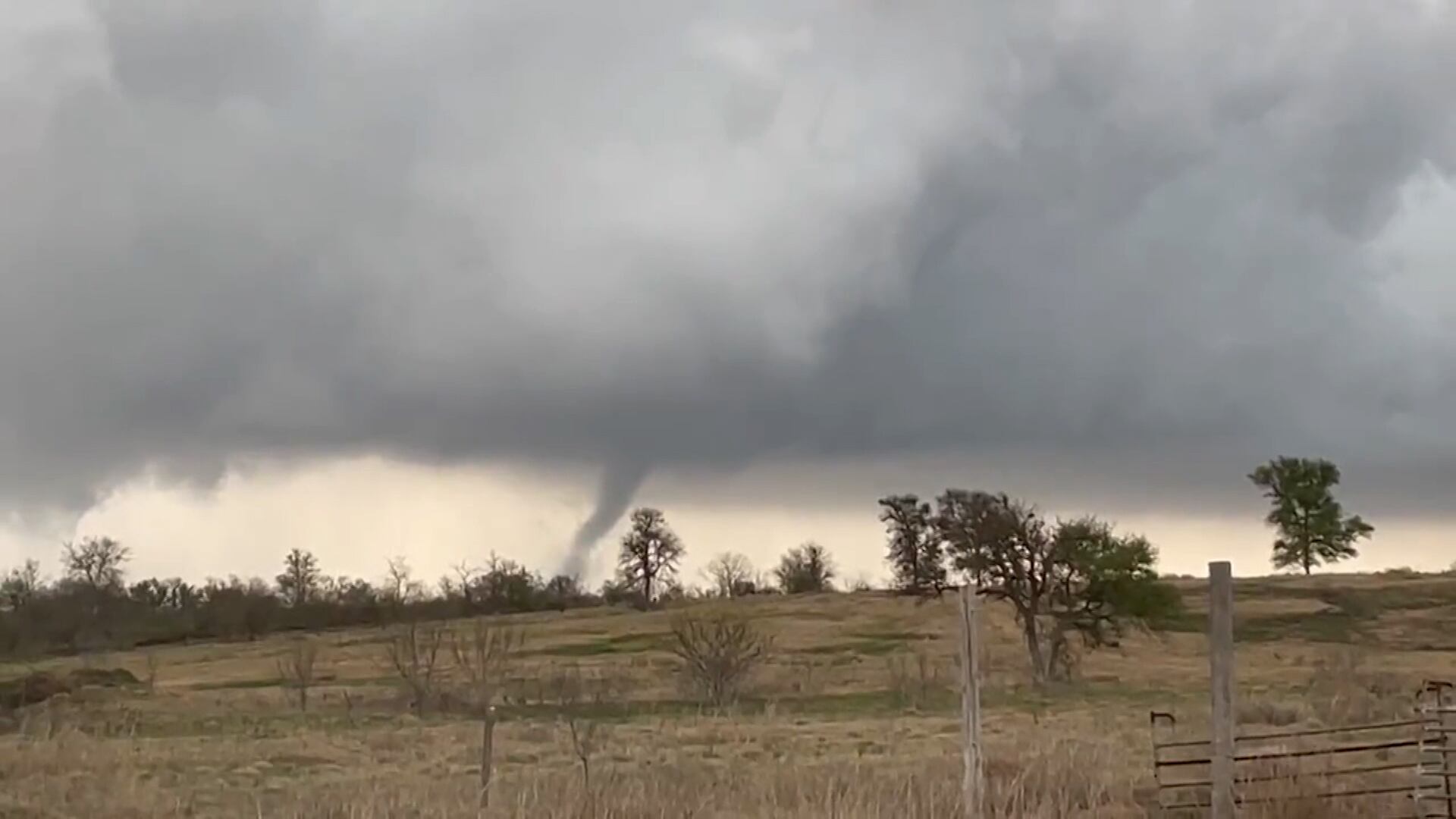
A record number of tornadoes were observed in March, topping the previous record set last year. Cheddar News speaks with NOAA’s Harold Brooks about what the implications are of an early tornado season.
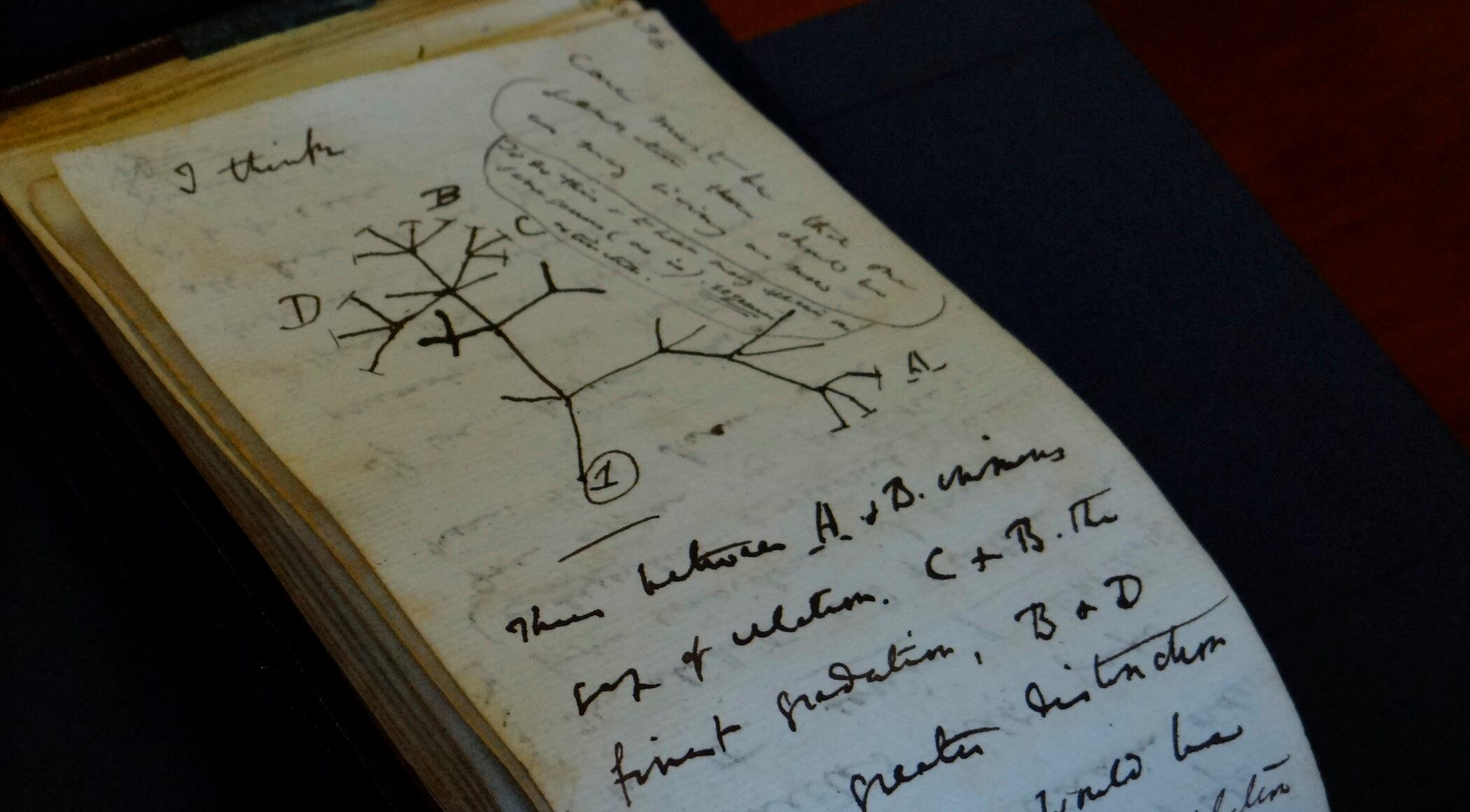
Catching you up on what you need to know on April 6, 2022, with updates on the FDA’s meeting to discuss a second COVID booster shot, more on the war in Ukraine, tornadoes on the Gulf coast, a third suspect arrested in connection to the mass shooting in California, Darwin’s lost notebooks mysteriously returned, and more.
Two of naturalist Charles Darwin’s notebooks that were reported stolen from Cambridge University have been returned, two decades after they disappeared.