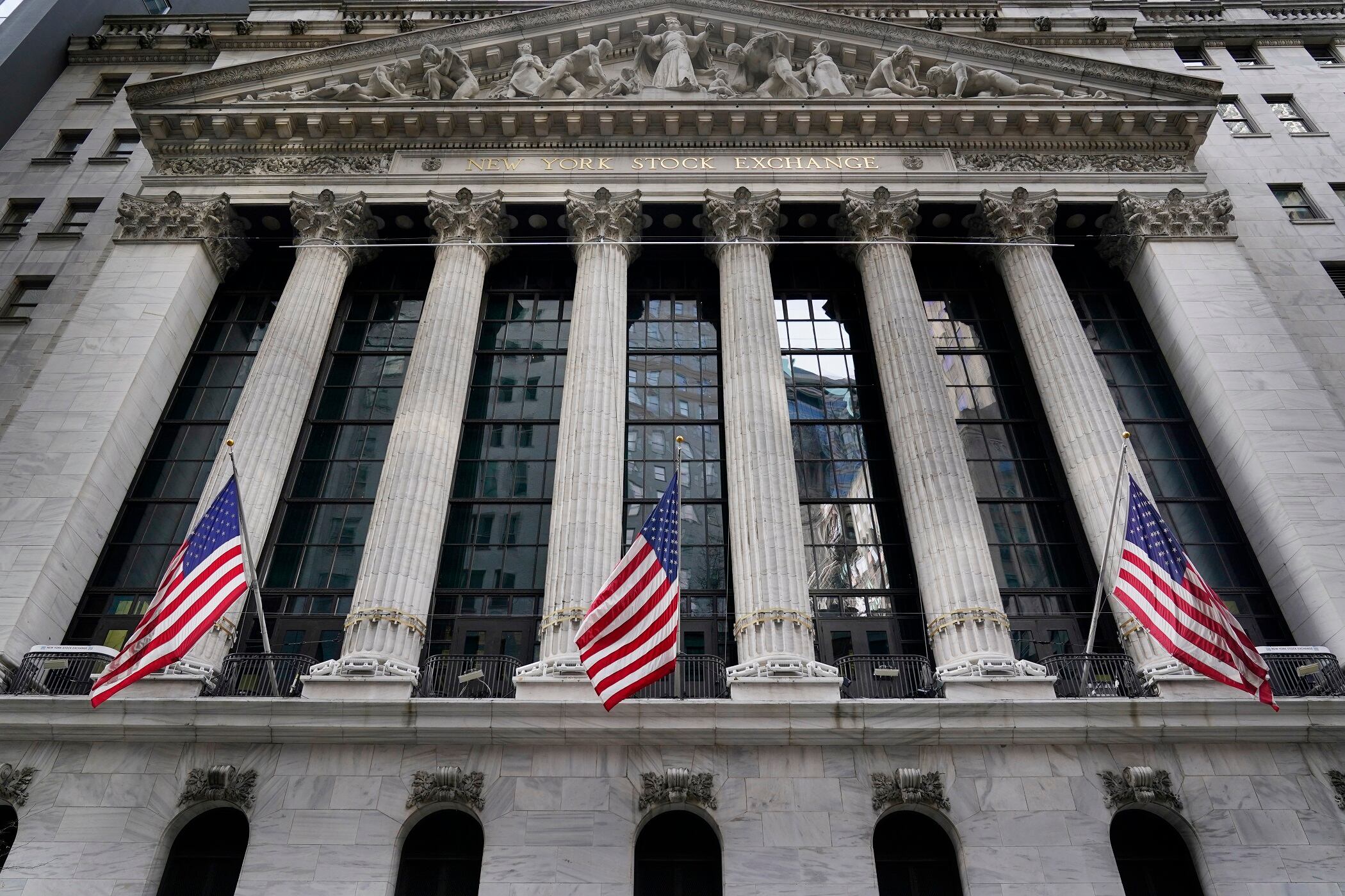
Stocks are off to a solid start on Wall Street Tuesday as investors continue to wager that the new variant of the COVID-19 virus won’t pose a big threat to the economy. The S&P 500 rose 1.4% in the first few minutes of trading, adding to its gains from a day earlier. The tech-heavy Nasdaq rose 2%, and small-company stocks also posted gains. Safe-play sectors like utilities lagged the rest of the market. Treasury yields rose and crude oil prices climbed about 3%. European markets were also solidly higher, and Asian markets closed higher overnight.
THIS IS A BREAKING NEWS UPDATE. AP’s earlier story follows below.
BEIJING (AP) — Global stock markets followed Wall Street higher Tuesday as anxiety about the coronavirus's latest variant eased and China reported stronger November trade figures than expected.
London and Frankfurt opened higher. Shanghai, Tokyo and Hong Kong advanced. Oil prices rose more than $1 a barrel for a second day.
Wall Street futures were higher after the chief White House medical adviser said Monday the omicron variant might be less dangerous. That might allow travel and business restrictions to ease.
Reports from South Africa, where omicron first was spotted, that hospitals haven't been overwhelmed “is fueling some optimism” among traders who sold earlier, said Yeap Jun Rong of IG in a report.
In early trading, the FTSE 100 in London gained 1% to 7,302.61 and Frankfurt's DAX advanced 1.6% to 15,623.97. The CAC 40 in Paris added 1.7% to 6,982.63.
On Wall Street, the S&P 500 future was up 1% and that for the Dow Jones Industrial Average advanced 0.8%.
On Monday, the S&P 500 rose 1.2% while the Dow added 1.9%. The Nasdaq composite gained less than 0.1%.
In Asia, the Shanghai Composite Index rose 0.2% to 3,595.09 after November imports surged 31.7% over a year earlier in a sign domestic demand might be strengthening.
The Nikkei 225 in Tokyo gained 1.9% to 28,455.60 and Hong Kong's Hang Seng added 2.6% to 23,983.66.
The Kospi in Seoul advanced 0.6% to 2,991.72 and Sydney's S&P-ASX 200 gained 1% to 7,313.90.
India's Sensex rose 2% to 57,871.21. New Zealand and Southeast Asian markets gained.
On Wall Street, more than 85% of stocks in the S&P 500 rose Monday, led by technology and banks.
Airlines, cruise lines and other travel companies that stand to gain from avoiding more anti-coronavirus controls advanced after Dr. Anthony Fauci said early indications suggested omicron may be less dangerous than the earlier delta variant.
It will still take a few weeks to learn whether omicron is more contagious, causes more severe illness or evades immunity.
Investors also are factoring mixed U.S. jobs data and the Federal Reserve's plan to accelerate its withdrawal of stimulus to cool inflation pressures.
The U.S. government is due to report November consumer inflation on Friday.
In energy markets, benchmark U.S. crude rose $1.58 to $71.07 per barrel in electronic trading on the New York Mercantile Exchange. The contract jumped $3.23 on Monday to $69.49. Brent crude, the price basis for international oils, added $1.41 to $74.49 per barrel in London. It surged $3.20 the previous session to $73.08 per barrel.
The dollar rose to 113.70 yen from Monday's 113.49 yen. The euro declined to $1.1266 from $1.1278.