By Stan Choe and Alex Veiga
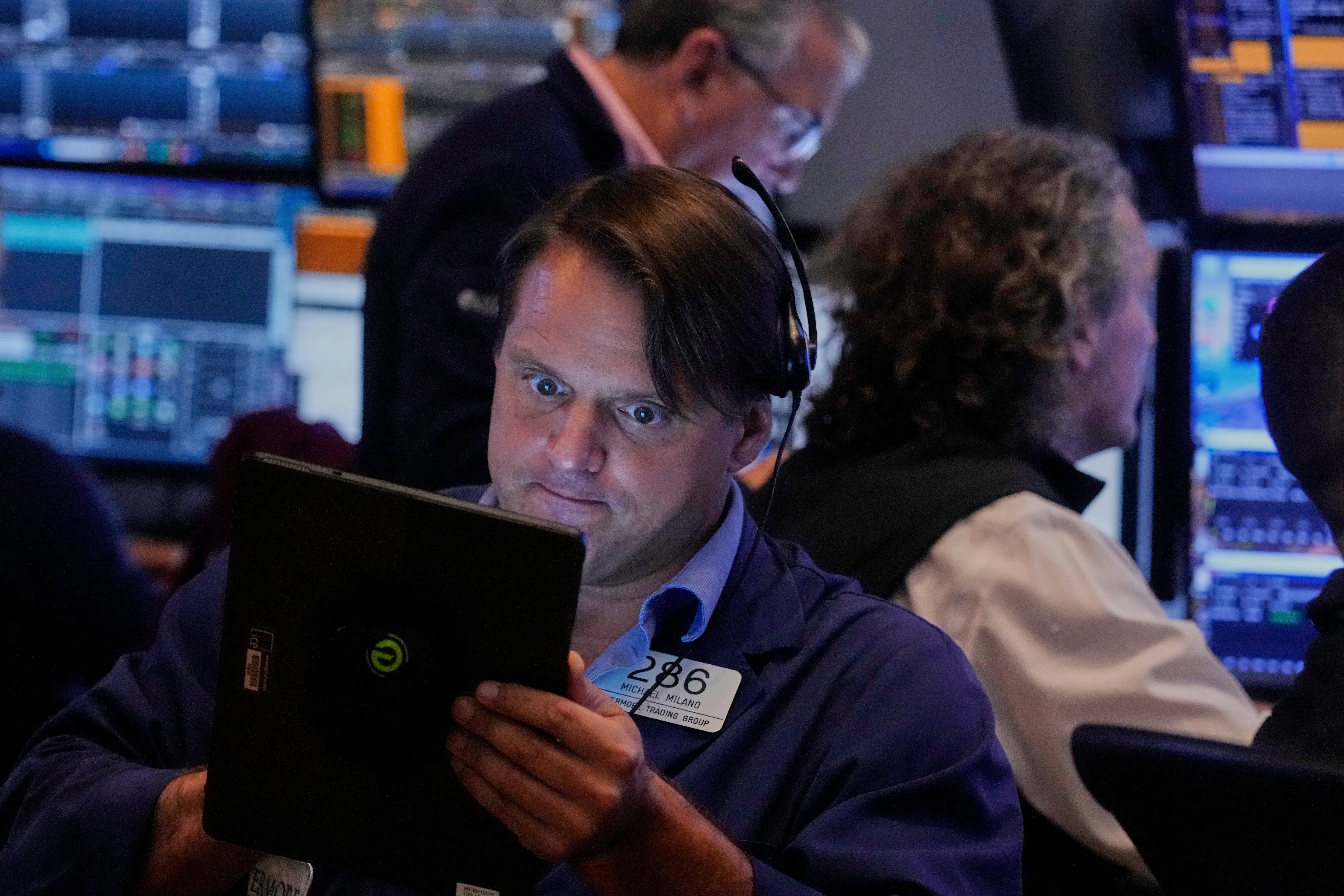
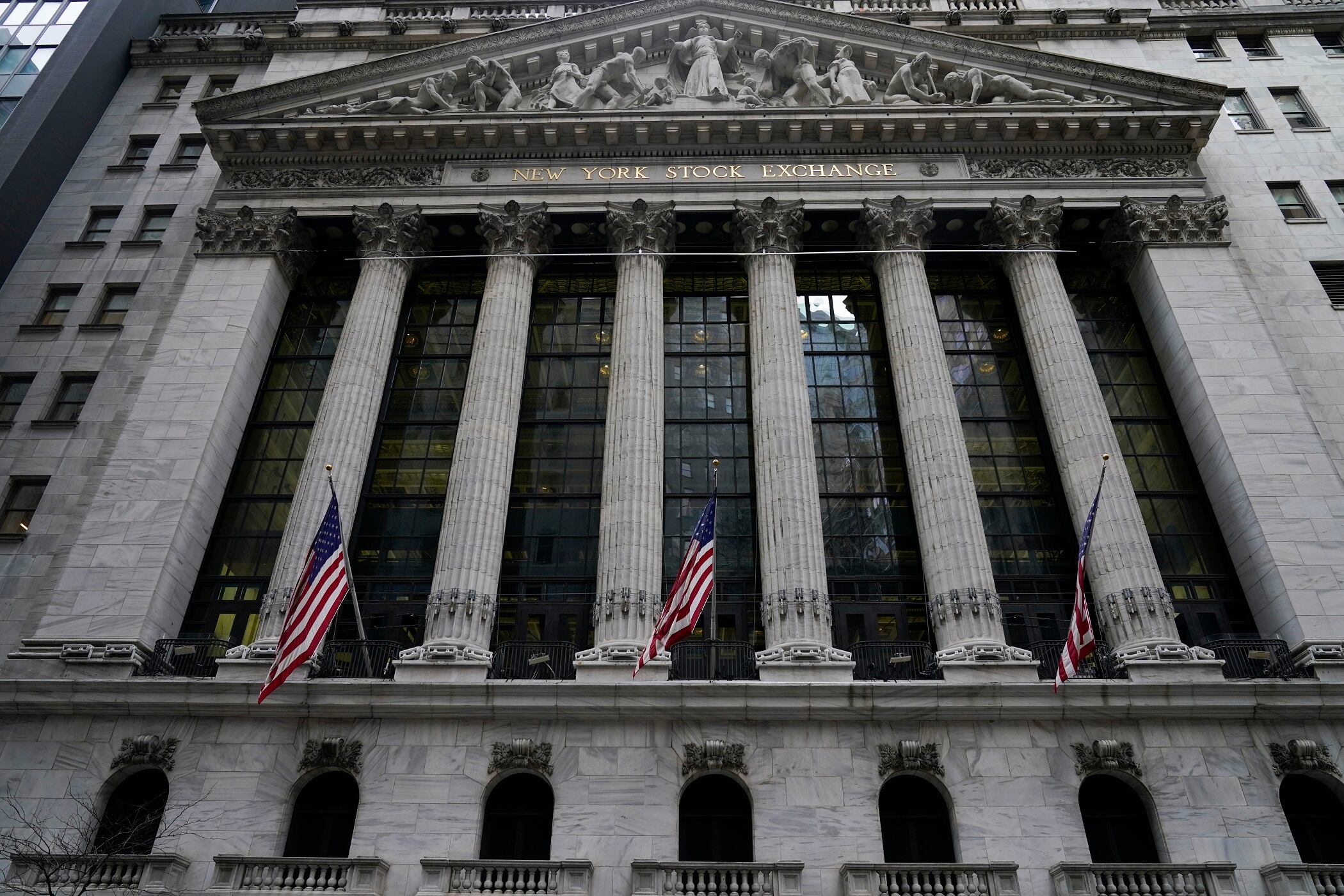
Stocks closed slightly lower after a wobbly day of trading Monday, as worries about interest rates and inflation keep a lid on Wall Street despite some better-than-expected profit reports.
The S&P 500 slipped less than 0.1%. The benchmark index was coming off its second straight week of losses. Like it, the other two major U.S. stock indexes also rolled between small gains and losses Monday. The Dow Jones Industrial Average and Nasdaq each fell 0.1%.
Among S&P 500 companies, a slide in health care, industrial and other sectors narrowly edged out gains in technology, financial, energy and other stocks.
That pulled the index 0.90 points lower to 4,391.69. The Dow, meanwhile, dropped 39.54 points to 34,411.69.
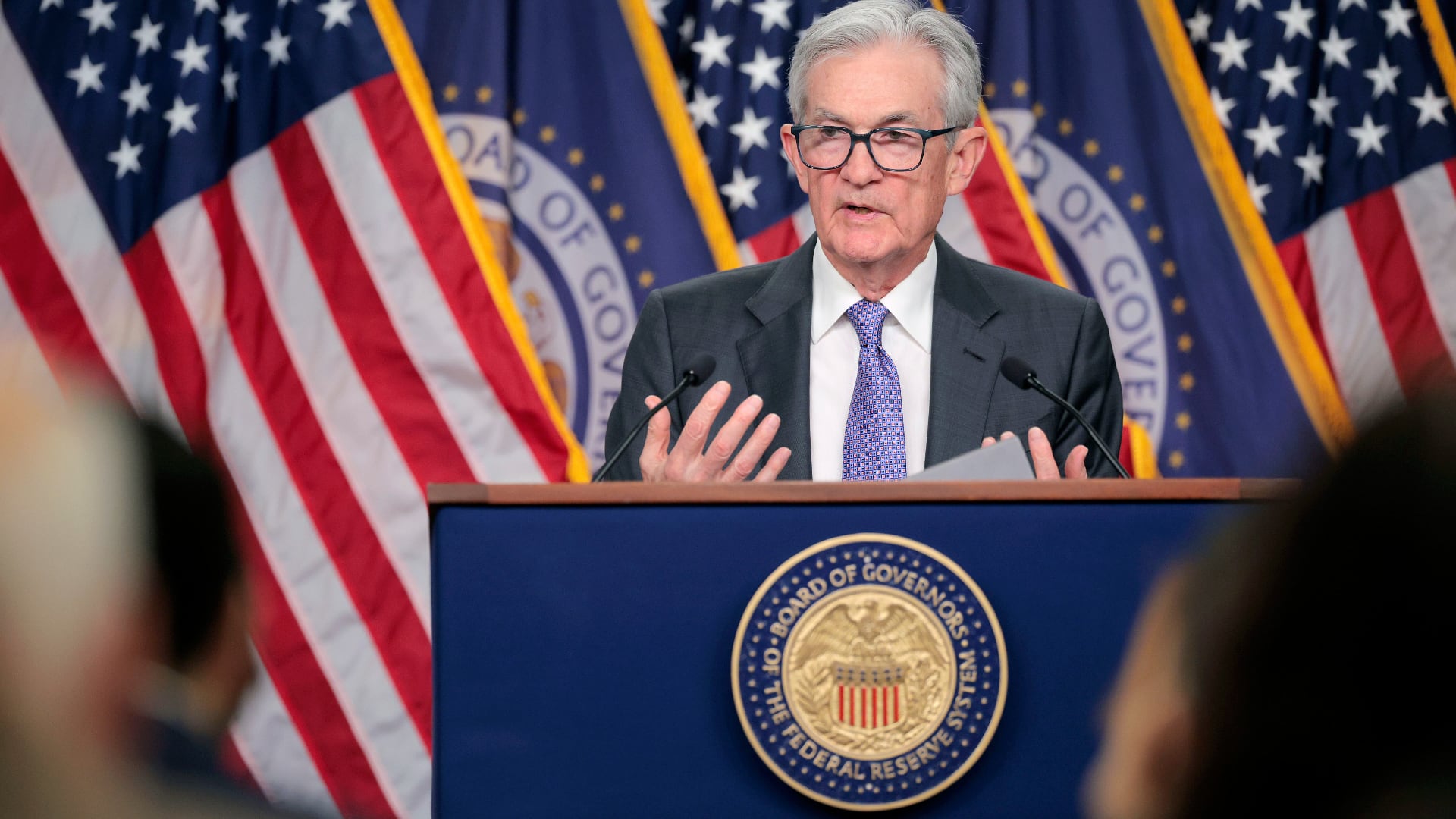
Stocks have struggled this year as the highest inflation in generations forces the Federal Reserve into a U-turn on the low-interest-rate policies that helped markets soar and the economy to rev in recent years.
The central bank has already raised short-term rates once, and investors are expecting it to raise rates by double the usual amount in a couple weeks, with more likely on the way. The Fed is also preparing investors for a sharp reversal in its massive efforts to keep longer-term rates low.
Stocks have often moved in the opposite direction of Treasury yields, and the 10-year yield is near its highest level since 2018, at 2.85% late Monday afternoon. Higher yields put downward pressure on all kinds of investments, from gold to cryptocurrencies, and the stocks seen as the most expensive tend to get hit hardest.
That puts the spotlight on big technology and high-growth stocks, the ones that screamed highest through the pandemic. The Nasdaq, home to many such stocks, has lagged the rest of the market sharply this year. The index fell 18.72 points to 13,332.36 Monday.
Smaller stocks also faltered, with the Russell 2000 index finishing down 14.85 points, or 0.7%, at 1,990.13.
Counterbalancing were some better-than-expected profit reports. Synchrony Financial climbed 6.2% after it said it earned more in the first three months of the year than Wall Street expected. It also boosted its dividend and plan to buy back its own stock.
Bank of America rose 3.4% after reporting stronger profits than analysts forecast.
They're among the first companies to tell investors how much they earned at the start of 2022, and expectations are relatively subdued. Analysts are forecasting roughly 5% growth for S&P 500 companies, the slowest since the end of 2020, according to FactSet. Much of that is because it's difficult to keep growing profits at such a high pace following a year of better than 30% growth.
But inflation may also be pulling down profits following a year of big companies' successfully passing along almost all their price increases onto their customers.
Energy producers continue to be big winners from inflation, as prices keep rising for the oil and natural gas they sell. Natural gas leaped again Monday, with the U.S. price up 7.1% and near its highest level since 2008. The war in Ukraine is pushing up demand for U.S. gas as European customers try to turn away from Russian supplies.
The price of benchmark U.S. oil, meanwhile, rose 1.2% to settle at $108.21 per barrel. Brent crude, the international standard, gained 2.7% to settle at $111.70, and that helped lift energy stocks in the S&P 500 by 1.5% for the biggest gain among the 11 sectors that make up the index.
Twitter, meanwhile, jumped 7.5% in the first trading after the company announced a plan to make it more difficult for someone to take over the company. Tesla CEO Elon Musk has said he wants to buy the social-media platform and take it private, but the company has made it tough for him to amass more than a 15% stake in it.
__
Veiga reported from Los Angeles.
Updated on April 18, 2022, at 4:44 p.m. ET.