Update: SpaceX postponed Friday's launch. The news liftoff is expected Saturday, November 18, 2023 with a 20-minute window opening at 8:00 a.m. ET.
By Marcia Dunn
SpaceX is aiming for another test flight of its mega rocket on Friday after getting final approval from federal regulators.
The first launch of Starship ended in an explosion minutes after lifting off from South Texas in April.
The Federal Aviation Administration issued its license Wednesday, noting that SpaceX has met safety, environmental and other requirements to launch again. Elon Musk's rocket company said it was targeting Friday morning.
After the self-destruct system blew up the rocket over the Gulf of Mexico, SpaceX made dozens of improvements to the nearly 400-foot (121-meter) rocket and to the launch pad, which ended up with a large crater beneath it.
SpaceX has a $3 billion NASA contract to land astronauts on the lunar surface as early as 2025, using the spacecraft.
A month ago, the FAA completed its safety review of the upcoming Starship launch. It needed more time to wrap up its environmental review. No one was injured in the first attempt, but the pad was heavily damaged as the rocket's 33 main engines ignited at liftoff.
The U.S. Fish and Wildlife Service later reported that concrete chunks, steel sheets and other objects were hurled thousands of feet (hundreds of meters) from the pad. It also said a plume of pulverized concrete sent material several miles (up to 10 kilometers) away.
Wildlife and environmental groups sued the FAA over what they considered to be the FAA’s failure to fully consider the environmental impacts of the Starship program near Boca Chica Beach.
Plans call for the test flight to last 1 /1/2 hours and fall short of a full orbit of Earth. The spacecraft would go eastward, passing over the Atlantic, Indian and Pacific oceans before ditching near Hawaii. Nothing of value will be on board.
The Associated Press Health and Science Department receives support from the Howard Hughes Medical Institute’s Science and Educational Media Group. The AP is solely responsible for all content.
Updated November 17, 2023 at 8:53 a.m. ET with time for new launch attempt.
Experts say that at some point next year, the pandemic will officially drop its pandemic status, becoming endemic. While this is a milestone to acknowledge, it does not mean we're free of infections, illnesses, and deaths. Dr. Rajeev Fernando, infectious disease specialist, Beth Israel Hospital and fellow, joins Cheddar News' Closing Bell to discuss.
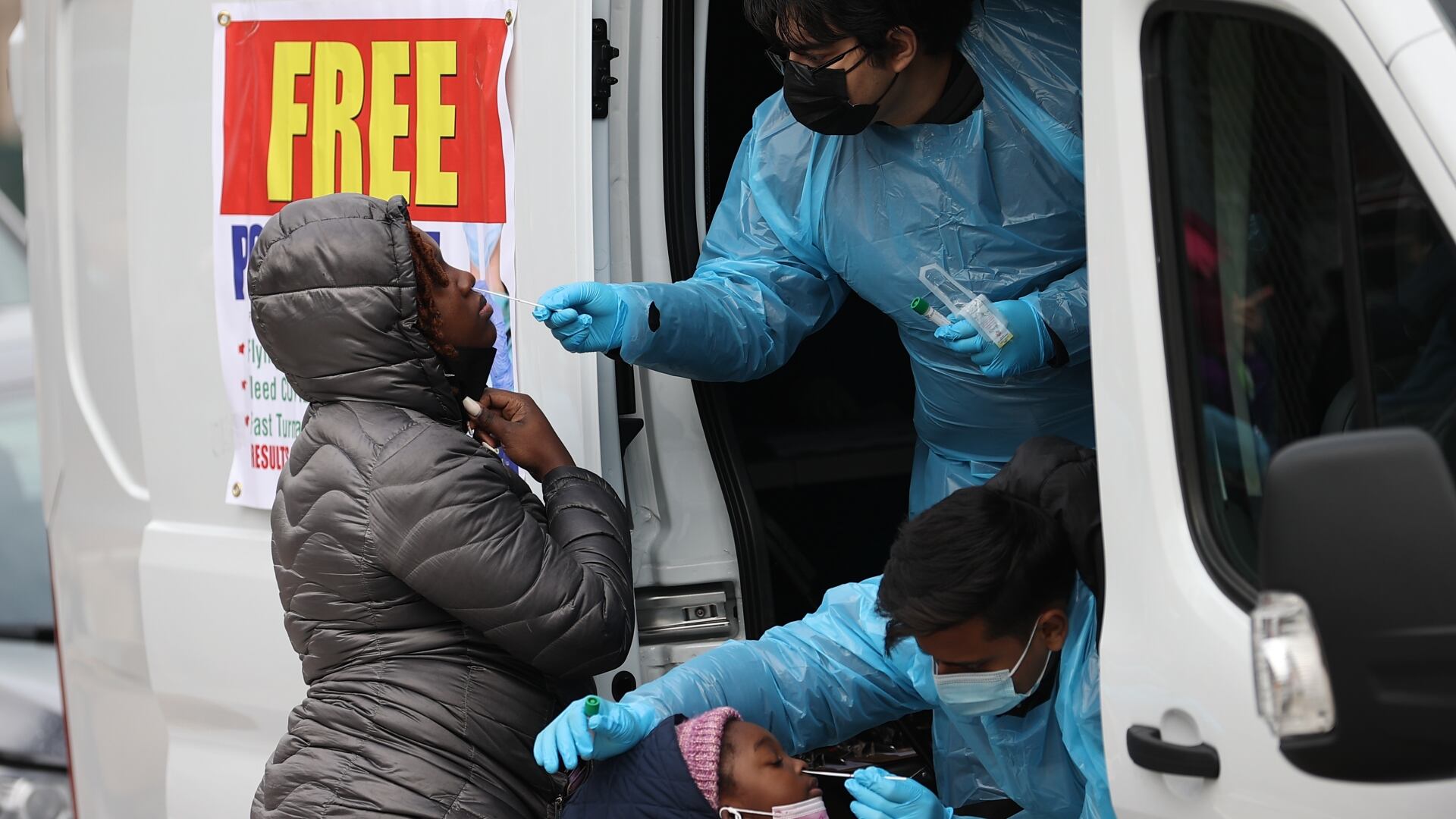
Chicago-based Internist Dr. Vivek Cherian joined Wake Up With Cheddar to break down the unprecedented surge in U.S. COVID-19 as many prepare to celebrate the new year.
Dr. Soumi Eachempati, co-founder and CEO of Cleared4 and former professor of surgery and public health at Weill Cornell Medical College, joined Cheddar to breakdown what people should know about the recently FDA-approved emergency use of Merck and Pfizer's COVID-19 treatment pills. He noted that not only do people need to be aware of other medications they are taking that could cause adverse effects if coupled with COVID-19 pill treatments, he also talked about the intense in-take regiment. "The Merck pills are actually about 40 pills over five days. The Pfizer ones are three pills over five days, so people have to be prepared for that because it is a lot of pills you'll have to take to get full value from these drugs," Eachempati told Cheddar.
Twitter is exploding with a new meme after the CDC revised its Covid-19 guidelines, shortening the recommended isolation period to five days instead of 10 for when you test positive and are asymptomatic. The change came amid a skyrocketing surge of new cases is the U.S. due to the Omicron variant, drawing criticism from experts and Twitter --with users claiming the government agency is giving funny advise on a variety of issues. But what does the meme say about the public’s trust in the agency? Cheddar News speaks with political strategist Hastie Afkhami.
The list of questions should be getting shorter as we enter the pandemic's third year, but that isn't the case. There's another question to add to that list: is the U.S. doing enough to track the virus and its variants? Lawrence Gostin, faculty director of the O'Neill Institute for national and global health law at Georgetown University, joins Cheddar News.
As we prepare to ring in the new year, COVID cases are hitting an all-time high. Dr. Anthony Fauci has said the safest way to celebrate would be a small gathering with vaccinated family members only... far from the large, flashy parties from a few years ago. Dr. Christina Johns, senior medical advisor at PM Pediatrics, joins Cheddar News to discuss how to celebrate safely.