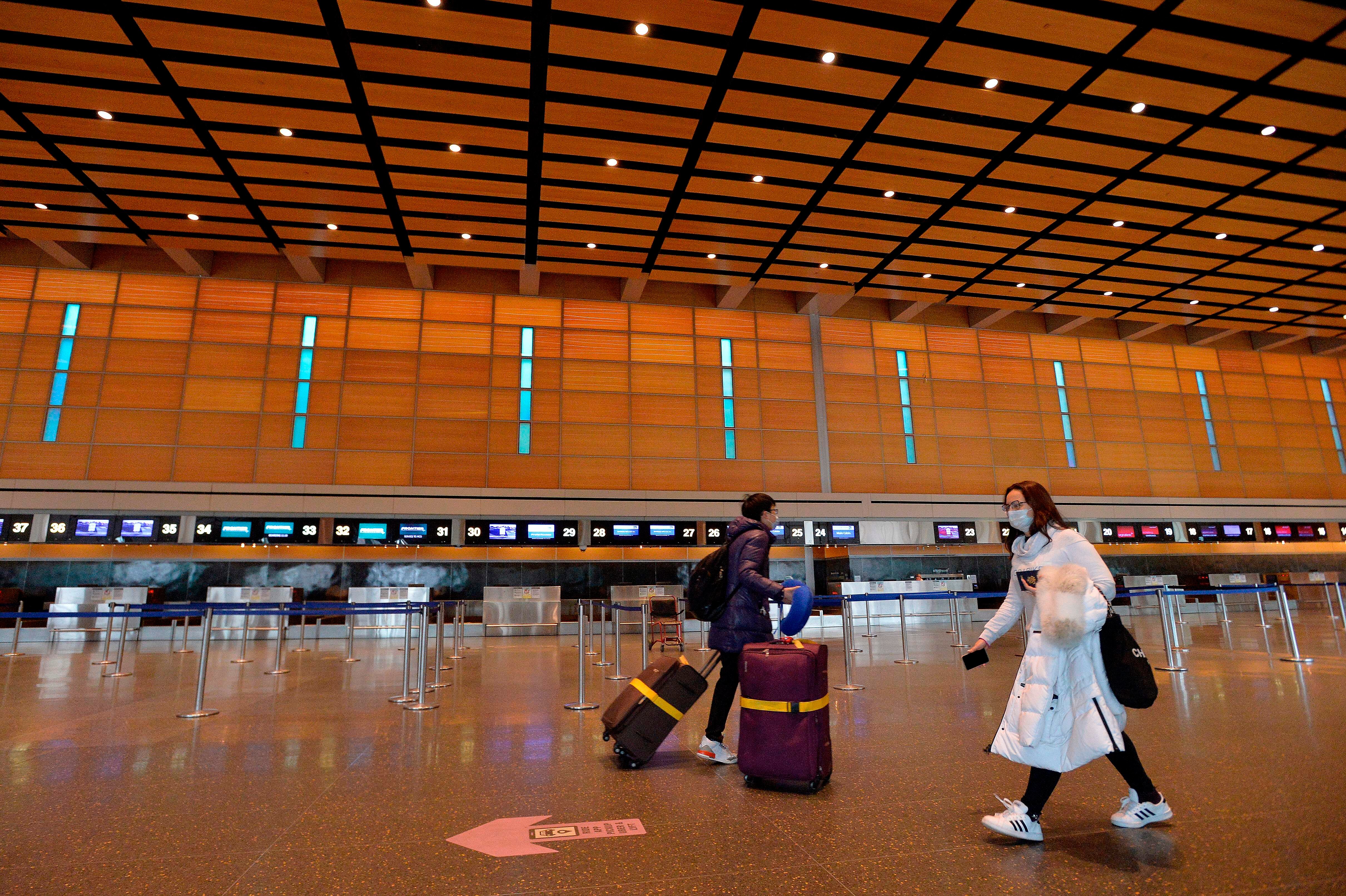
U.S. airlines are seeking as much as $50 billion in federal support as travel restrictions aimed at containing the spread of coronavirus have pushed the industry’s biggest players to the brink of bankruptcy.
The airlines are seeking a combination of grants, government-backed loans and tax relief, the industry’s main trade group, Airlines 4 America, has said.
The impact of the travel restrictions has been swift and dramatic: Among the country’s Big Three airlines, American Airlines has slashed its international flights by 75 percent, United Airlines plans to cut half its domestic and international flights through the next two months, and Delta Airlines has said that bookings have plummeted by roughly a third.
Meanwhile JetBlue, Southwest and Alaska have reduced their schedules, and some ultra-low-cost providers like Frontier and Spirit have taken dramatic steps to prop-up ridership, with Frontier on Monday announcing free flights for students with .edu email addresses.
“This is a today problem, not a tomorrow problem. It requires urgent action,” A4A president and CEO Nicholas Calio said in a statement.
The Wall Street Journal was the first to put a number on the bailout request.
The trade group’s statement sought to underscore the urgency, describing a “dramatic decline in demand” that is “getting worse by the day,” “historic capacity cuts” and a “staggering” economic impact on U.S. airlines.
United Airlines’ market value has plunged by 60 percent since the start of the year. American Airlines’ stock price has fallen by more than 50 percent, and Delta Airlines’ by close to 40 percent.
“U.S. carriers are in need of immediate assistance as the current economic environment is simply not sustainable. This is compounded by the fact that the crisis does not appear to have an end in sight,” the trade group said.
The Biden administration has enacted a new labor rule that aims to prevent the misclassification of workers as independent contractors. The labor department rule going into effect Tuesday replaces a scrapped Trump-era standard that lowered the bar for classifying employees as contractors
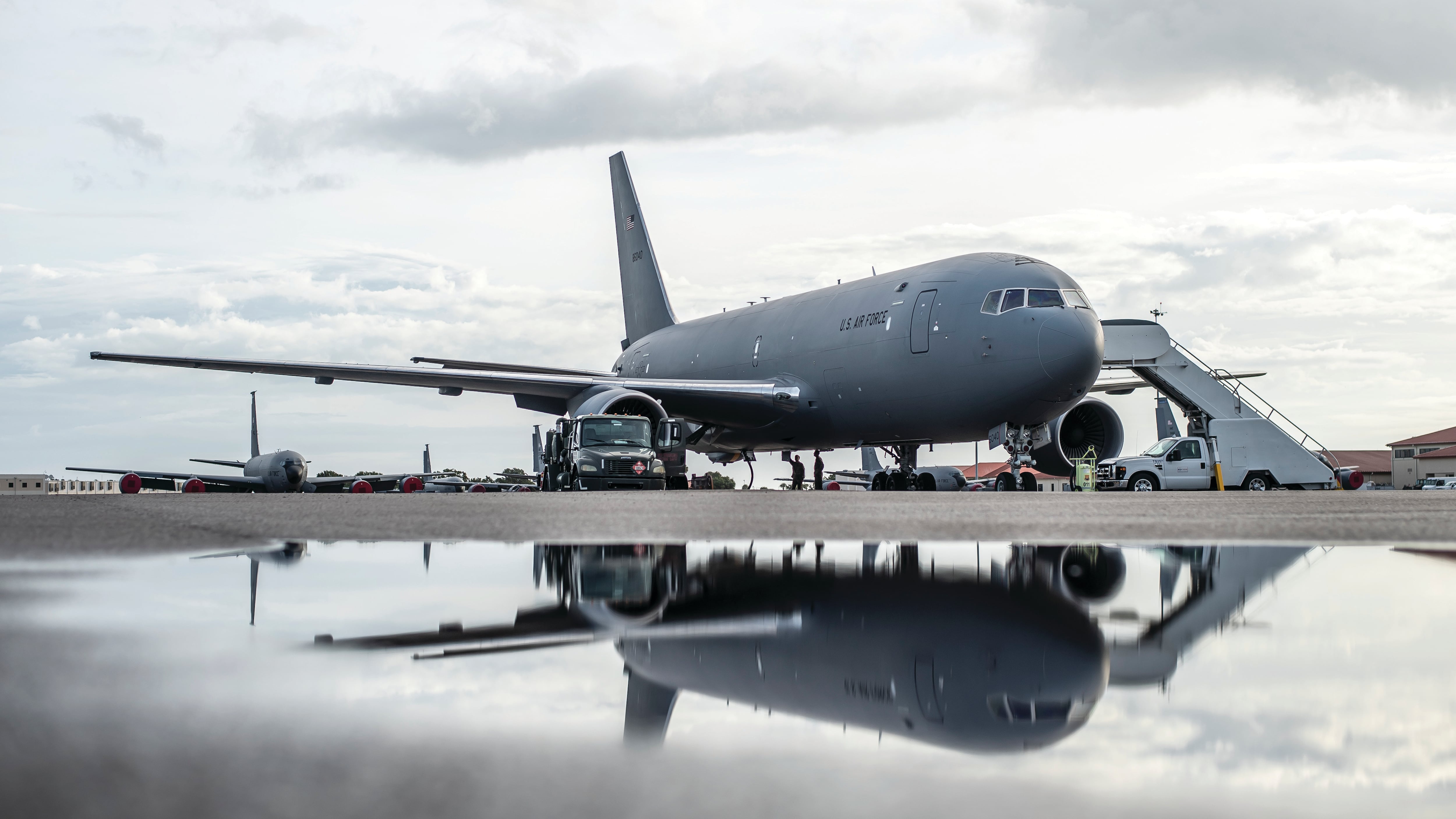
The KC-46 was to be the ideal candidate for a fixed-price development program. Instead, it has cost Boeing billions, and made industry wary of such deals.
Dave Long, CEO and Co-Founder of Orangetheory Fitness joins Cheddar to chat trends in the industry for 2024. He updates us on the company's plans to expand and what the state of the economy has meant for business.
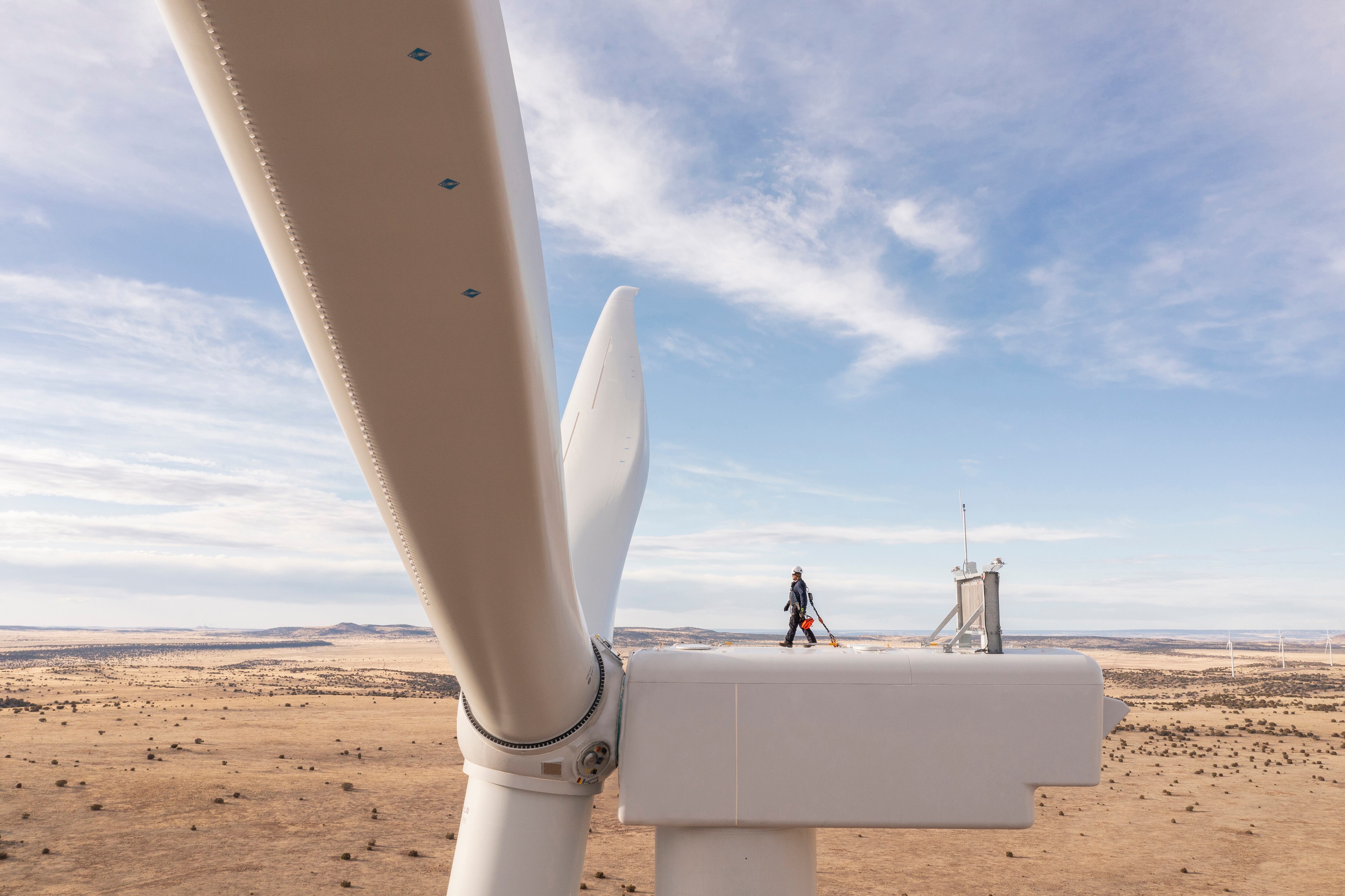
One of the world's largest renewable energy developers will be getting hundreds of wind turbines from General Electric spinoff GE Vernova as part of a record equipment order and long-term service deal.
A moon landing attempt by a private US company appears doomed because of a fuel leak on the newly launched spacecraft. Astrobotic Technology managed to orient the lander toward the sun Monday so its solar panel could capture sunlight and charge its onboard battery.
Treasury Secretary Janet Yellen has announced that 100,000 businesses have signed up for a new database that collects ownership information intended to help unmask shell company owners. Yellen says the database will send the message that “the United States is not a haven for dirty money.”
A new version of the federal student aid application known as the FAFSA is available for the 2024-2025 school year, but only on a limited basis as the U.S. Department of Education works on a redesign meant to make it easier to apply.
A steep budget deficit caused by plummeting tax revenues and escalating school voucher costs will be in focus Monday as Democratic Gov. Katie Hobbs and the Republican-controlled Arizona Legislature return for a new session at the state Capitol.
The first U.S. lunar lander in more than 50 years is on its way to the moon. The private lander from Astrobotic Technology blasted off Monday from Cape Canaveral, Florida, catching a ride on United Launch Alliance's brand new rocket Vulcan.