By Christopher Rugaber
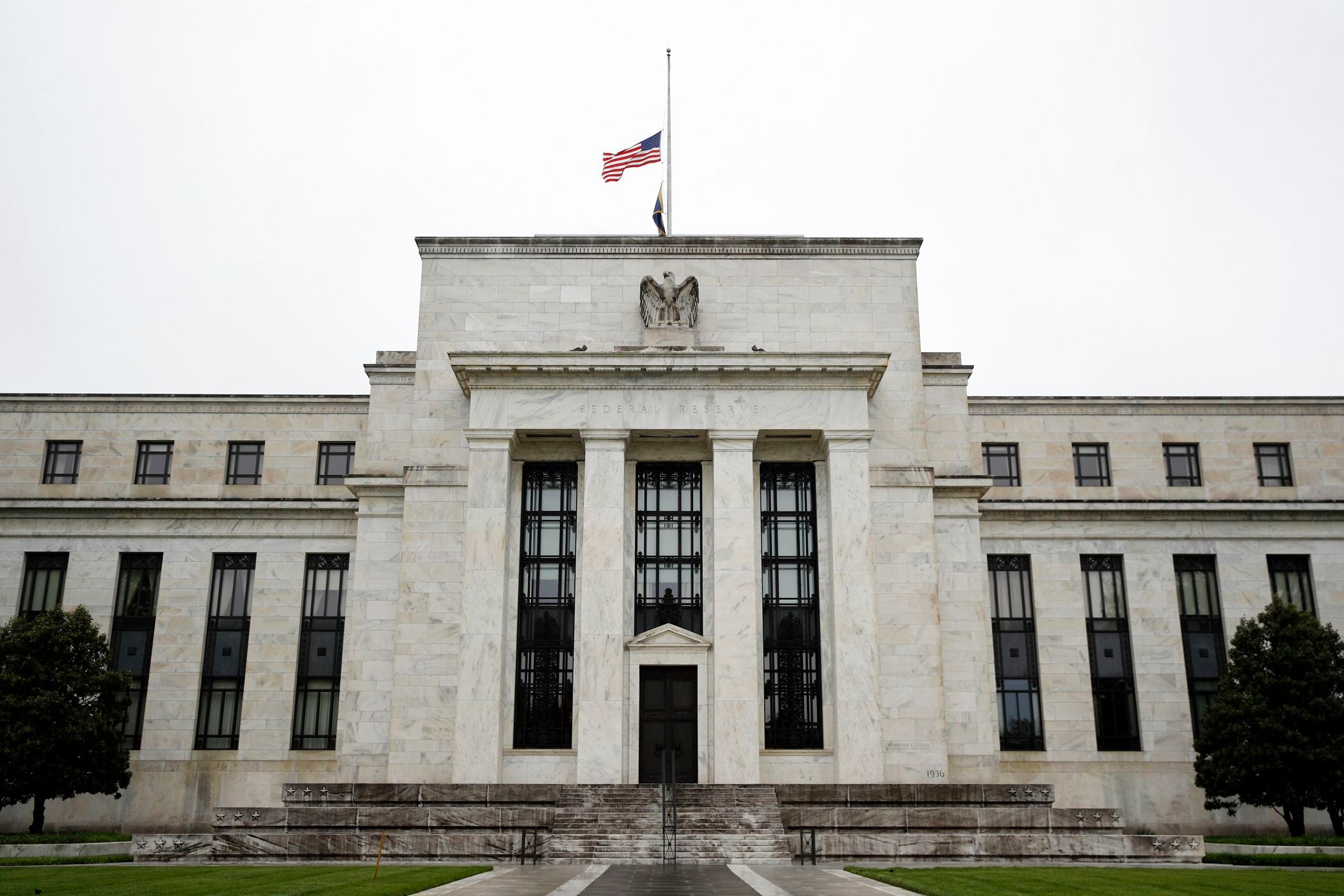
The Senate on Thursday narrowly confirmed the nomination of Christopher Waller for the Federal Reserve's Board of Governors, placing another of President Donald Trump's picks on the Fed's influential board after a string of high-profile rejections.
The vote in favor of Waller's appointment was 48-47. Waller, research director for the St. Louis Federal Reserve Bank, taught economics for nearly 25 years before joining the St. Louis Fed in 2009. He has endured far less scrutiny than Judy Shelton, the controversial nominee he was paired with and who was voted down in the Senate last month.
Still, his confirmation vote broke down along party lines, a shift from the vote in the Senate Banking Committee in July, when some Democrats had supported him.
As an executive vice president of the St. Louis Fed Waller has attended dozens of meetings of the Fed’s interest rate-setting policy committee, of which he will now become a voting member. His research has focused on how the Fed’s communications affect financial markets and the benefits of an independent central bank. His term on the board will last until January 2030.
Waller, who holds a Ph.D. in economics from Washington State University, has taught at the University of Notre Dame, the University of Kentucky, and Indiana University.
Waller is a top aide to James Bullard, the president of the Federal Reserve Bank of St. Louis, and a well-known “dove.” Doves are policymakers who are generally thought to favor lower interest rates to help boost job growth and who tend to worry less about the risk of inflation. Those who worry more about the threat of inflation, by contrast, are generally referred to as “hawks.”
Carl Tannenbaum, chief economist at Chicago-based Northern Trust, and a former Fed economist, said Waller's economic tilt won't likely make much difference to the Fed’s policy, “because the Fed is almost as dovish as they can be.”
In contrast to Waller's conventional background, Shelton's past support for the gold standard, which involves tying the dollar's value to gold and is now mostly discredited, generated vociferous opposition from Democrats and discomfort among some Republicans. She was voted out of the Senate Banking Committee on a party-line vote in July only for her nomination to languish until after the presidential election.
Shelton also came under fire for appearing to change her views on interest rates to suit the political circumstances. She opposed the Fed's policy of pinning its benchmark interest rate at nearly zero when Barack Obama was president, only to support ultra-low rates after Trump's election. Her nomination failed on a 47-50 vote. Sens. Mitt Romney, R-Mass., and Susan Collins, R-Me., voted against Shelton.
With Waller's approval, four of the six governors have been appointed by Trump, and Chair Jerome Powell was elevated to his position by Trump. The only Democrat on the board of governors is Lael Brainard, who was widely considered a possible Treasury Secretary under President Biden. That position instead went to former Fed Chair Janet Yellen. One seat on the seven-member Board remains vacant.