The head of Russia's space agency said Monday that the Luna-25 spacecraft crashed into the moon after its engines failed to shut down correctly, and he blamed the country's decades-long pause in lunar exploration for the mishap.
The pilotless Luna-25 had been scheduled to land Monday while aiming to become the first spacecraft to touch down on the south pole of the moon, an area where scientists believe important reserves of frozen water and precious elements may exist.
Roscosmos Director General Yury Borisov said the spacecraft's engines were turned on over the weekend to put Luna-25 into a “pre-landing orbit" but did not shut down properly, plunging the lander onto the moon.
“Instead of the planned 84 seconds, it worked for 127 seconds. This was the main reason for the emergency,” Borisov told Russian state news channel Russia 24.
Roscosmos had contact with the spacecraft until 2:57 p.m. local time Saturday, when communication was lost and “the device passed into an open lunar orbit and crashed into the surface of the moon,” he said.
The lunar mission was Russia’s first since 1976, when it was part of the Soviet Union. Only three countries have managed successful moon landings: the Soviet Union, the United States and China.
“The negative experience of interrupting the lunar program for almost 50 years is the main reason for the failures,” Borisov said, adding “it would be the worst decision ever” for Russia to end the program now.
The Luna-25 was in a race with an Indian spacecraft launched on July 14 to be the first to reach the south pole. Both were expected to reach the moon between Aug. 21 and Aug. 23.
A previous Indian attempt to land at the moon's south pole in 2019 ended when the spacecraft crashed into the moon’s surface.
Luna-25 launched from the Vostochny Cosmodrome in Russia’s Far East on Aug. 10. The spaceport is a pet project of Russian President Vladimir Putin and key to his efforts to make Russia a space superpower.
Before the launch, Roscosmos said it wanted to show Russia “is a state capable of delivering a payload to the moon,” and “ensure Russia’s guaranteed access to the moon’s surface.”
Following the crash, the Russian space agency said the moon mission was about ensuring long-term “defense capability” as well as “technological sovereignty.”
“The race to develop the moon's natural resources has begun,” Borisov said Monday. “In the future, the moon will become an ideal platform for the exploration of deep space.”
Sanctions imposed on Russia since it launched a war in Ukraine nearly 18 months ago have affected its space program, making it more difficult to access Western technology.
The Luna-25 was initially meant to carry a small moon rover, but the idea was abandoned to reduce the weight of the craft for improved reliability, analysts said.
The lunar south pole is of particular interest to scientists, who believe the permanently shadowed polar craters may contain frozen water in the rocks that future explorers could transform into air and rocket fuel.
It’s no secret that the world is amidst a climate crisis never before seen in our time. And our excessive resource consumption is to blame. But just exactly what resources are to blame might surprise you. Hint: fossil fuels are only one part of the problem.
Dr. Robert Lahita, the director of Saint Joseph's Institute for Autoimmune and Rheumatic Diseases, joined Cheddar to discuss the latest on omicron as the new variant has popped up in more than a dozen states so far. He emphasized that vaccinations should remain the priority despite efficacy against the new variant being unknown at this point.
Six states have confirmed cases of the new Omicron coronavirus variant, and this number is expected to grow. Cheddar's Hena Doba speaks with Dr. William Schaffner,
Professor of Preventive Medicine at Vanderbilt University Medical Center, on the latest developments.
Just days after the detection of the Omicron variant, the World Health Organization has agreed to start the process of establishing a global pandemic treaty or accord. Amy Maxmen, senior reporter for Nature, and Dr. Samuel Scarpino, managing director for the Rockefeller Foundation's Pandemic Prevention Institute, joined Cheddar to discuss this effort and what lessons can be learned from the many COVID-19 failures as the world prepares for future pandemics.
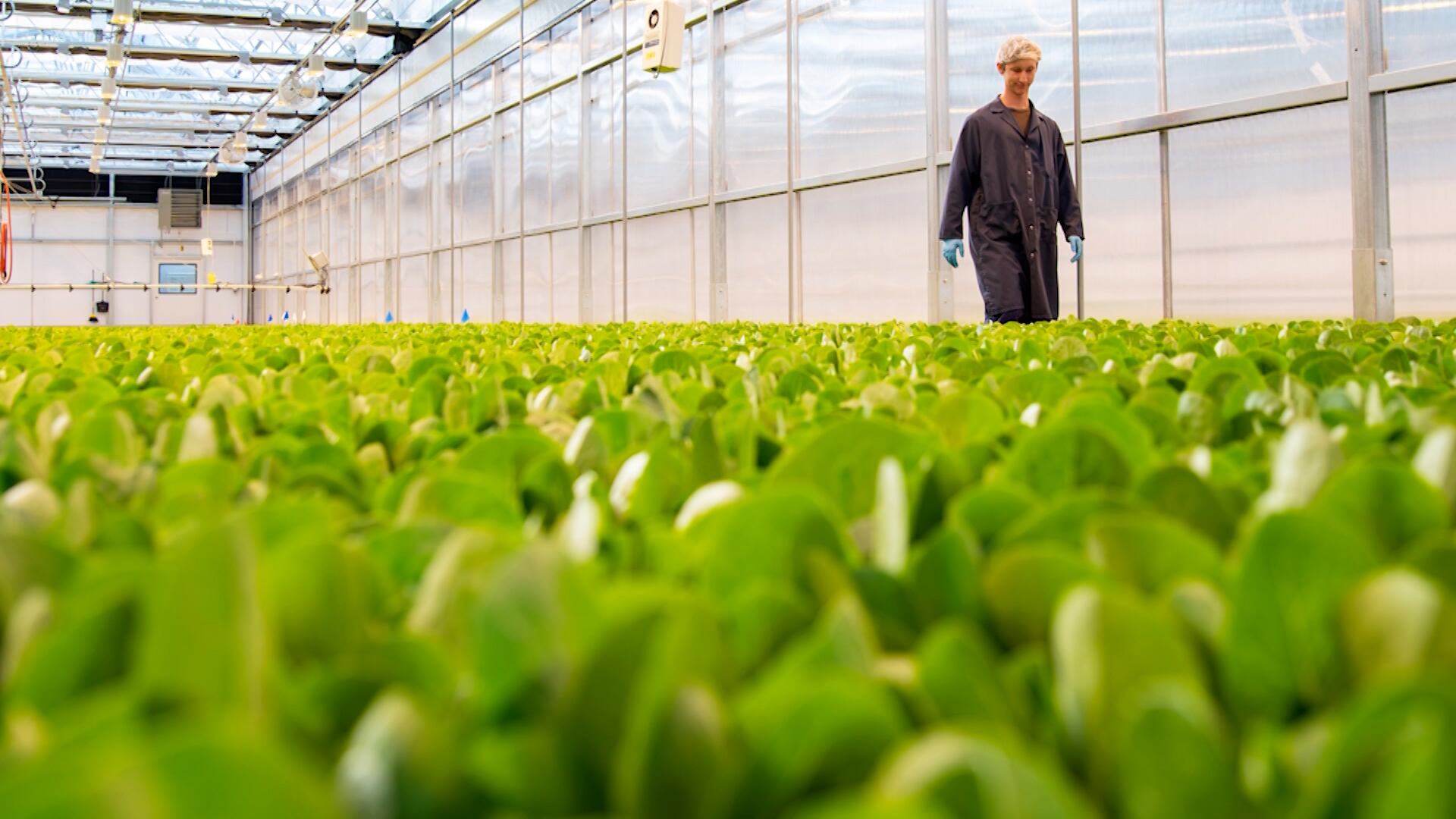
Local Bounti rang the opening bell December 3 in honor of its recent trading debut on the NYSE after closing a $1.1 billion SPAC deal. The company operates an indoor growing facility in Montana and aims to transform the production and delivery of local, fresh and sustainably-grown leafy greens. Craig Hurlbert, co-founder and co-CEO of Local Bounti, joined Cheddar to discuss the company's goals as a newly publicly-traded company.
Stephan Winkelmann, president of Bugatti Automobiles and CEO of Lamborghini, stopped by Cheddar to talk about Lamborghini's 2021 success after the luxury automaker set a company sales record on more than 6,9000 vehicles delivered. With climate change top of mind for the auto industry, Winkelmann also talked about Lamborghini's commitment to hybridizing its entire fleet. Still, when it comes to supercars, the legacy brand isn't quite ready to give up gasoline power, and according to the CEO, three new combustion engine vehicles will be available in 2022.
New York officials have confirmed five omicron COVID-19 cases in New York City and on Long Island after a Minnesota man who tested positive for the same variant said he attended a convention in November at the Jacob Javits Center in Manhattan.
It's Friday at long last. Jill and Carlo cover the latest on Omicron, including a possible superspreader event in NYC. Plus, previewing the November jobs report, a new Zoom feature no one asked for, and when it's no longer a good idea to eat Thanksgiving leftovers.
Three cases of the new omicron COVID-19 variant have been confirmed in the U.S. Cheddar speaks with global infection disease specialist Dr. Rajeev Fernando on how to prepare for a possible new coronavirus wave.