Russian officials on Tuesday rejected accusations that they endangered astronauts aboard the International Space Station by conducting a weapons test that created more than 1,500 pieces of space junk.
U.S. officials on Monday accused Russia of destroying an old satellite with a missile in what they called a reckless and irresponsible strike. The debris could do major damage to the space station as it is orbiting at 17,500 mph (28,000 kph).
Astronauts now face four times greater risk than normal, NASA Administrator Bill Nelson told The Associated Press.
The test clearly demonstrates that Russia, “despite its claims of opposing the weaponization of outer space, is willing to ... imperil the exploration and use of outer space by all nations through its reckless and irresponsible behavior,” U.S. Secretary of State Antony Blinken said in a statement.
The Russian space agency Roscosmos wouldn't confirm or deny that the strike took place, saying only that “unconditional safety of the crew has been and remains our main priority” in a vague online statement released Tuesday.
Russia's Defense Ministry on Tuesday confirmed carrying out a test and destroying a defunct satellite that has been in orbit since 1982, but insisted that “the U.S. knows for certain that the resulting fragments, in terms of test time and orbital parameters, did not and will not pose a threat to orbital stations, spacecraft and space activities” and called remarks by U.S. officials “hypocritical.” Defense Minister Sergei Shoigu said that the strike was carried out “with surgical precision” and posed no threat to the space station.
Russia's Foreign Minister Sergey Lavrov also charged that it is “hypocrisy" to say that Russia creates risks for peaceful activities in space.
Once the situation became clear early Monday morning, the four Americans, one German and two Russians on board the International Space Station were ordered to immediately seek shelter in their docked capsules. They spent two hours in the two capsules, finally emerging only to have to close and reopen hatches to the station’s individuals labs on every orbit, or 1 1/2 hours, as they passed near or through the debris.
NATO Secretary-General Jens Stoltenberg agreed that Russia’s actions endangered the space station.
“This was a reckless act by Russia to actually shoot down and destroy a satellite as part of a test of an anti-satellite weapon system,” which created a lot of space debris, Stoltenberg told reporters in Brussels.
He said it was of additional concern “because it demonstrates that Russia is now developing new weapons systems that can shoot down the satellites, can destroy important space capabilities for basic infrastructure on Earth, like communications, like navigation, or like early warning of missile launches.”
NASA Mission Control said the heightened threat could continue to interrupt the astronauts’ science research and other work. Four of the seven crew members only arrived at the orbiting outpost Thursday night.
A similar weapons test by China in 2007 also resulted in countless pieces of debris. One of those threatened to come dangerously close to the space station last week. While it later was dismissed as a risk, NASA had the station move anyway.
Anti-satellite missile tests by the U.S. in 2008 and India in 2019 were conducted at much lower altitudes, well below the space station at about 260 miles (420 kilometers.)
___
Marcia Dunn in Cape Canaveral, Florida, and Lorne Cook in Brussels contributed to this report.
A new report by the Foreign Correspondents Club of China warns that press freedom in the most populous country in the world is declining at an alarming speed. Cheddar News speaks with Steven Butler, Asia Program Coordinator at the Committee to Protect Journalists, about the hardships journalists face in China.
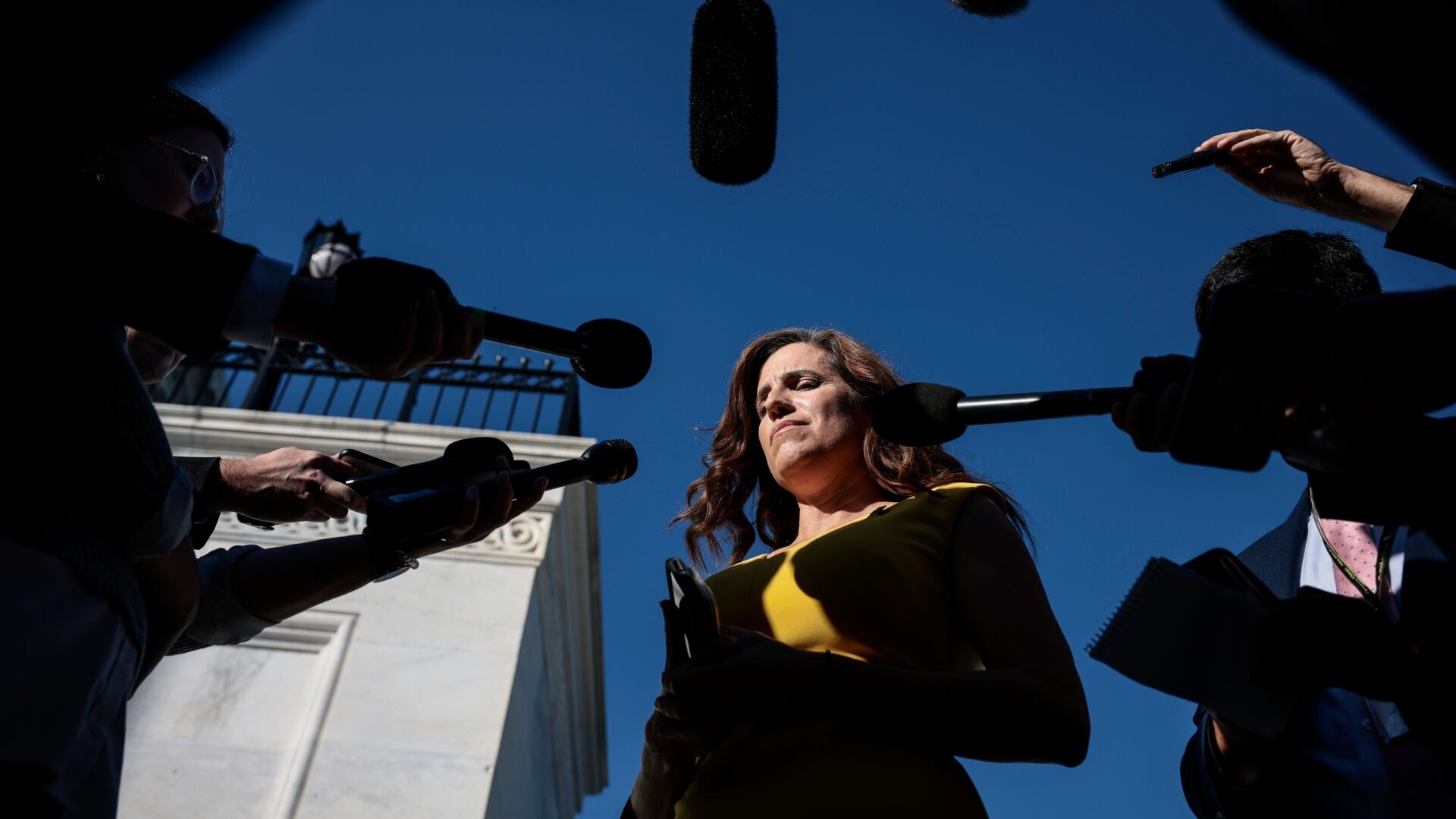
Rep. Nancy Mace (R-S.C. 1st District) joined Cheddar to discuss her cannabis legalization bill, the States Reform Act, and the prospects for gaining bipartisan support for a bill that has garnered the endorsement of e-commerce giant Amazon. This legislation is supported by businesses large and small, Amazon obviously being the most recent and largest business to support it," Mace said. "They don't want to sell pot. But what it does do is it affects their working employment pool." She stated that 10 percent of eligible new hires for Amazon are affected by restrictive marijuana laws. The representative also explained that the bill leaves equity provisions up to the states rather than mandating them on a federal level.
After a number of tragic subway incidents, the MTA is facing increased pressure to install subway platform screens to help prevent injury or death. However, according to an earlier report from the MTA, installing these prevented measures isn't feasible. New York City Council Member Keith Powers, joined Cheddar to discuss more.
Across the country, states are working to redraw their congressional lines in what is often known as gerrymandering. These news lines are expected to determine the balance of power between Democrats and Republicans within the next decade. Senior Counsel for the Brennan Center's Democracy Program, Michael Li, joined Cheddar to discuss more.
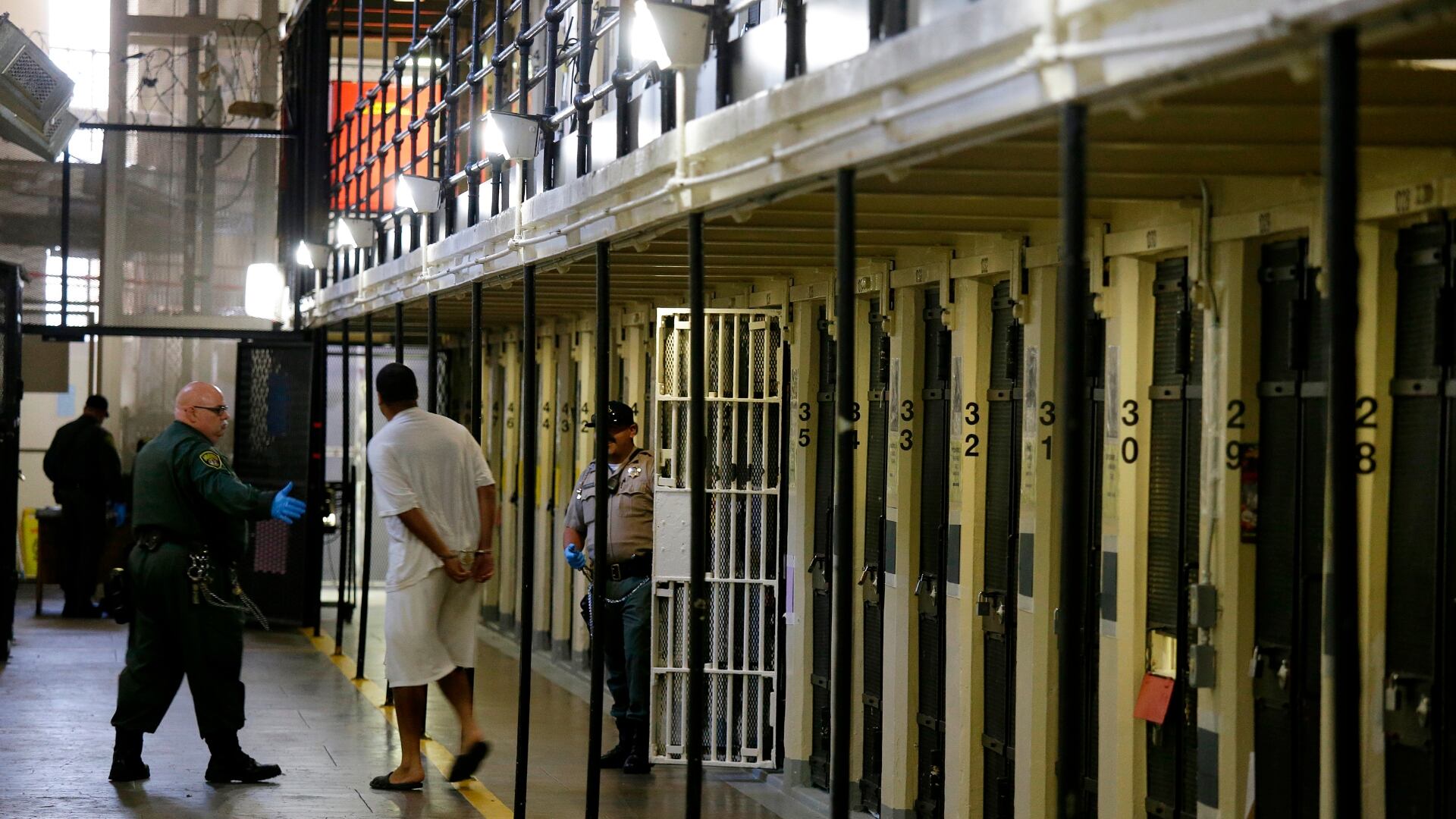
The state of California is officially planning to close its death row in the next two years. That state's governor Democrat Gavin Newsom says the plan is now to move all condemned inmates to other prisons and turn it into, as he calls it, a positive healing environment. Former U. S. Assistant Attorney and Legal Analyst, David Katz, joined Cheddar to discuss more.
Anthony Saccaro, Founder and President of Providence Financial, joins Cheddar News' Closing Bell, where he elaborates on why he is excited that the market is beginning to rebound and believes February has the potential to be a good month after a turbulent January.
Cryptocurrency is expected to become a part of our daily lives — but what sort of environmental impact does it have? As the U.S. becomes the crypto mining capital of the world, climate advocates are worried about mining companies reopening old coal plants, using massive amounts of energy, wasteful hardware, and more. Congressional Democrats led by Senator Elizabeth Warren are demanding answers from mining firms about their electricity use and waste levels. John Belizaire, CEO of Soluna Computing, joins Cheddar Climate to discuss the congressional letters, how crypto mining can become a green industry, and more.
The Supreme Court will reconsider race-based affirmative action in college admissions. The court will examine admissions policies at Harvard University and The University of North Carolina Chapel Hill, which count the race of applicants as a factor in admissions. The court has upheld affirmative action policies in the past, saying it helps to create more diverse student bodies. However, the conservative Supreme Court could be skeptical and even possibly hostile to such policies. Nick Anderson, Higher Education Writer, Washington Post joined Cheddar's Opening Bell to discuss.