By Lisa Mascaro, Kevin Freking and Farnoush Amiri
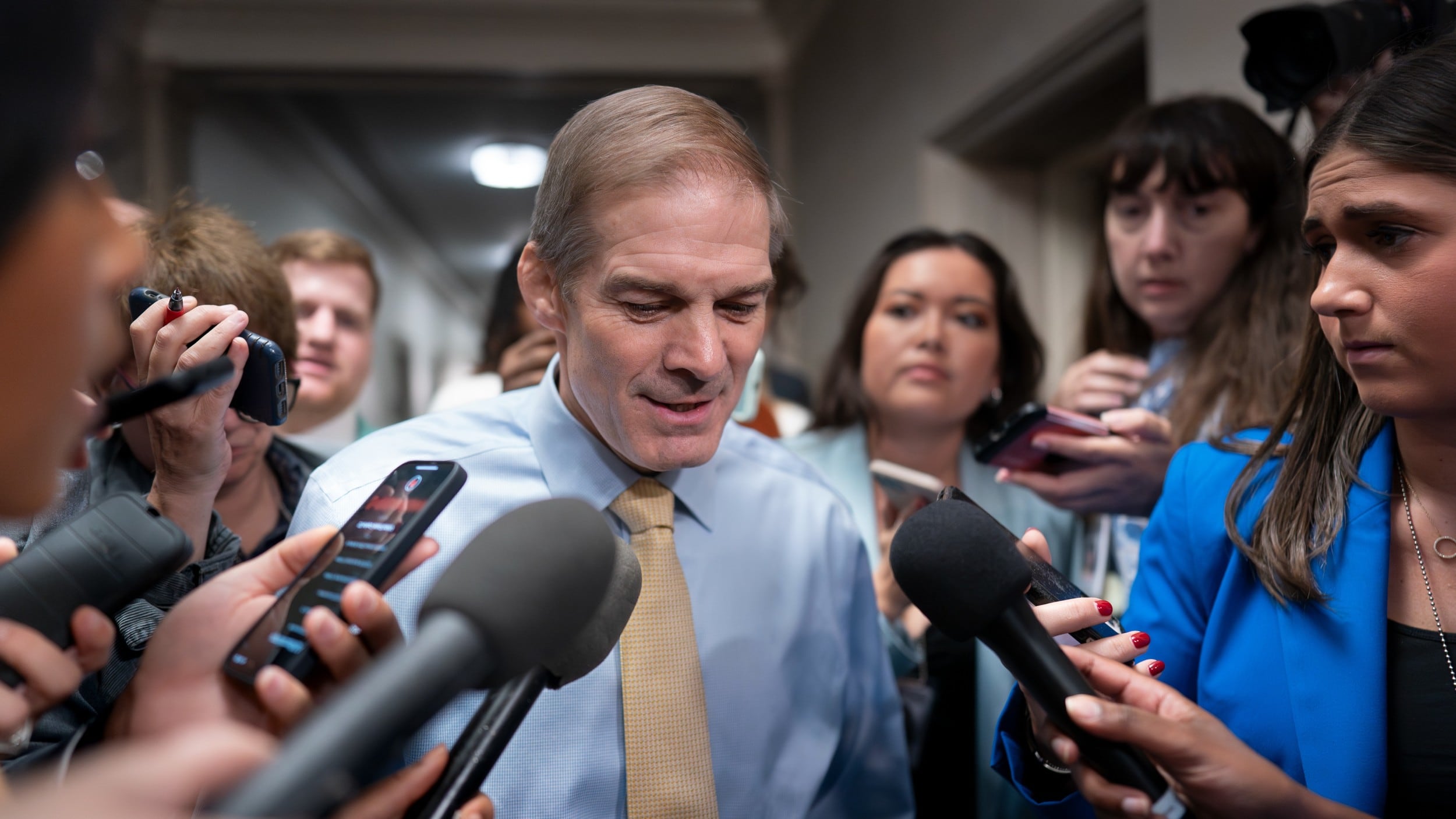
Republicans chose Rep. Jim Jordan as their new nominee for House speaker on Friday during internal voting, putting the gavel within reach of the staunch ally of GOP presidential front-runner Donald Trump.
Jordan, of Ohio, will now try to unite colleagues from the deeply divided House GOP majority around his bid ahead of a floor vote, which could push to next week.
Frustrated House Republicans have been fighting bitterly over whom they should elect to replace the speaker they ousted, Rep. Kevin McCarthy, and the future direction of their party. The stalemate, now in its second week, has thrown the House into chaos, grinding all other business to a halt.
“I think Jordan would do a great job,” McCarthy said ahead of the vote. “We got to get this back on track.”
Attention swiftly turned to Jordan, the Judiciary Committee chairman and founder of the hard-line Freedom Caucus, as the next potential candidate after Majority Leader Steve Scalise abruptly ended his bid when it became clear holdouts would refuse to back him.
But not all Republicans want to see Jordan as speaker, second in line to the presidency. Overwhelmed and exhausted, anxious GOP lawmakers worry their House majority is being frittered away to countless rounds of infighting and some don't want to reward Jordan's wing, which sparked the turmoil.
“If we’re going to be the majority party, we have to act like the majority party,” said Rep. Austin Scott, R-Ga., who posed a last-ditch challenge to Jordan.
While the firebrand Jordan has a long list of detractors who started making their opposition known, Jordan’s supporters said voting against the Trump ally during a public vote on the House floor would be tougher since he is so popular and well-known among more conservative GOP voters.
Heading into a morning meeting, Jordan said, “I feel real good.”
Other potential speaker choices were also being floated. Some Republicans proposed simply giving Rep. Patrick McHenry, R-N.C., who was appointed interim speaker pro tempore, greater authority to lead the House for some time.
The House, without a speaker, is essentially unable to function during a time of turmoil in the U.S. and wars overseas. The political pressure increasingly is on Republicans to reverse course, reassert majority control and govern in Congress.
With the House narrowly split 221-212, with two vacancies, any nominee can lose just a few Republicans before they fail to reach the 217 majority needed in the face of opposition from Democrats, who will most certainly back their own leader, New York Rep. Hakeem Jeffries.
Absences heading into the weekend could lower the majority threshold needed, and Republicans said they were down about a dozen lawmakers as of midday Friday. No floor votes were scheduled as attendance thinned before the weekend.
In announcing his decision to withdraw from the nomination, Scalise said late Thursday the Republican majority still has to come together and “open up the House again. But clearly not everybody is there.”
Asked if he would throw his support behind Jordan, Scalise said, “It’s got to be people that aren’t doing it for themselves and their own personal interest.”
But Jordan's allies swung into high gear at a chance for the hard-right leader to seize the gavel.
“Make him the speaker. Do it tonight,” said Rep. Jim Banks, R-Ind. “He’s the only one who can unite our party.”
Jordan also received an important nod Friday from the Republican party’s campaign chairman, Rep. Richard Hudson, R-N.C., who made an attempt to unify the fighting factions.
“Removing Speaker Kevin McCarthy was a mistake,” Hudson wrote on social media, saying the party found itself at a crossroads also blocking Scalise. “We must unite around one leader.”
Earlier in the week, Jordan had nominally dropped out of the race he initially lost to Scalise, 113-99, during internal balloting.
Scalise had been laboring to peel off more than 100 votes, mostly from those who backed Jordan. But many hard-liners taking their cues from Trump have dug in for a prolonged fight to replace McCarthy after his historic ouster from the job.
The holdouts argued that as majority leader, Scalise was no better choice, that he should be focusing on his health as he battles cancer and that he was not the leader they would support.
Handfuls of Republicans announced they were sticking with Jordan, McCarthy or someone other than Scalise — including Trump, the former president. The position as House speaker does not need to go to a member of Congress.
Trump, the early front-runner for the 2024 GOP presidential nomination, repeatedly discussed Scalise’s health during a radio interview that aired Thursday.
Scalise has been diagnosed with a form of blood cancer known as multiple myeloma and is being treated, but he has also said he was definitely up for the speaker's job.
On Friday, another California Republican, Rep. Tom McClintock, had introduced a motion to reinstate McCarthy during the morning meeting, but it was shelved.
“I just told them, no, let’s not do that,” McCarthy said afterward. “Let’s walk through this and have an election.”
The situation is not fully different from the start of the year, when McCarthy faced a similar backlash from a different group of far-right holdouts who ultimately gave their votes to elect him speaker, then engineered his historic downfall.
But the math this time is even more daunting, and the problematic political dynamic is only worsening.
Exasperated Democrats, who have been waiting for the Republican majority to recover from McCarthy’s ouster, urged them to figure it out.
“The House Democrats have continued to make clear that we are ready, willing and able to find a bipartisan path forward,” Jeffries said, including doing away with the rule that allows a single lawmaker to force a vote against the speaker. “But we need traditional Republicans to break from the extremists and partner with us.”
Associated Press writers Stephen Groves and Jill Colvin in New York contributed to this report.