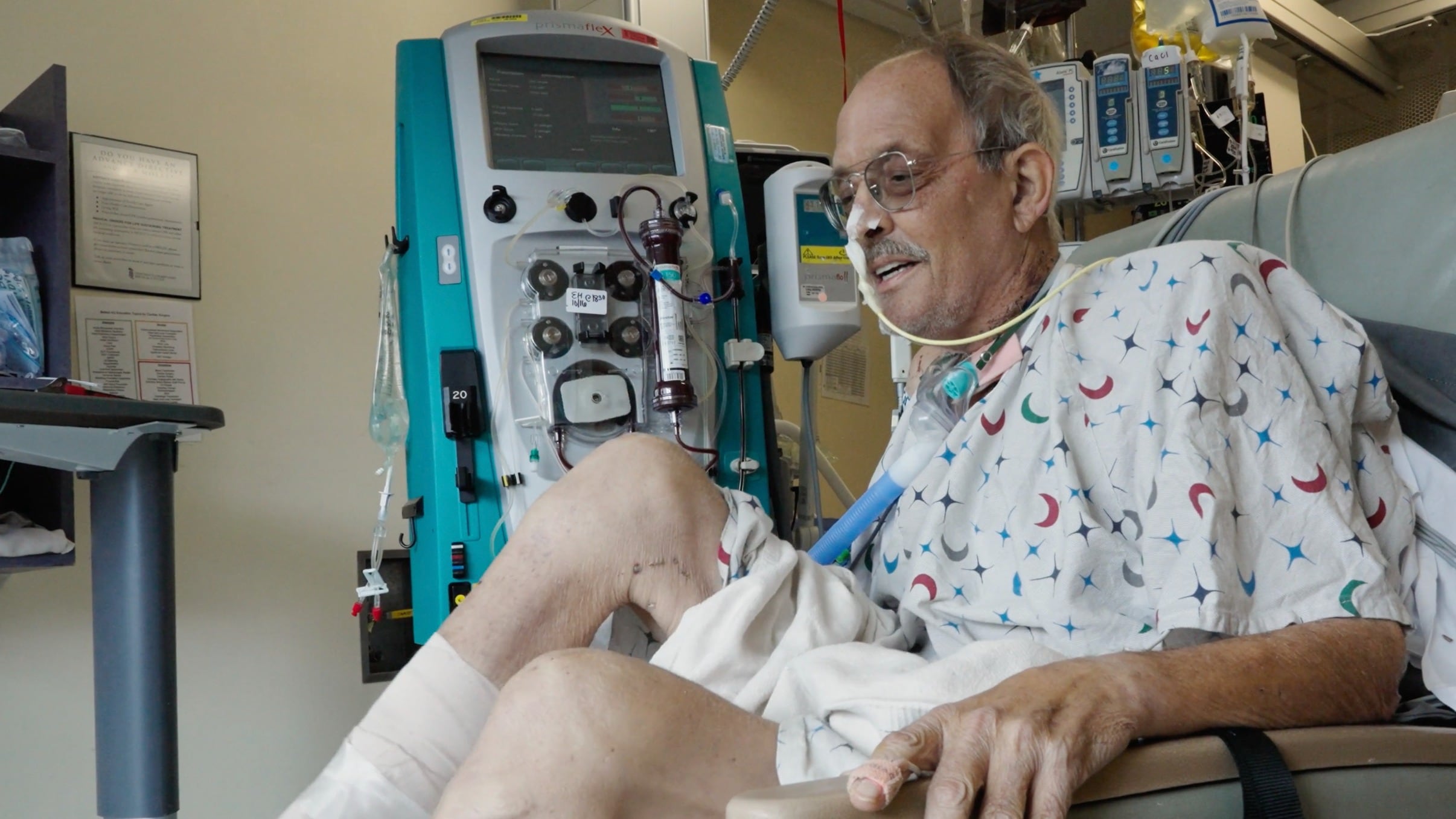
In this image from video provided by the University of Maryland School of Medicine, Lawrence Faucette, a pig heart transplant patient, works with a physical therapist at the school's hospital in Baltimore, Md., on Wednesday, Oct. 18, 2023. (Tom Jemski/University of Maryland School of Medicine via AP)
Lawrence Faucette was dying from heart failure and ineligible for a traditional heart transplant because of other health problems when doctors at the University of Maryland School of Medicine offered the highly experimental surgery.
In the first glimpse of Faucette provided since the Sept. 20 transplant, hospital video shows physical therapist Chris Wells urging him to smile while pushing through a pedaling exercise to regain his strength.
“That’s going to be tough but I’ll work it out,” Faucette, 58, replied, breathing heavily but giving a smile.
The Maryland team last year performed the world’s first transplant of a heart from a genetically altered pig into another dying man. David Bennett survived just two months before that heart failed, for reasons that aren’t completely clear although signs of a pig virus later were found inside the organ. Lessons from that first experiment led to changes before this second try, including better virus testing.
Attempts at animal-to-human organ transplants — called xenotransplants — have failed for decades, as people’s immune systems immediately destroyed the foreign tissue. Now scientists are trying again using pigs genetically modified to make their organs more humanlike.
In Friday’s hospital video, Faucette’s doctors said the pig heart has shown no sign of rejection.
“His heart is doing everything on its own,” said Dr. Muhammad Mohiuddin, the Maryland team’s cardiac xenotransplantation chief.
A hospital spokeswoman said Faucette, of Frederick, Maryland, has been able to stand and physical therapists are helping him gain strength needed to attempt walking.
Many scientists hope xenotransplants one day could compensate for the huge shortage of human organ donations. More than 100,000 people are on the nation’s list for a transplant, most awaiting kidneys, and thousands will die waiting.
A handful of scientific teams have tested pig kidneys and hearts in monkeys and in donated human bodies, hoping to learn enough for the Food and Drug Administration to allow formal xenotransplant studies.
The Associated Press Health and Science Department receives support from the Howard Hughes Medical Institute’s Science and Educational Media Group. The AP is solely responsible for all content.
Heila Technologies, a startup that develops hardware and software to integrate renewables and batteries on a microgrid, is helping to power the first clean energy microgrid for Auto Mercado, a top supermarket chain in Costa Rica. The plant will reduce 20 tons of CO2 emissions per year. Heila Technologies CEO Francisco Morocz joins Cheddar Climate to discuss.
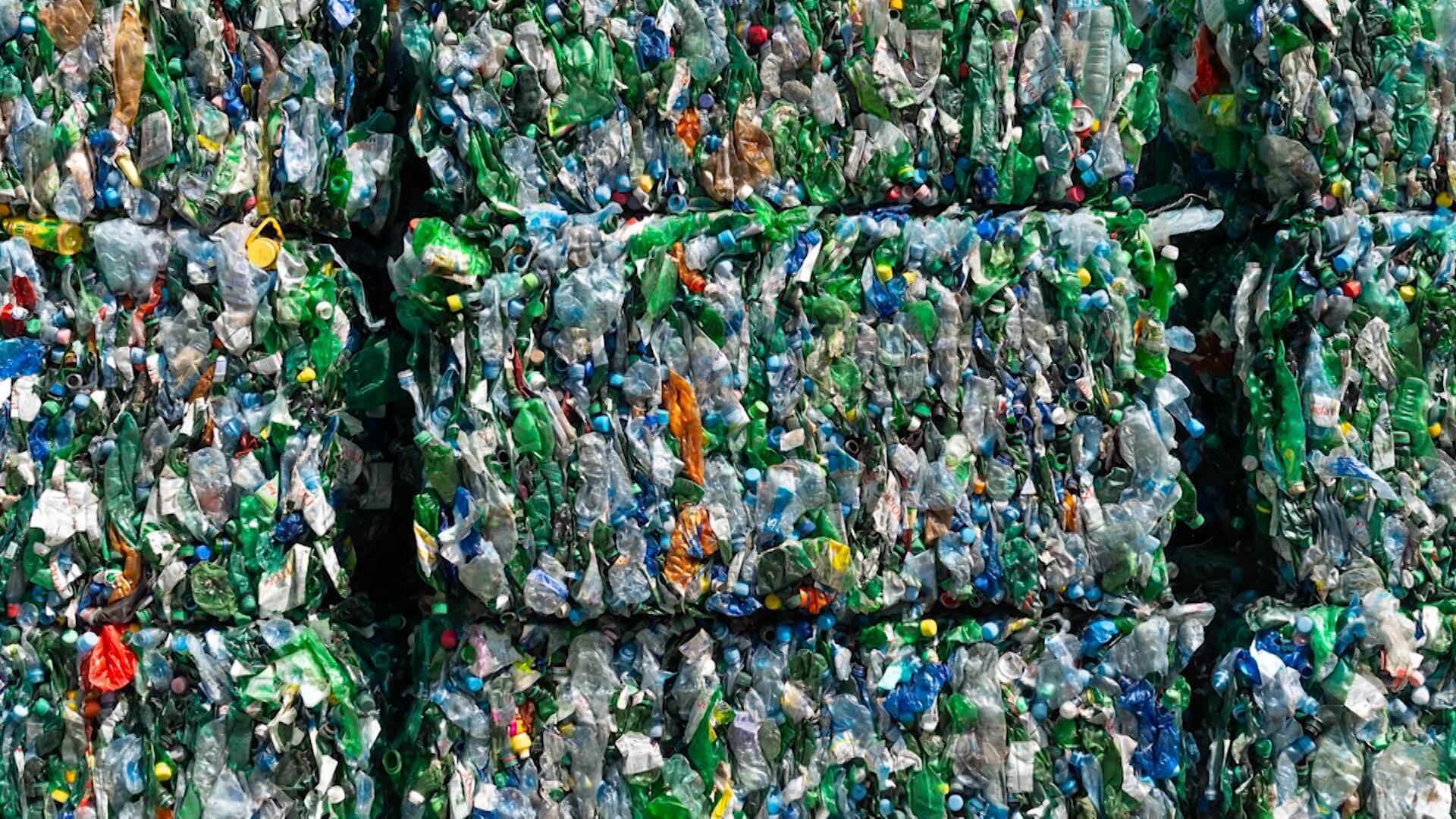
The U.S. has a million-ton problem: each year, hundreds of pounds of plastic waste are produced per person, and that leads to close to 2 million tons of that waste leaking into the environment. Eight million tons end up in the ocean, where it hinders marine life, damages ecosystems, and impacts industry. But in recent years, Congress has introduced measures including the Save our Seas act to try to mitigate the issue and turn our plastic problem around. Sen. Chris Murphy (D-CT) joins Cheddar Climate to discuss why the U.S. is the top global polluter of plastic, what Congress is doing to try to fix the issue, and more.
Daniel Huppmann, researcher at International Institute for Applied Systems Analysis, joins Cheddar Climate, where he explains how the global economy could be 2% bigger by 2100 if the world can hold global warming below 1.5°C.
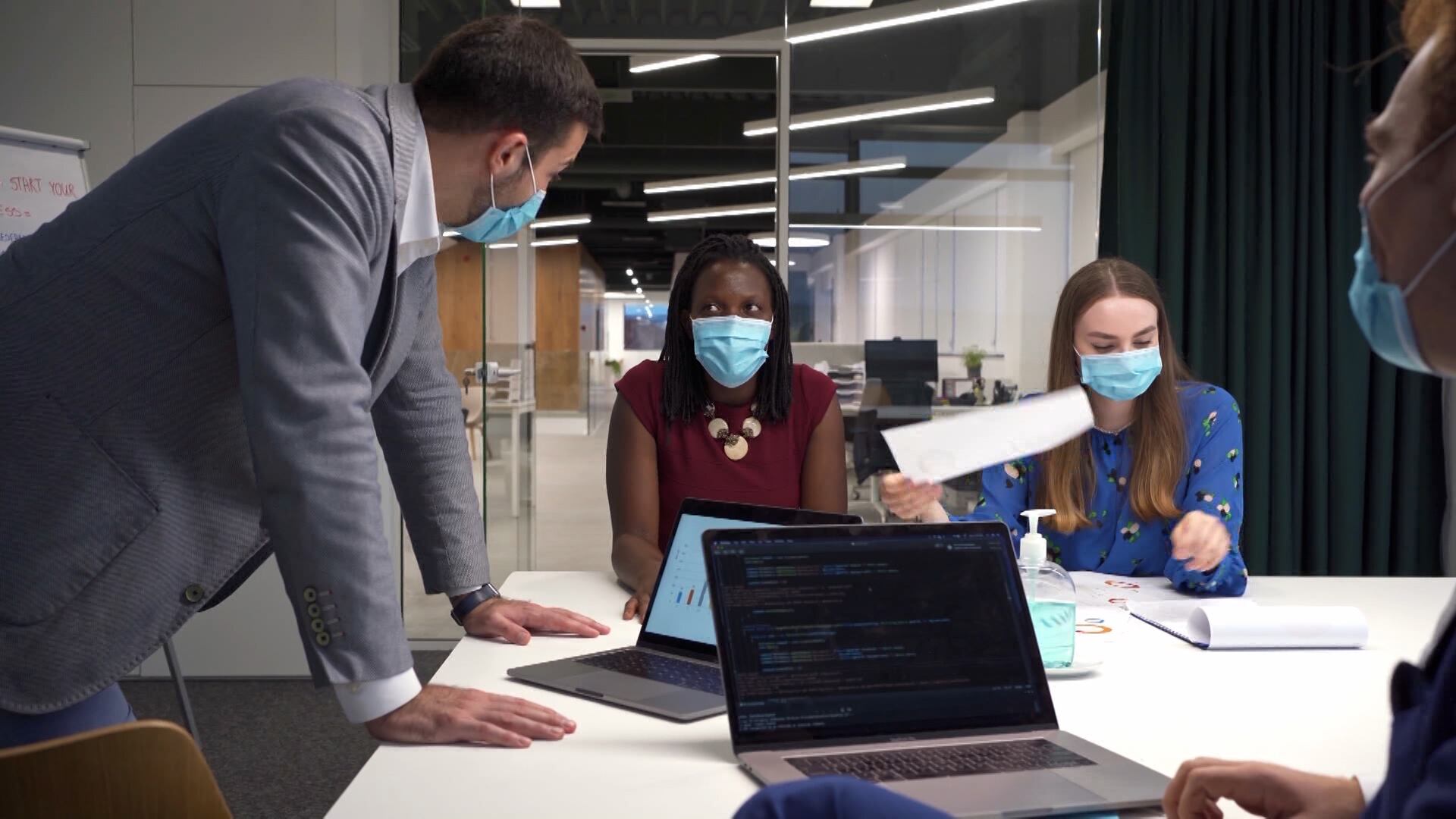
While the World Health Organization strongly advises against a COVID-19 vaccine mandate, national and local governments are moving to make inoculations compulsory. Cheddar News speaks with Dr. Joel Zinberg of the Competitive Enterprise Institute on the issue.
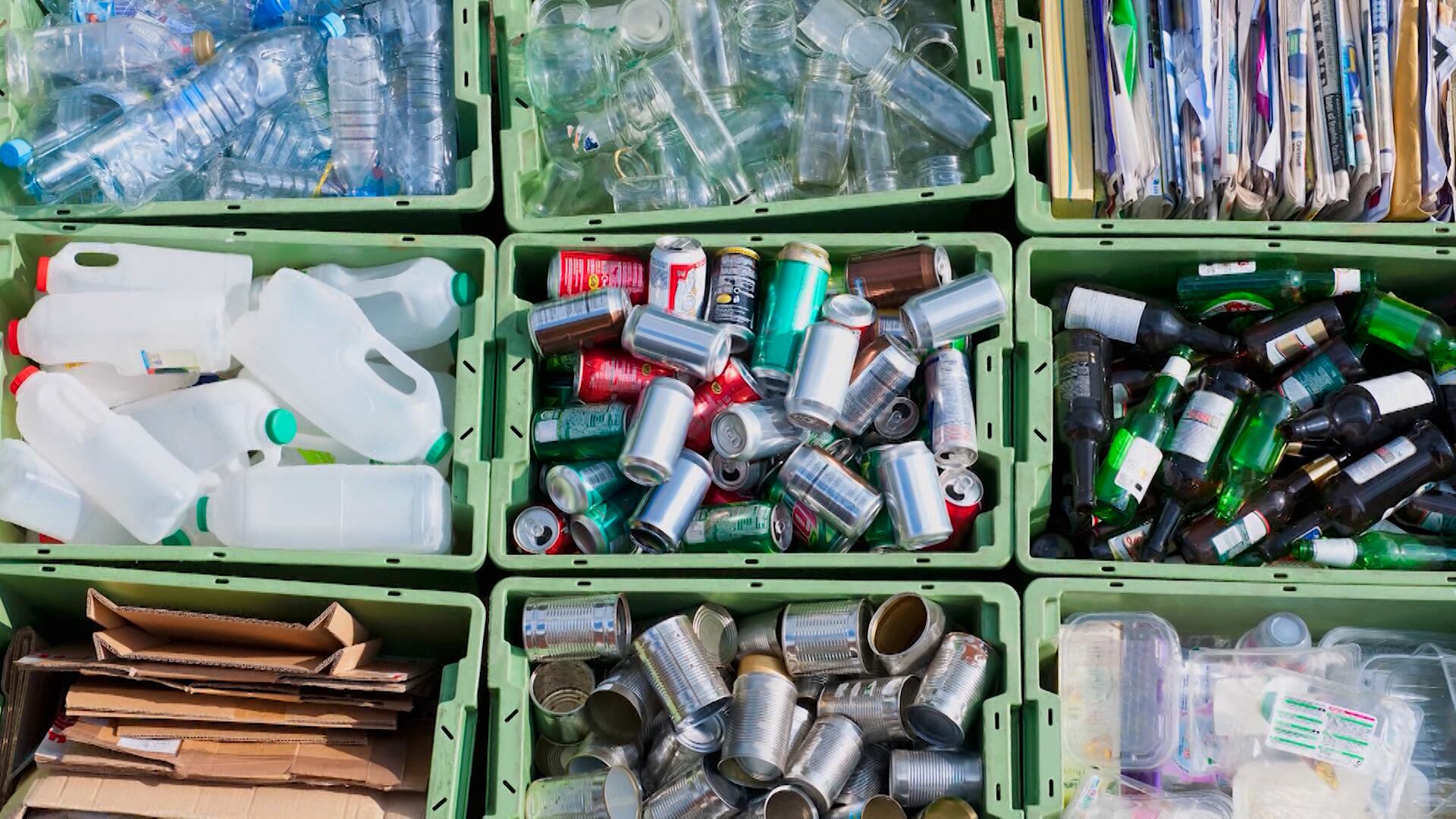
Cheddar breaks down the challenges of plastic recycling and what one company is doing to help offset the negative environmental impact of single-use plastics.
Earlier this year, JetBlue flew its inaugural flight into the United Kingdom. It was a game changer — not only did the airline enter the transatlantic market, but the plane that completed the flight was a single-aisle jet. For decades, flying the distance was synonymous with jumbo jets, but today narrow-body aircraft are now proving they are up for the task — and maybe even the best option. In this episode, Cheddar examines why airlines are betting on narrow-body aircraft.
Carlo and Baker discuss the sweeping new vaccine mandate in NYC that will target all private businesses. Plus, Trump's media venture gets its CEO and more.
Humans are scientifically the most successful species in the history of planet earth. And for this we can thank our opposable thumbs, proportionally large brains, and our upright posture. But for all our anatomical wonders, we still have some pretty major flaws.