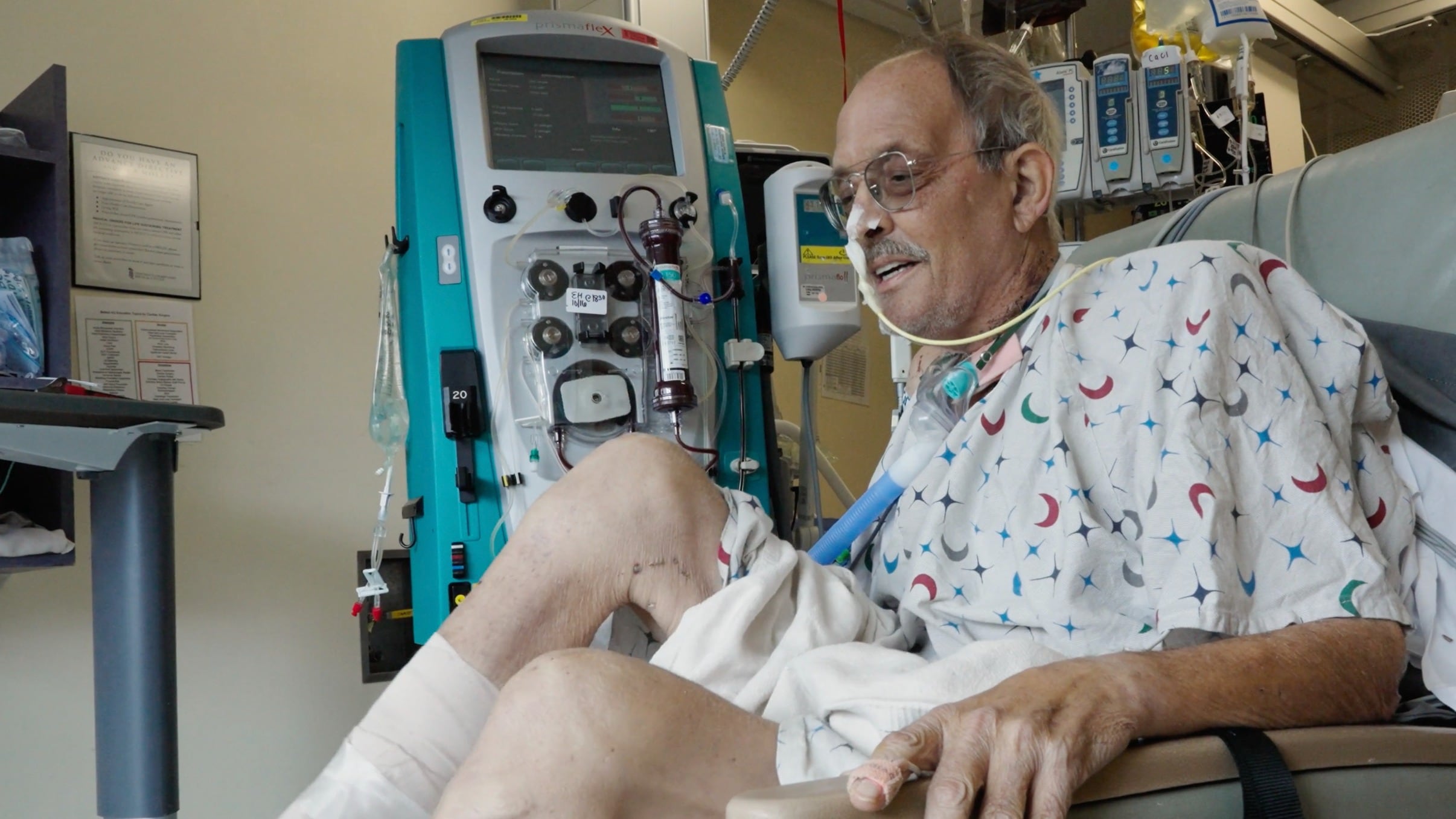
In this image from video provided by the University of Maryland School of Medicine, Lawrence Faucette, a pig heart transplant patient, works with a physical therapist at the school's hospital in Baltimore, Md., on Wednesday, Oct. 18, 2023. (Tom Jemski/University of Maryland School of Medicine via AP)
Lawrence Faucette was dying from heart failure and ineligible for a traditional heart transplant because of other health problems when doctors at the University of Maryland School of Medicine offered the highly experimental surgery.
In the first glimpse of Faucette provided since the Sept. 20 transplant, hospital video shows physical therapist Chris Wells urging him to smile while pushing through a pedaling exercise to regain his strength.
“That’s going to be tough but I’ll work it out,” Faucette, 58, replied, breathing heavily but giving a smile.
The Maryland team last year performed the world’s first transplant of a heart from a genetically altered pig into another dying man. David Bennett survived just two months before that heart failed, for reasons that aren’t completely clear although signs of a pig virus later were found inside the organ. Lessons from that first experiment led to changes before this second try, including better virus testing.
Attempts at animal-to-human organ transplants — called xenotransplants — have failed for decades, as people’s immune systems immediately destroyed the foreign tissue. Now scientists are trying again using pigs genetically modified to make their organs more humanlike.
In Friday’s hospital video, Faucette’s doctors said the pig heart has shown no sign of rejection.
“His heart is doing everything on its own,” said Dr. Muhammad Mohiuddin, the Maryland team’s cardiac xenotransplantation chief.
A hospital spokeswoman said Faucette, of Frederick, Maryland, has been able to stand and physical therapists are helping him gain strength needed to attempt walking.
Many scientists hope xenotransplants one day could compensate for the huge shortage of human organ donations. More than 100,000 people are on the nation’s list for a transplant, most awaiting kidneys, and thousands will die waiting.
A handful of scientific teams have tested pig kidneys and hearts in monkeys and in donated human bodies, hoping to learn enough for the Food and Drug Administration to allow formal xenotransplant studies.
The Associated Press Health and Science Department receives support from the Howard Hughes Medical Institute’s Science and Educational Media Group. The AP is solely responsible for all content.
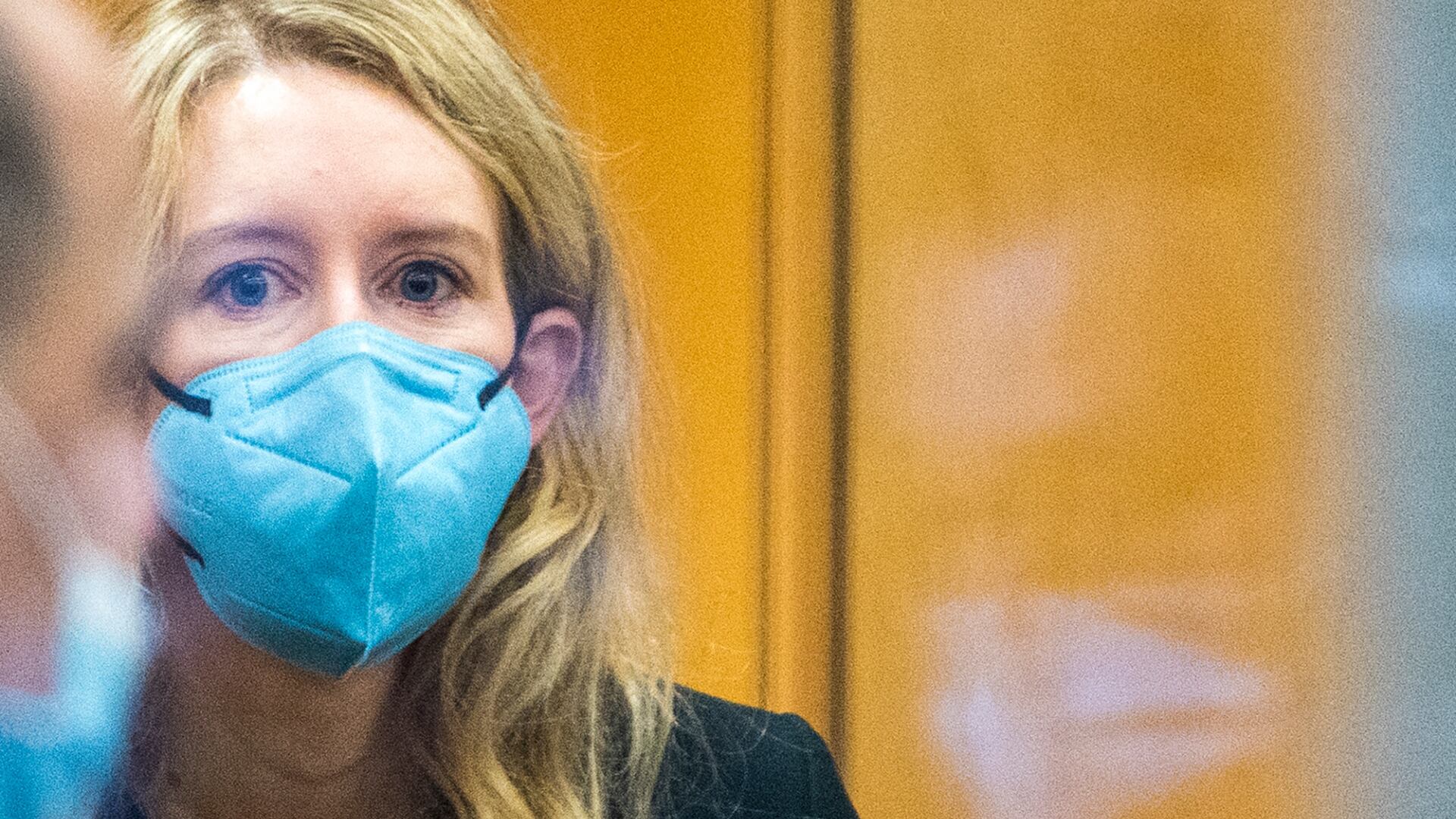
Jurors in the trial against Theranos CEO Elizabeth Holmes have entered day six of deliberations. Holmes is accused of lying to investors about the functionality of a newly developed blood-testing technology. Andrew George, partner at Baker Botts, joined Cheddar to break down key points in the case and what the jury might be considering during their deliberations. He also noted that the rest of Silicon Valley, including Holmes' business partner, Ramesh "Sunny" Balwani, who is facing identical charges, is closely watching the outcome of deliberations — as it could set the tone for future regulations and Balwani's own trial.
According to researchers, the state of California's cap-and-trade program is currently being undermined by forest fires caused primarily by climate change. Over the past few years, trees that were set aside for the program have been releasing carbon as they continue to burn in fires. Climate Researcher and Policy Director at CarbonPlan Danny Cullenward, joined Cheddar to discuss more.
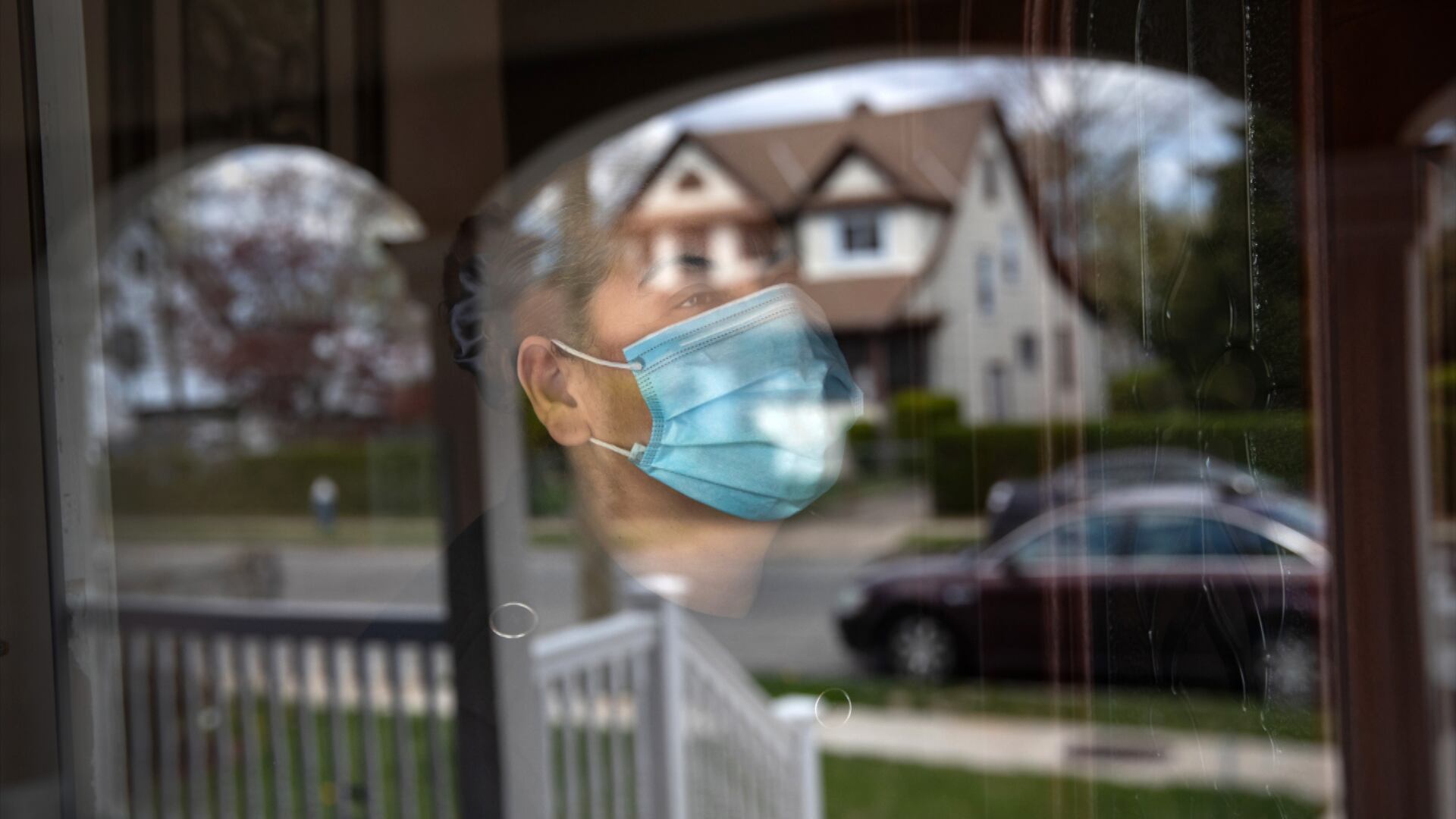
The CDC's latest update to its COVID-19 quarantine guidelines reduces the isolation period from ten days to just five for people who test positive but are asymptomatic. Dr. Bayo Curry-Winchell, regional clinical director at Carbon Health, spoke to Cheddar's Baker Machado about the new guidance. She noted that while the reduced quarantine time "makes sense," the CDC should also require that a person test negative after their quarantine and before interacting with the public. "There is science behind it. We know that the majority of illness happens, or transmission, one to two days before the onset of symptoms and then two to three days as you have symptoms. So there is science behind the reducement of the actual five days," she said.
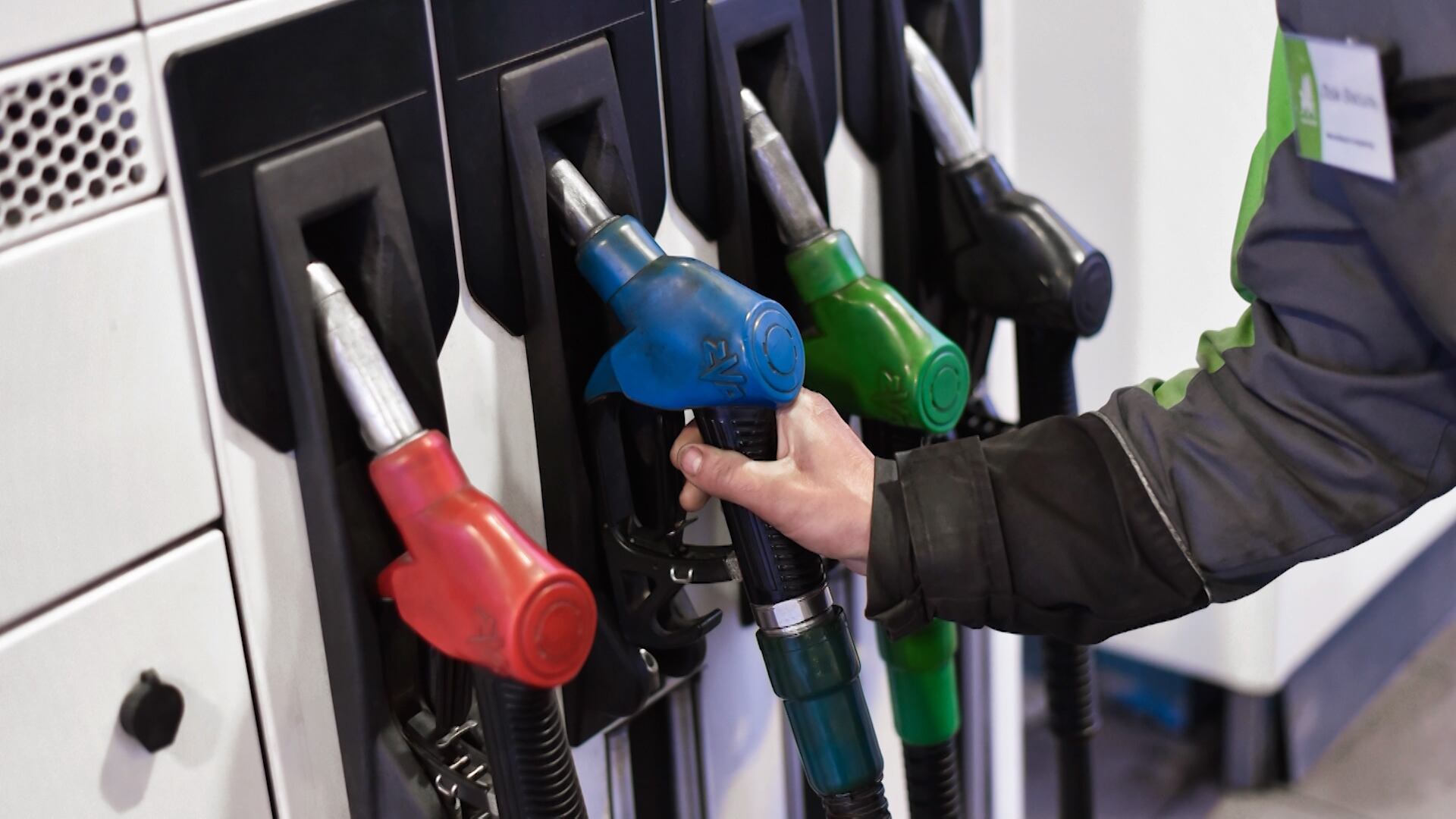
Prices at the pump this year reached a seven-year high, and a new forecast from GasBuddy shared with CNN predicts that gas prices will only continue to rise in 2022 and that the national average could even reach $4.00 a gallon; however, analysts at GasBuddy say anything could happen when it comes to gas prices in the future, as the pandemic has made it difficult to make any predictions about the economy. Consumer Energy Alliance federal policy advisor Michael Zehr joins Cheddar News' Closing Bell to discuss.
As the Omicron variant is fueling a surge in COVID-19 cases, parents and schools are faced with tough choices between absences and outbreaks. Matt Barnum, a national reporter at Chalkbeat, joins Cheddar News to discuss.
Ron Gutman, Co-CEO of Intrivo, joins Cheddar News to discuss how the company is creating a test and tech solution for Covid testing called 2Gather, and how it's using data-driven digital diagnostics to make these tests widely available and affordable.
As 2021 winds down, the number of positive COVID-19 cases has surged dramatically with numbers not seen since the heights of the pandemic. Dr. Laolu Fayanju, the regional medical director at primary care provider Oak Street Health, joined Cheddar to discuss the numbers, how the healthcare system is handling the surge this time around, and what it means that the CDC just cut the quarantine time guideline in half for those who are infected. "These are incredibly high numbers because they reflect the transmissibility of the omicron variant," Fayanju said.