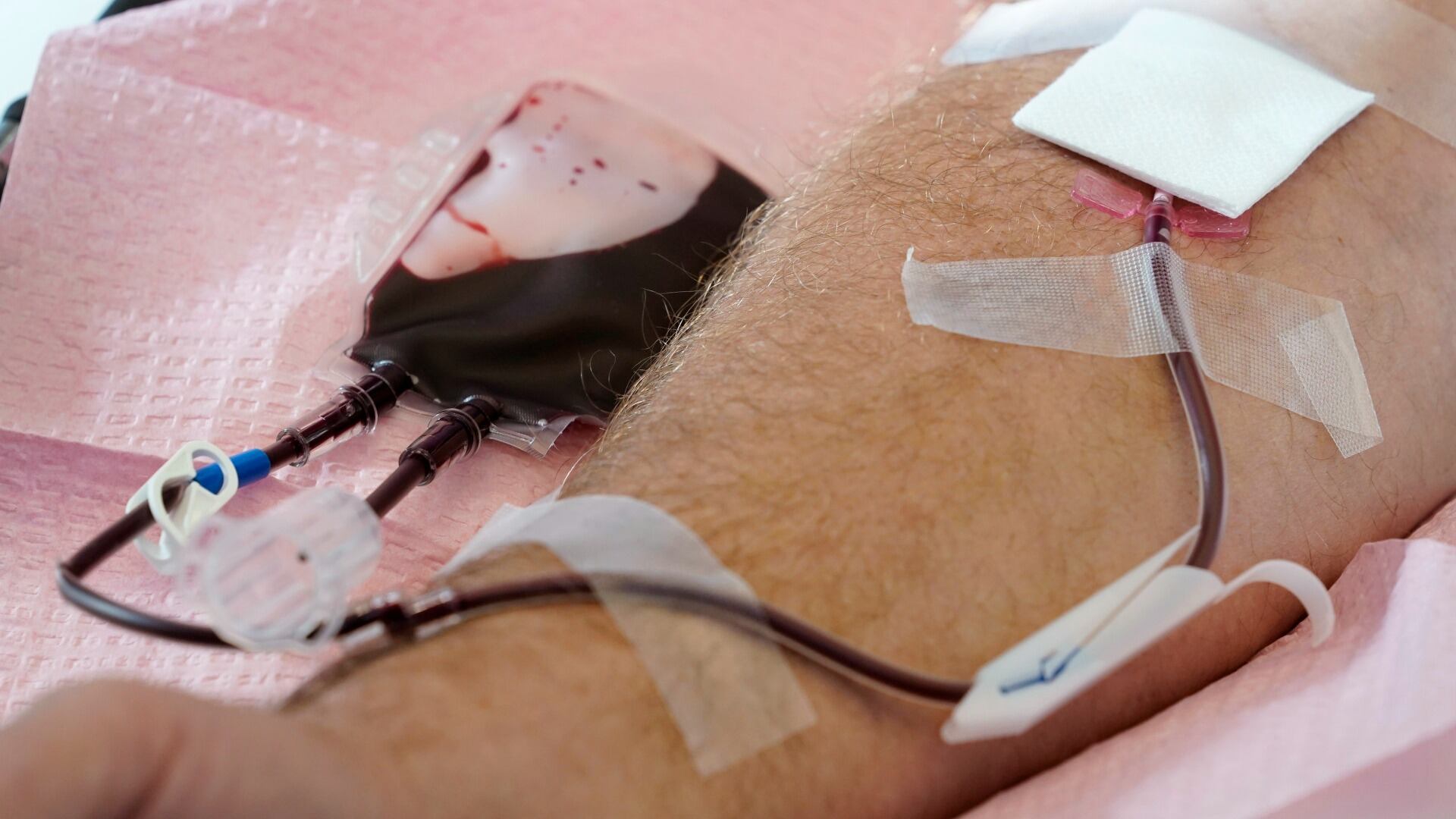
Tubes direct blood from a donor into a bag in Davenport, Iowa, on Friday, Nov. 11, 2022. The U.S. is moving to ease restrictions on blood donations from gay and bisexual men and other groups that traditionally face higher risks of HIV. The Food and Drug Administration on Friday, Jan. 27, 2023, announced draft guidelines that would do away with the current three-month abstinence requirement for donations from men who have sex with men. (AP Photo/Charlie Neibergall, File)
By Matthew Perrone
Gay and bisexual men in monogamous relationships can donate blood in the U.S. without abstaining from sex, under a federal policy finalized Thursday by health regulators.
The Food and Drug Administration guidelines ease decades-old restrictions designed to protect the blood supply from HIV. The agency announced plans for the change in January and said this week the new approach can now be implemented by blood banks.
The updated guidelines do away with a requirement that men who have sex with men abstain from sex for three months prior to giving blood.
Instead, all potential donors — regardless of sexual orientation, sex or gender — will be screened with a new questionnaire that evaluates their individual risks for HIV based on sexual behavior, recent partners and other factors. Potential donors who report having anal sex with new partners in the last three months will be barred from giving until a later date.
The FDA said the new policy reflects the latest scientific evidence and is in line with rules in the U.K. and Canada.
It’s the latest move by the FDA to broaden donor eligibility, with the potential to boost donations.
“The implementation of these recommendations will represent a significant milestone for the agency and the LGBTQI+ community,” Dr. Peter Marks, director of the FDA's center for biological therapies, said in a statement.
Gay rights groups have long opposed blanket restrictions on who can give blood, saying they discriminate. Medical societies including the American Medical Association have also said such exclusions are unnecessary given advances in blood testing.
Anyone who has ever tested positive for HIV will continue to be ineligible to donate blood. Those taking pills to prevent HIV through sexual contact will also still be barred, until three months after their last dose. The FDA noted that the medications, known as PrEP, can delay the detection of the virus in screening tests.
The FDA sets requirements and procedures for U.S. blood banks. All potential donors answer questions about their sexual history, injectable drug use and any recent tattoos or piercings, among other factors that can contribute to the spread of blood-borne infections. Donated blood is then tested for HIV, hepatitis C, syphilis and other infectious diseases.
In 2015, the FDA dropped the lifetime ban on donations from men who have sex with men and replaced it with a one-year abstinence requirement. Then in 2020, the agency shortened the abstinence period to three months, after donations plummeted during the COVID-19 pandemic.
Regulators said there has been no negative impact on the blood supply as a result of those changes.
___
The Associated Press Health and Science Department receives support from the Howard Hughes Medical Institute’s Science and Educational Media Group. The AP is solely responsible for all content.
It’s no secret that the world is amidst a climate crisis never before seen in our time. And our excessive resource consumption is to blame. But just exactly what resources are to blame might surprise you. Hint: fossil fuels are only one part of the problem.
Dr. Robert Lahita, the director of Saint Joseph's Institute for Autoimmune and Rheumatic Diseases, joined Cheddar to discuss the latest on omicron as the new variant has popped up in more than a dozen states so far. He emphasized that vaccinations should remain the priority despite efficacy against the new variant being unknown at this point.
Six states have confirmed cases of the new Omicron coronavirus variant, and this number is expected to grow. Cheddar's Hena Doba speaks with Dr. William Schaffner,
Professor of Preventive Medicine at Vanderbilt University Medical Center, on the latest developments.
Just days after the detection of the Omicron variant, the World Health Organization has agreed to start the process of establishing a global pandemic treaty or accord. Amy Maxmen, senior reporter for Nature, and Dr. Samuel Scarpino, managing director for the Rockefeller Foundation's Pandemic Prevention Institute, joined Cheddar to discuss this effort and what lessons can be learned from the many COVID-19 failures as the world prepares for future pandemics.
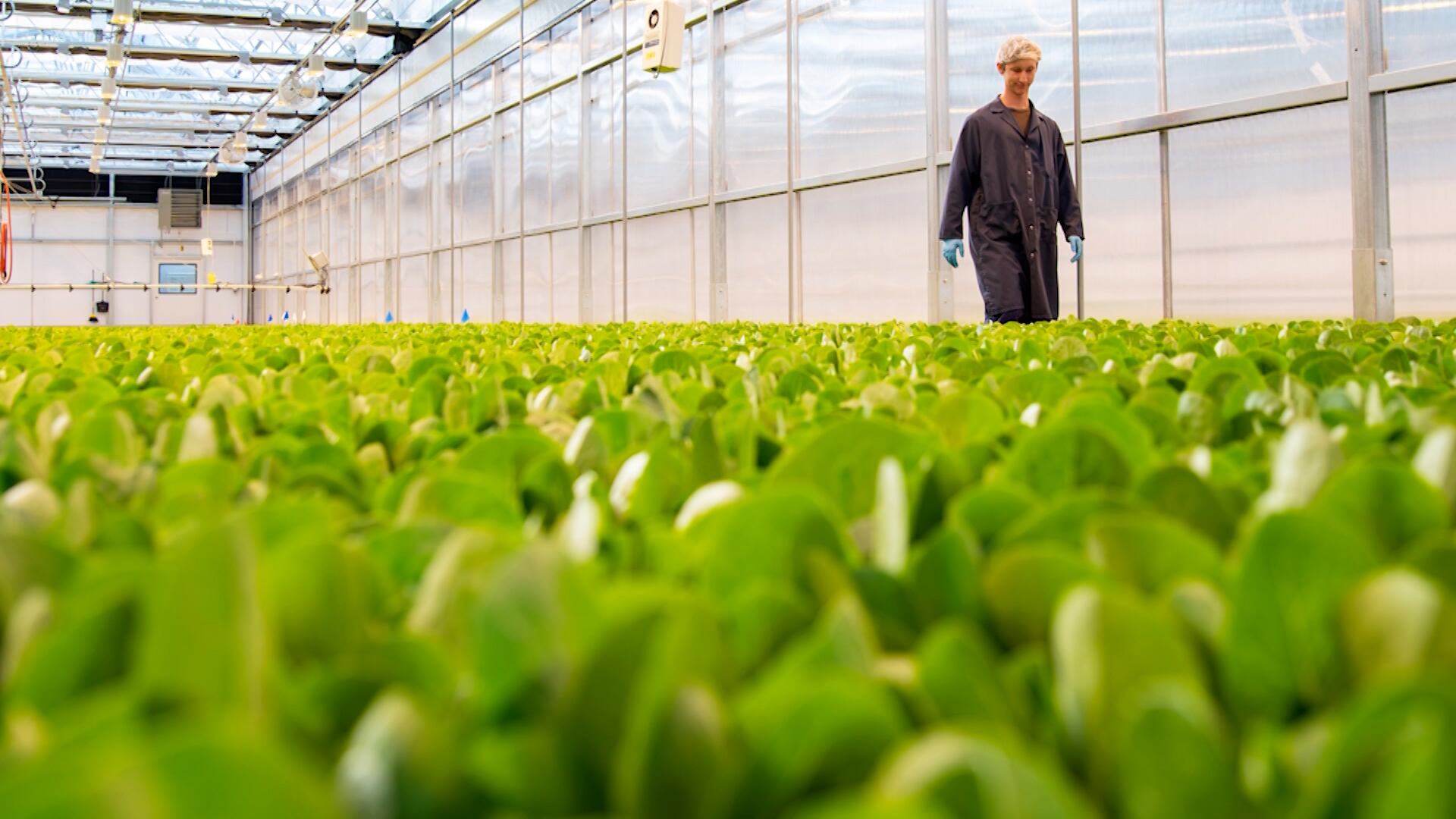
Local Bounti rang the opening bell December 3 in honor of its recent trading debut on the NYSE after closing a $1.1 billion SPAC deal. The company operates an indoor growing facility in Montana and aims to transform the production and delivery of local, fresh and sustainably-grown leafy greens. Craig Hurlbert, co-founder and co-CEO of Local Bounti, joined Cheddar to discuss the company's goals as a newly publicly-traded company.
Stephan Winkelmann, president of Bugatti Automobiles and CEO of Lamborghini, stopped by Cheddar to talk about Lamborghini's 2021 success after the luxury automaker set a company sales record on more than 6,9000 vehicles delivered. With climate change top of mind for the auto industry, Winkelmann also talked about Lamborghini's commitment to hybridizing its entire fleet. Still, when it comes to supercars, the legacy brand isn't quite ready to give up gasoline power, and according to the CEO, three new combustion engine vehicles will be available in 2022.
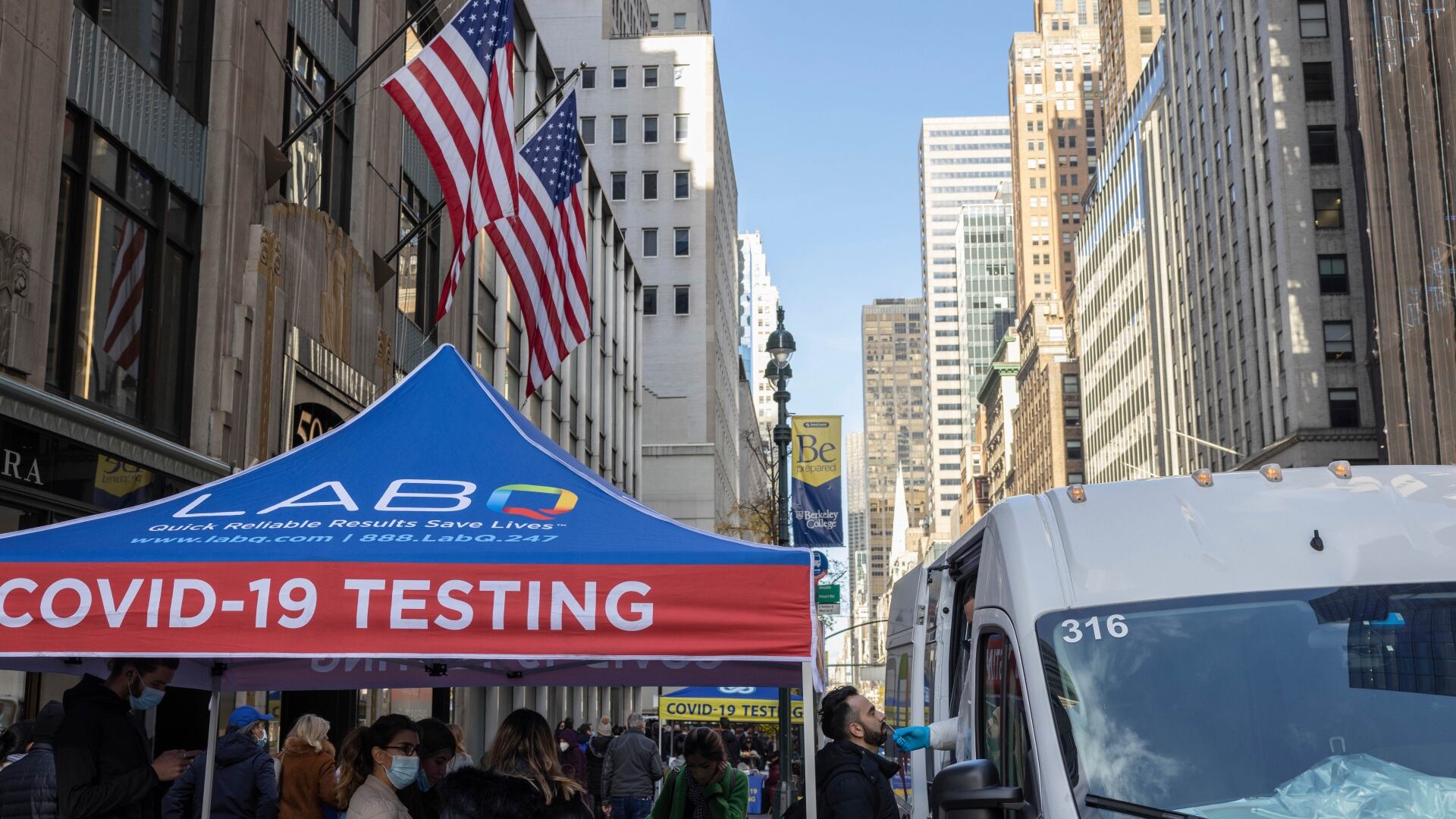
New York officials have confirmed five omicron COVID-19 cases in New York City and on Long Island after a Minnesota man who tested positive for the same variant said he attended a convention in November at the Jacob Javits Center in Manhattan.
It's Friday at long last. Jill and Carlo cover the latest on Omicron, including a possible superspreader event in NYC. Plus, previewing the November jobs report, a new Zoom feature no one asked for, and when it's no longer a good idea to eat Thanksgiving leftovers.
Three cases of the new omicron COVID-19 variant have been confirmed in the U.S. Cheddar speaks with global infection disease specialist Dr. Rajeev Fernando on how to prepare for a possible new coronavirus wave.