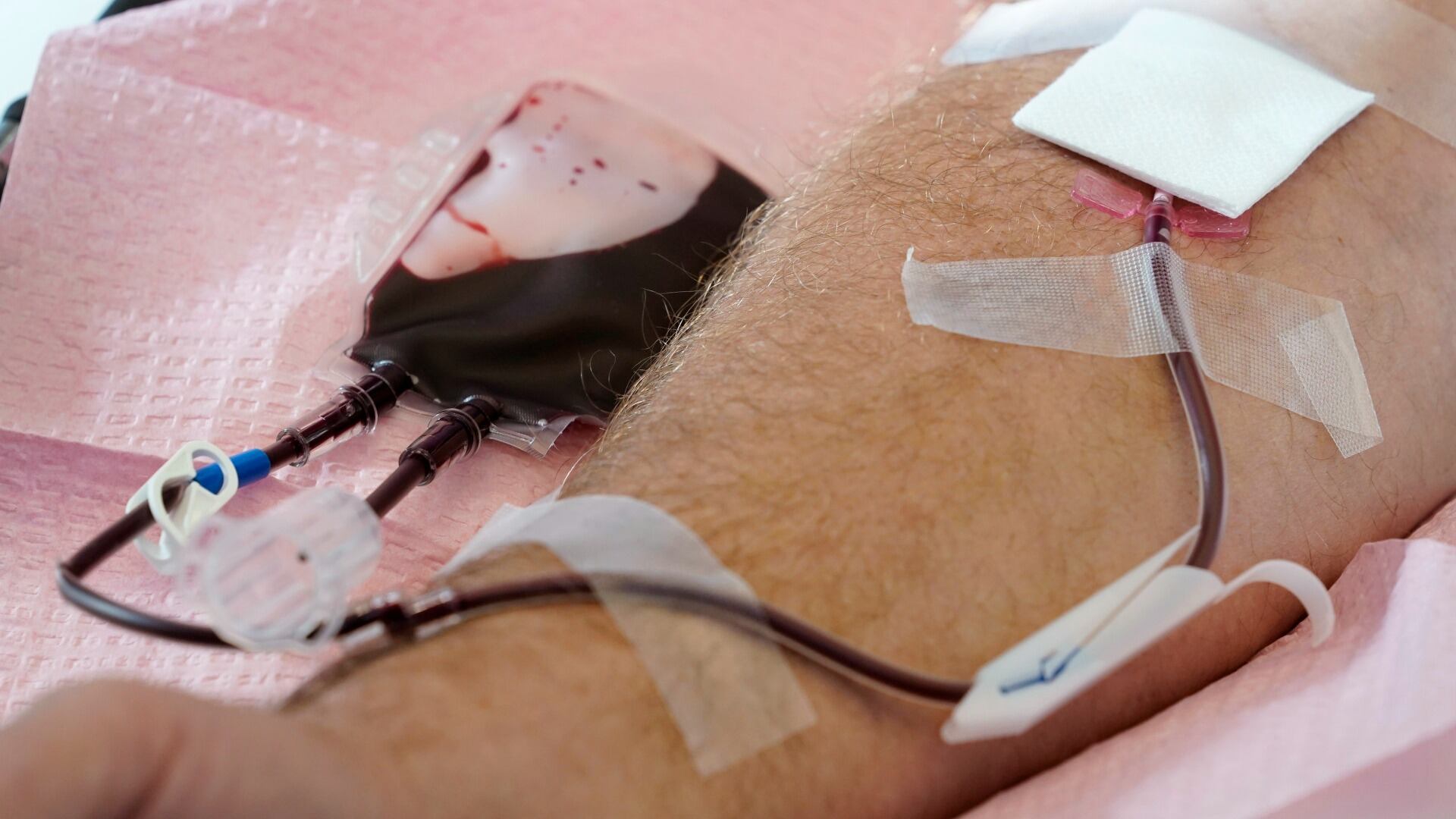
Tubes direct blood from a donor into a bag in Davenport, Iowa, on Friday, Nov. 11, 2022. The U.S. is moving to ease restrictions on blood donations from gay and bisexual men and other groups that traditionally face higher risks of HIV. The Food and Drug Administration on Friday, Jan. 27, 2023, announced draft guidelines that would do away with the current three-month abstinence requirement for donations from men who have sex with men. (AP Photo/Charlie Neibergall, File)
By Matthew Perrone
Gay and bisexual men in monogamous relationships can donate blood in the U.S. without abstaining from sex, under a federal policy finalized Thursday by health regulators.
The Food and Drug Administration guidelines ease decades-old restrictions designed to protect the blood supply from HIV. The agency announced plans for the change in January and said this week the new approach can now be implemented by blood banks.
The updated guidelines do away with a requirement that men who have sex with men abstain from sex for three months prior to giving blood.
Instead, all potential donors — regardless of sexual orientation, sex or gender — will be screened with a new questionnaire that evaluates their individual risks for HIV based on sexual behavior, recent partners and other factors. Potential donors who report having anal sex with new partners in the last three months will be barred from giving until a later date.
The FDA said the new policy reflects the latest scientific evidence and is in line with rules in the U.K. and Canada.
It’s the latest move by the FDA to broaden donor eligibility, with the potential to boost donations.
“The implementation of these recommendations will represent a significant milestone for the agency and the LGBTQI+ community,” Dr. Peter Marks, director of the FDA's center for biological therapies, said in a statement.
Gay rights groups have long opposed blanket restrictions on who can give blood, saying they discriminate. Medical societies including the American Medical Association have also said such exclusions are unnecessary given advances in blood testing.
Anyone who has ever tested positive for HIV will continue to be ineligible to donate blood. Those taking pills to prevent HIV through sexual contact will also still be barred, until three months after their last dose. The FDA noted that the medications, known as PrEP, can delay the detection of the virus in screening tests.
The FDA sets requirements and procedures for U.S. blood banks. All potential donors answer questions about their sexual history, injectable drug use and any recent tattoos or piercings, among other factors that can contribute to the spread of blood-borne infections. Donated blood is then tested for HIV, hepatitis C, syphilis and other infectious diseases.
In 2015, the FDA dropped the lifetime ban on donations from men who have sex with men and replaced it with a one-year abstinence requirement. Then in 2020, the agency shortened the abstinence period to three months, after donations plummeted during the COVID-19 pandemic.
Regulators said there has been no negative impact on the blood supply as a result of those changes.
___
The Associated Press Health and Science Department receives support from the Howard Hughes Medical Institute’s Science and Educational Media Group. The AP is solely responsible for all content.
Carlo and Baker wrap up another week discussing the latest explosion in new Covid cases in the Northeast, President Biden's stalled agenda and more. Plus, Love, Hate, Ate featuring the question: why did movie dialogue get so hard to understand?
From extreme cold in Texas to devastating wildfires in California to the recent tornadoes in the Midwest, the U.S. experienced a string of severe weather events in 2021. Cheddar News speaks with climate expert Sweta Chakraborty on how these disasters are linked to climate change.
The sports world has been at the forefront of dealing with the pandemic ever since the NBA temporarily halted operations in March 2020 and opted to play in their Florida bubble. As the omicron variant and current COVID surge forces game postponements and player quarantines, how leagues manage to continue operations through the outbreaks could be a sign of what is to come for the general public. Dr. Robby Sikka, chair of the COVID Sports Society Workgroup and a former VP with the Minnesota Timberwolves, joined Cheddar's "Closing Bell" to talk about the ways in which the NBA, NHL, and NFL are innovating amid the disruptions.
According to the CDC, Black women are three to four times more likely to die from pregnancy-related causes than white women. The grim statistic is one of the main reasons why two organizations came together to do something. The Bump and the National Medical Association are partnering to launch The Black Maternal Health hub. The online resource will help expecting mothers feel supported, informed, and empowered throughout pregnancy and the early days of parenting. Jennifer Lee at The Bump and Dr. Rachel Villanueva, a clinical assistant professor of OB/GYN and member of the National Medical Association join Cheddar News to talk about the initiative.
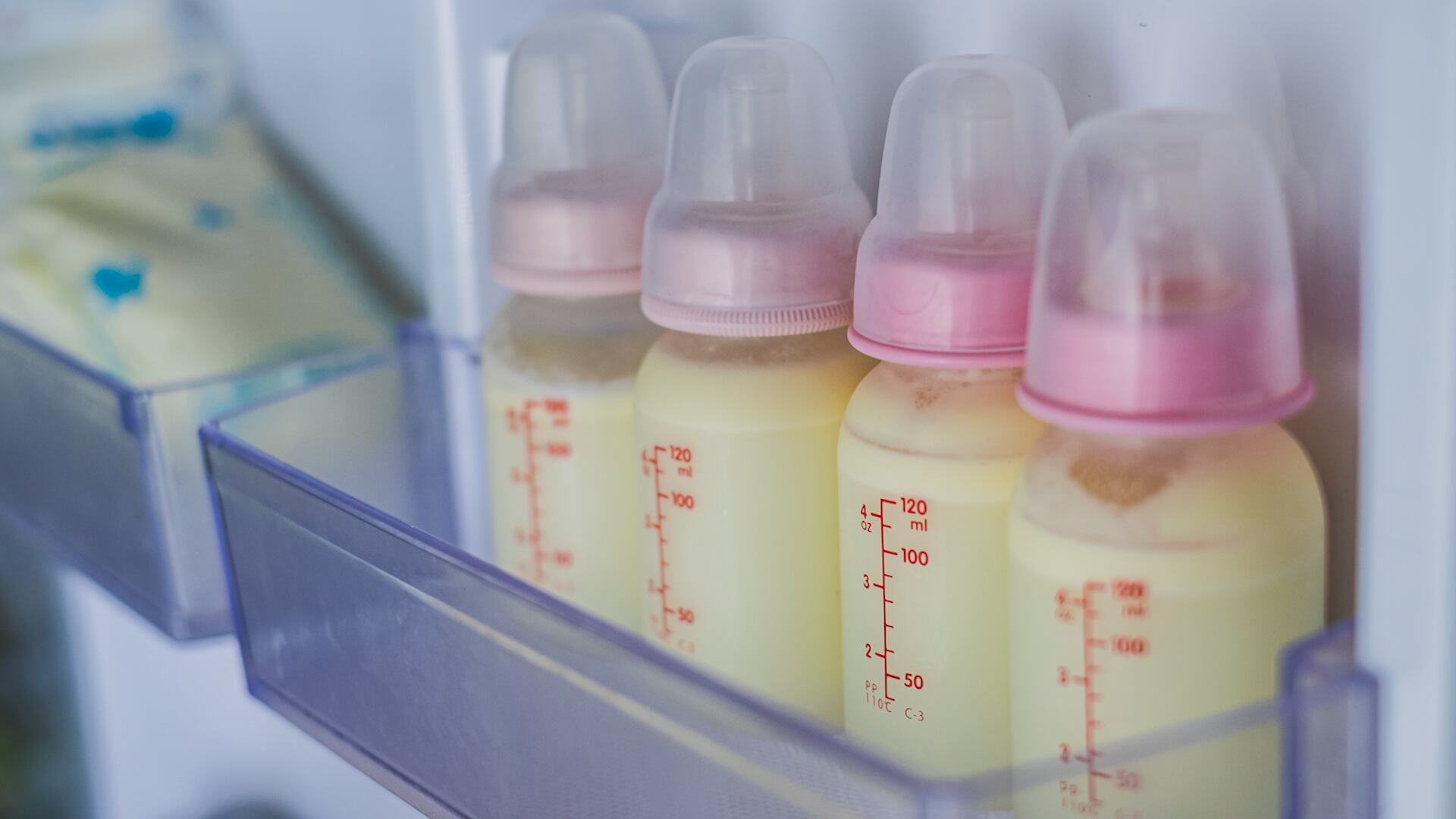
Michelle Egger and Leila Strickland, Co-Founders of Biomilq, join Cheddar Innovates to discuss how their women-led team is recreating the process of milk production outside the body to combine both nutrition and practicality for new moms.
On this episode of Cheddar Innovates: Nucleus CEO breaks down what the future of the genomics industry looks like; Biomilq Co-Founders explains how they are is recreating the process of milk production outside the body to combine both nutrition and practicality for new moms; A look at Curiosity Stream's 'Top Science Stories 2021.'
Kian Sadeghi, Founder and CEO of Nucleus, joins Cheddar Innovates to discuss how he's making genetic analysis more accessible, what our genetic code can teach us about ourselves, and what the future of the genomics industry looks like.
On this episode of Cheddar Innovates: Omorpho Co-Founder explains the innovation driving gravity sportswear; Cool Beans CEO breaks down the science behind 'good mood food;' A look at Curiosity Stream's 'Building The James Webb Telescope.'