Tubes direct blood from a donor into a bag in Davenport, Iowa, on Friday, Nov. 11, 2022. The U.S. is moving to ease restrictions on blood donations from gay and bisexual men and other groups that traditionally face higher risks of HIV. The Food and Drug Administration on Friday, Jan. 27, 2023, announced draft guidelines that would do away with the current three-month abstinence requirement for donations from men who have sex with men. (AP Photo/Charlie Neibergall, File)
By Matthew Perrone
Gay and bisexual men in monogamous relationships can donate blood in the U.S. without abstaining from sex, under a federal policy finalized Thursday by health regulators.
The Food and Drug Administration guidelines ease decades-old restrictions designed to protect the blood supply from HIV. The agency announced plans for the change in January and said this week the new approach can now be implemented by blood banks.
The updated guidelines do away with a requirement that men who have sex with men abstain from sex for three months prior to giving blood.
Instead, all potential donors — regardless of sexual orientation, sex or gender — will be screened with a new questionnaire that evaluates their individual risks for HIV based on sexual behavior, recent partners and other factors. Potential donors who report having anal sex with new partners in the last three months will be barred from giving until a later date.
The FDA said the new policy reflects the latest scientific evidence and is in line with rules in the U.K. and Canada.
It’s the latest move by the FDA to broaden donor eligibility, with the potential to boost donations.
“The implementation of these recommendations will represent a significant milestone for the agency and the LGBTQI+ community,” Dr. Peter Marks, director of the FDA's center for biological therapies, said in a statement.
Gay rights groups have long opposed blanket restrictions on who can give blood, saying they discriminate. Medical societies including the American Medical Association have also said such exclusions are unnecessary given advances in blood testing.
Anyone who has ever tested positive for HIV will continue to be ineligible to donate blood. Those taking pills to prevent HIV through sexual contact will also still be barred, until three months after their last dose. The FDA noted that the medications, known as PrEP, can delay the detection of the virus in screening tests.
The FDA sets requirements and procedures for U.S. blood banks. All potential donors answer questions about their sexual history, injectable drug use and any recent tattoos or piercings, among other factors that can contribute to the spread of blood-borne infections. Donated blood is then tested for HIV, hepatitis C, syphilis and other infectious diseases.
In 2015, the FDA dropped the lifetime ban on donations from men who have sex with men and replaced it with a one-year abstinence requirement. Then in 2020, the agency shortened the abstinence period to three months, after donations plummeted during the COVID-19 pandemic.
Regulators said there has been no negative impact on the blood supply as a result of those changes.
___
The Associated Press Health and Science Department receives support from the Howard Hughes Medical Institute’s Science and Educational Media Group. The AP is solely responsible for all content.
Neil Young has come up with an ultimatum for Spotify: his music or Joe Rogan’s podcast. This comes over concerns that the podcast is spreading COVID-19 vaccine misinformation to its listeners. "The Joe Rogan Experience," which is exclusive to Spotify, is currently the number one streamed podcast on the platform.
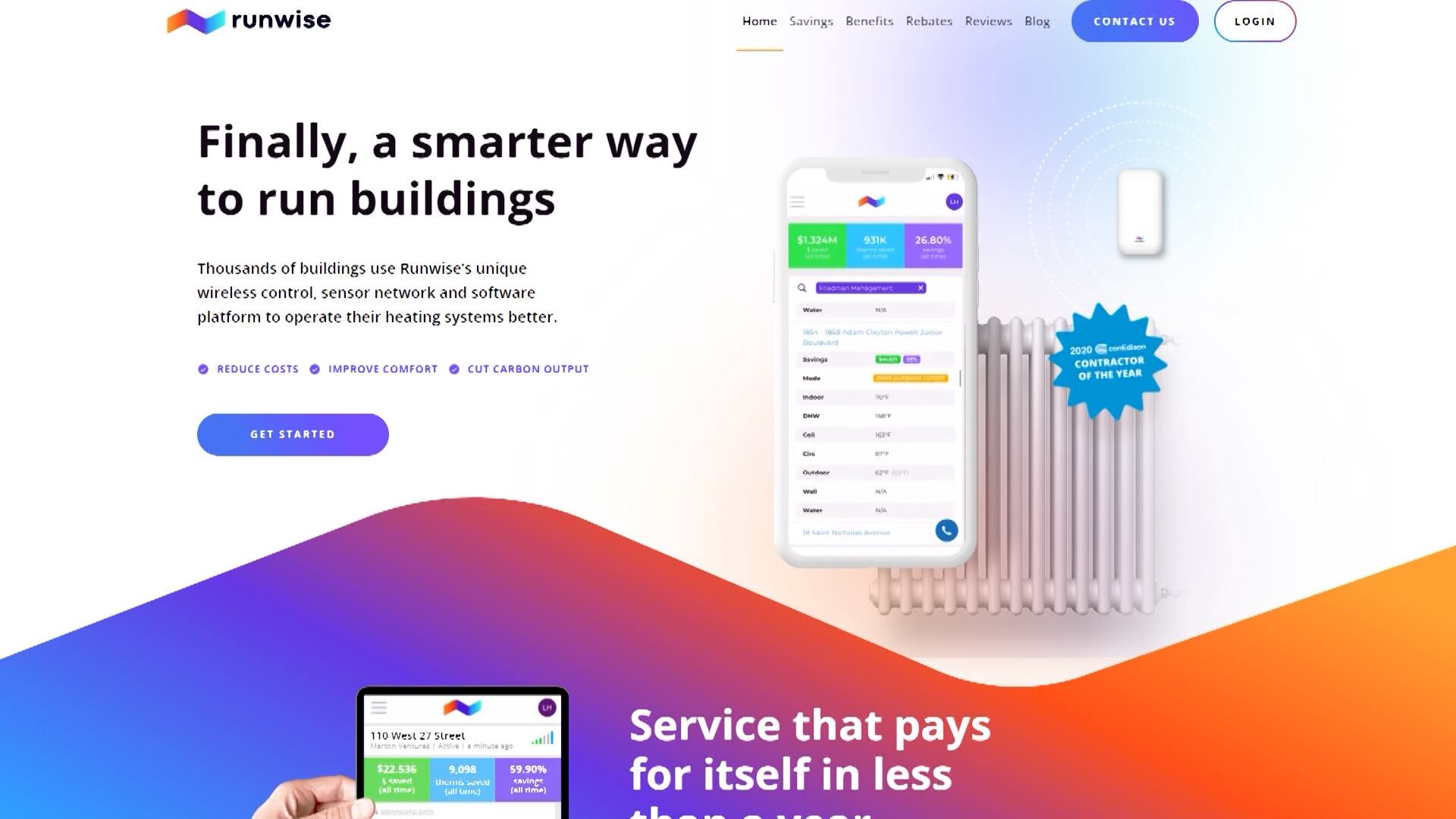
Commercial and residential buildings account for 13% of carbon emissions in the U.S., according to the EPA, and one company says it has a solution. Runwise says it has updated the boiler and heating systems of thousands of buildings, and that its technology not only lowers carbon output but also saves landlords money. Lee Hoffman, Co-Founder and COO of Runwise, joined Cheddar Climate to discuss.
Jo Ruxton, Founder of Ocean Generation, joins Cheddar Climate, where she explains the threat that plastic pollution poses to marine life, but elaborates on why we shouldn't be looking to ban plastic entirely. Ruxton also discusses her biggest takeaways while producing the film ‘A Plastic Ocean.'
President Joe Biden's Build Back Better deal seems all but finished after months of Democratic infighting and the Senate's deadlock over certain provisions. But Biden mentioned during a press conference marking his first year in office that 'chunks' of the bill could be passed. Is that enough motivation to force Democrats to rally around certain parts of the bill - especially those that focus on climate and green energy? Andrew Freedman, Energy and Climate Reporter at Axios, joins Cheddar Climate to discuss whether Senate Democrats will be able to rally around climate provisions, if the idea of passing Build Back Better in 'chunks' is doable, and more.
Anyone who remembers the 70s and 80s will probably remember acid rain. Industrial emissions acidified precipitation around the globe, which killed forests and crops, rendered lakes inhospitable, corroded buildings, and exacerbated human health problems.
But anyone who follows environmental news will be surprised to learn this: we solved it! Countries came together to limit acid rain-causing emissions, eliminating the problem altogether.
…kind of. Acidic precipitation may not be a thing of the past after all.
Natalie Ginsberg, Global Impact Officer, MAPS, joins Cheddar Reveals to discuss MAPS organization and its current initiatives and their work to get FDA approval for MDMA to treat PTSD.
Kelsey Ramsden, Co-Founder, President & CEO, Mind Cure Health, joins Cheddar Reveals to break down what 'psychedelic therapy' could look like once it's legalized and how Mind Cure Health is using AI to help treat everything from addiction to depression.
On this episode of Cheddar Reveals, Natalie Ginsberg, Global Impact Officer, MAPS, discusses the MAPS organization and its current initiatives and their work to get FDA approval for MDMA to treat PTSD; Kelsey Ramsden, Co-Founder, President & CEO, Mind Cure Health, breaks down what 'psychedelic therapy' could look like once it's legalized and how Mind Cure Health is using AI to help treat everything from addiction to depression; Cheddar gets a look at Curiosity Stream's 'Pain, Pus and Poison.'