By Deepa Bharath 

California may become the first state in the nation to outlaw caste-based bias, a safeguard people of South Asian descent say is necessary to protect them from discrimination in housing, education and the tech sector where they hold key roles.

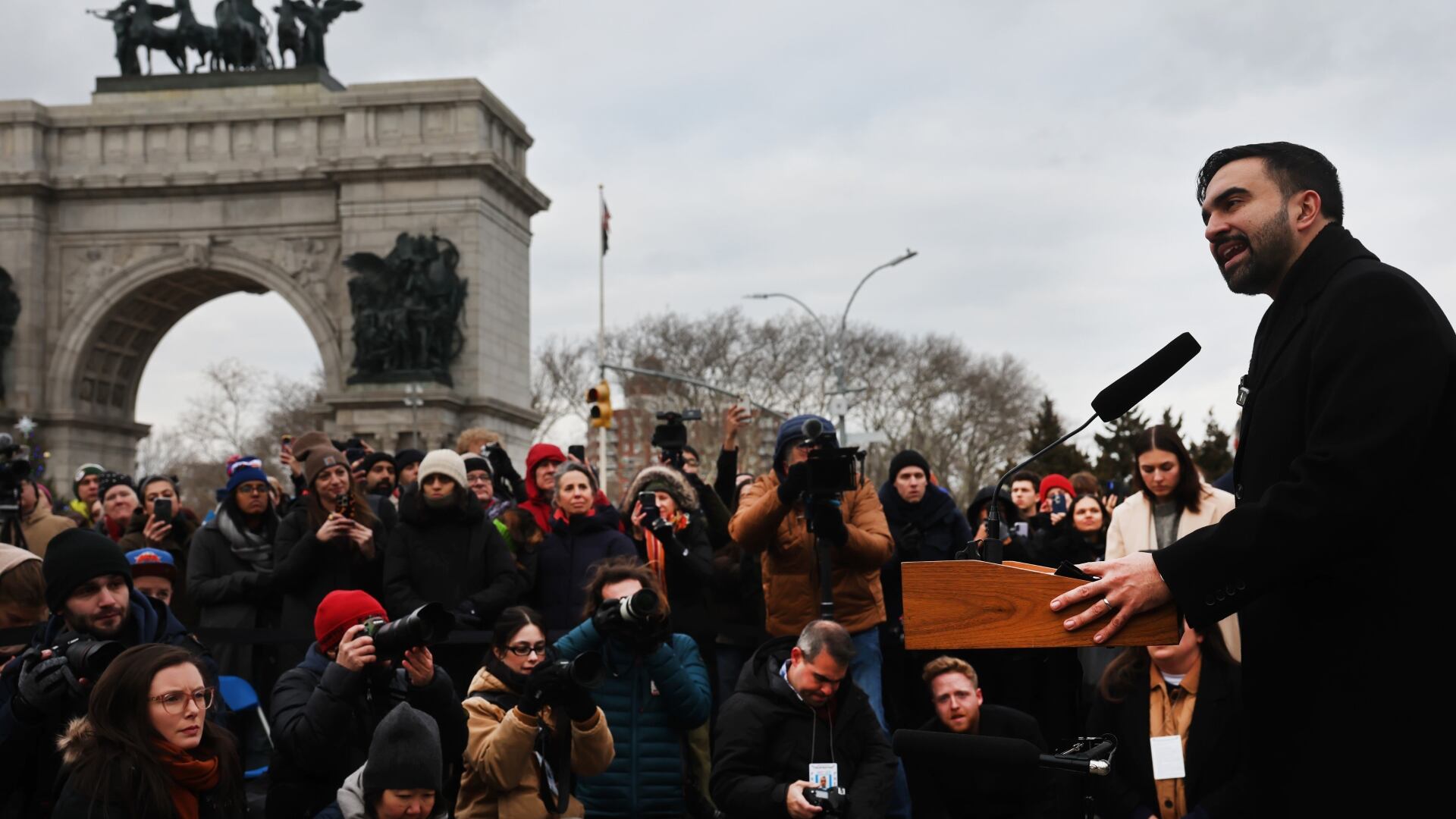
State Sen. Aisha Wahab, the first Muslim and Afghan American elected to the state legislature, introduced the bill Wednesday. It adds caste — a division of people related to birth or descent — as a protected category in the state’s anti-discrimination laws.

Those at the lowest strata of the caste system known as Dalits, have been increasingly calling for such legislation saying they have faced this kind of discrimination in the United States. But such policies remain divisive.

Wahab said caste discrimination is “a social justice and civil rights issue.”

“People came to this country so they can be free and can pursue their American dream without any disruption to their lives," Wahab said, adding that she heard about this form of discrimination growing up in Fremont, California, and living in the San Francisco Bay Area.

But some groups such as the Hindu American Foundation and the Coalition of Hindus of North America oppose such policies. They argue these measures will hurt a community that already faces hate and discrimination, and will specifically target Hindus and Indian Americans who are commonly associated with the caste system. The legislation is being backed by other groups such as Hindus for Human Rights and Hindus for Caste Equity.

A United Nations report in 2016 said at least 250 million people worldwide still face caste discrimination in Asia, Africa, the Middle East and Pacific regions, as well as in various diaspora communities. Caste systems are found among Buddhists, Christians, Hindus, Jains, Muslims and Sikhs.

Wahab said she is “deeply sensitive to how minority religions and groups are depicted.”

“Caste goes beyond religion and nationality,” she said. “This legislation primarily protects millions who live in silence and have never had such protection because there is little understanding of this issue. This bill is about protecting people who are vulnerable.”

In February, Seattle became the first U.S. city and the first jurisdiction outside South Asia to add caste to its anti-discrimination laws. Several colleges and universities have also enacted similar policies barring caste discrimination on campuses, including University of California, Davis.

A 2020 survey of Indian Americans by the Carnegie Endowment for International Peace found caste discrimination was reported by 5% of survey respondents. While 53% of foreign-born Hindu Indian Americans said they affiliate with a caste group, only 34% of U.S. born Hindu Indian Americans said they do the same.

However, a 2016 Equality Labs survey of 1,500 South Asians in the U.S. showed 67% of Dalits who responded reported being treated unfairly because of their caste.

California "has been ground zero for the caste equity movement,” said Thenmozhi Soundararajan, founder and executive director of Oakland, California-based Equality Labs, a Dalit advocacy group.

“This legislation is about clarifying existing protections and making them explicit,” she said.

The Hindu American Foundation disagrees. Samir Kalra, the group's managing director, said it is “a dangerous and misguided bill that targets, racially profiles, and institutionalizes bias against all residents of Indian and South Asian origin, as well as a few other vulnerable communities of color."

Kalra said California legislators should be protecting everyone's civil rights, but “they are instead trampling the fundamental constitutional rights of specific minority communities.”

According to a 2021 report by the Silicon Valley Institute for Regional Studies, Asians, including South Asians, hold 37.8% of technical roles and 25.3% of leadership roles at Silicon Valley's largest tech companies.

In 2020, California regulators sued Cisco Systems saying a Dalit Indian engineer faced caste discrimination at the company’s Silicon Valley headquarters. In another case, Tanuja Gupta, quit her senior manager job at Google News last year after blowback over inviting Soundararajan to speak to employees during April, which is Dalit History Month. The talk was canceled and Gupta accused her former employer of retaliation, which Google has denied.

Gupta said she is backing the bill because those facing caste discrimination have no protection or legal recourse right now.

“This is the form of accountability we need,” she said. “People are afraid to speak up when they are discriminated against because they are afraid to rock the boat and they fear they may lose their job or employment visa. It's a hard cycle to break and you can only do it when someone is willing to risk everything.”

Caste is “not a religious issue, but a civil rights issue,” said Gupta.

Shakeel Syed, executive director of South Asian Network in Artesia, California, said he sees caste discrimination among workers and he has helped in cases where caste played a role in wage theft and housing discrimination.

“When hardworking people are not respected or valued simply because of their caste, that is just blatantly wrong,” he said.


Share:
More In Politics
Senate Committee Votes to Advance Big Tech Antitrust Bill
Members of Congress have voted to advance a bill meant to address antitrust concerns related to tech giants including Amazon, Apple, Google, and Meta. The 'American Innovation and Choice Online Act' is largely seen as one of the best chances for the government to reign in Big Tech's dominance Seth Schachner, Managing Director StratAmericas; Digital Business Executive joined Cheddar's Opening Bell to discuss.
Biden Touts Intel's Chip Factory Plans Amid Shortages
American semiconductor company, Intel officially announcing plans to build a new $20 billion chip manufacturing complex outside Columbus, Ohio. This comes as the global chip shortage continues to hamper production of everything from smart phones, to cars. Jennifer Smith - Logistics and Supply Chain Reporter, WSJ joined Cheddar's Opening Bell to discuss.
U.S. Puts Troops On High Alert As Russia Increases Presence Near Ukraine Border
The U.S. has put more than 8,000 American troops on high alert for possible deployment to Eastern Europe as the West prepares for a potential Russian invasion of Ukraine. With Russia building up more than 100,000 troops near the Ukrainian border, concerns over the country's behavior are mounting. Joel Rubin, Former Deputy Assistant Secretary of State and President of the Washington Strategy Group, joined Cheddar to discuss what this means for U.S.-Russia relations, and where the conflict might be heading next.
As Midterm Elections Loom, Biden's Approval Rating Continues Decline
As the midterm election looms, things aren't looking too promising for President Joe Biden. One year into his term as president, Biden is facing one of the lowest approval ratings of any modern-day president, threatening his party's control of the House in 2022. Brian Bennett, Senior White House Correspondent for TIME, joined Cheddar's Opening Bell to discuss.
The Biden Administration: One Year Down, Three to Go
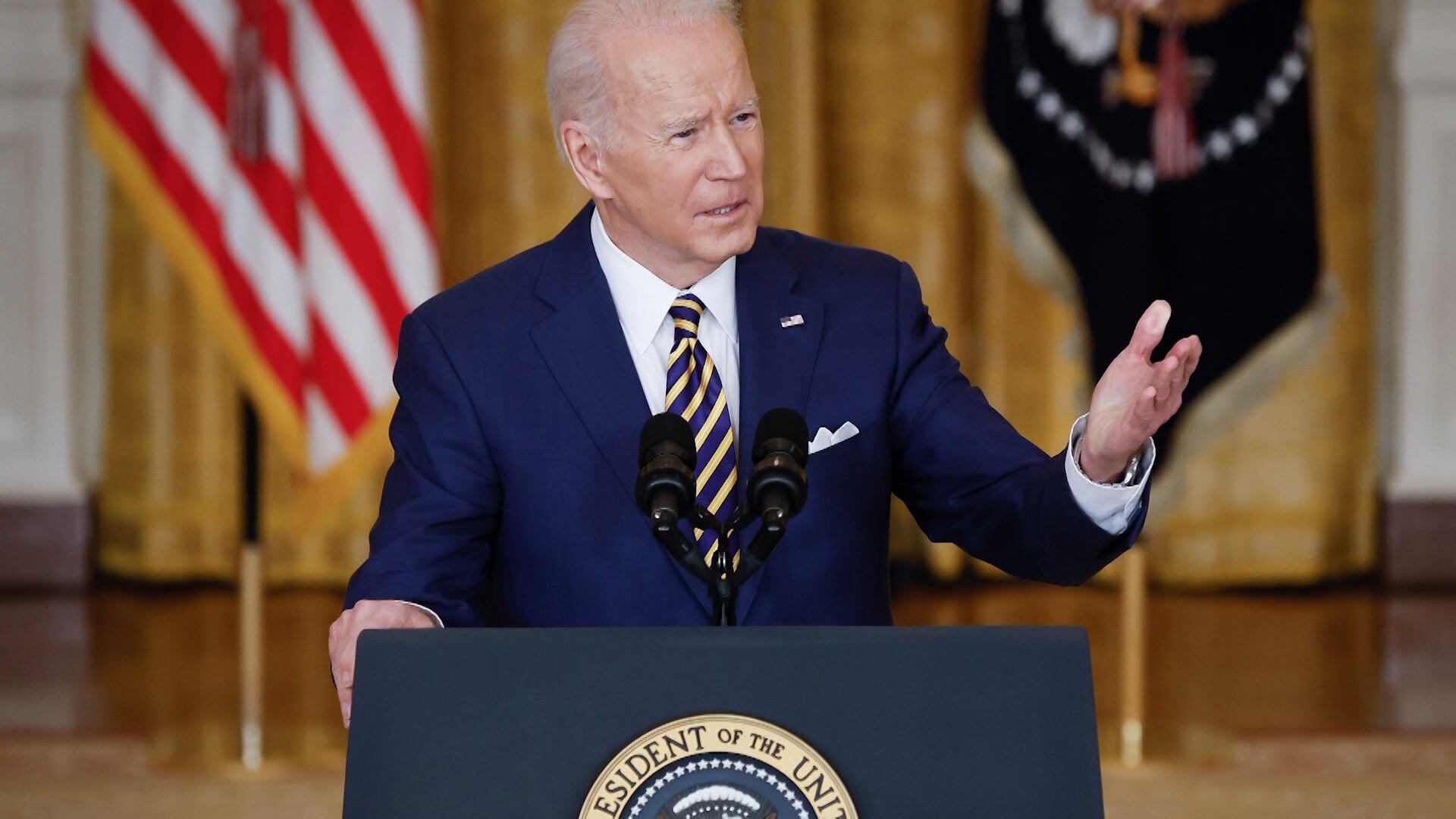
A full one year into his term as President of The United States, President Biden addressed the nation on Wednesday, facing questions on everything from inflation to chip shortages and covid-19. As Biden enters his second year in office, he is facing one of the lowest approval ratings of any modern-day president. Kate Davidson, Reporter, POLITICO joined Cheddar's Opening Bell to discuss.
New Documentary Highlights the Life and Role of Congresswoman Barbara Lee
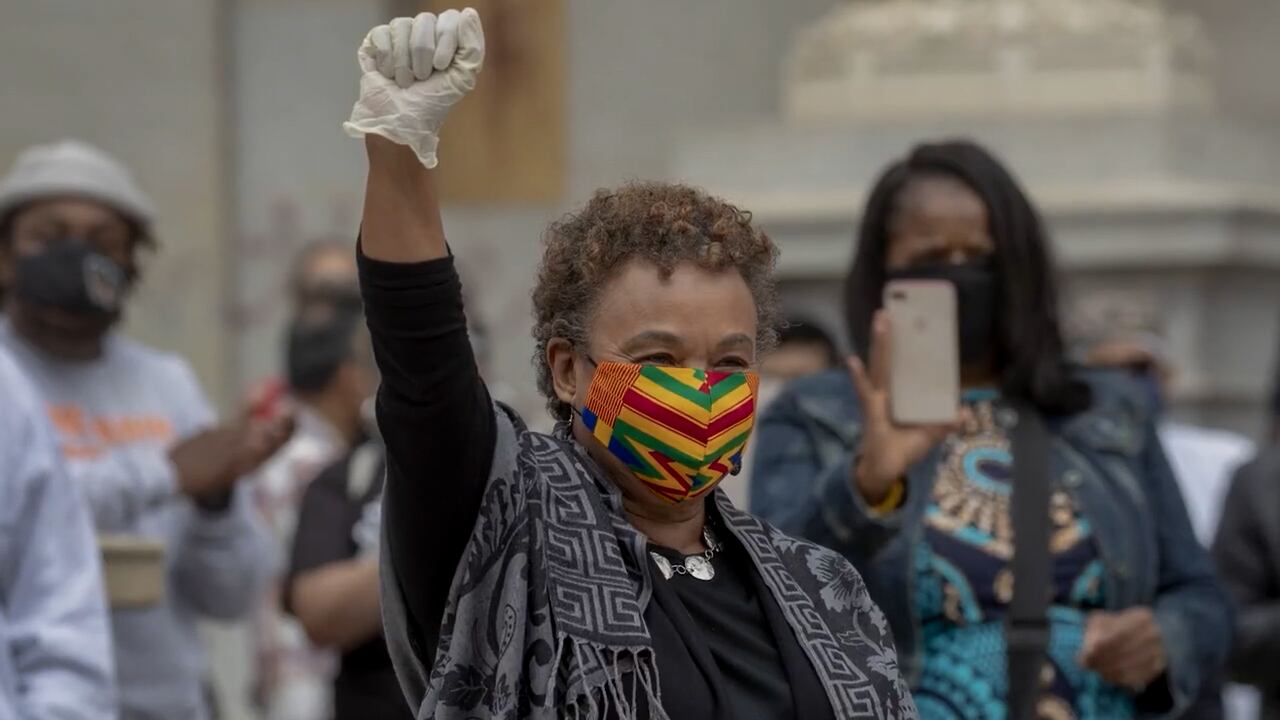
"Barbara Lee: Speaking Truth to Power" is the story of how the longtime House Democrat became, as she Is known to some, as "the Conscience of Congress." The film also shows Representative Lee from her days working to fight community poverty to famously becoming the only member of Congress to vote "no" against the war in Afghanistan days after 9/11. The film is nominated for an NAACP Image Award, and Premieres on Starz on February 1. Film director Abby Ginzberg and Rep. Barbara Lee (D-Calif. 13th District), joined Cheddar to discuss more.
New San Diego Law Funnels Grocery Waste To Food Banks
San Diego has just implemented a new law that could set the stage for how the country deals with food waste. This new law hopes to make a dent in that. Businesses and groceries stores out in San Diego will need to put a plan in place to *donate edible food rather than toss it straight to the trash. Food Rescue Manager at Feeding San Diego, Kate Garret
Bronx Twin Parks Apartment Fire Leaves 17 People Dead
Earlier this month, New York City experienced one of the deadliest fires it has seen in decades. 17 people lost their lives in the Fordham section of the Bronx. This was due to a faulty space heater which reportedly began on the lower floor of the 120 unit building. Thanks to the F. D. N. Y. And heroic neighbors, many were able to get out in time. Unfortunately, the toxic smoke surged upwards through a safety door. Now, many advocates say negligence by policymakers and landlords has led to the deaths in black and brown communities from fires that honestly could have been preventable. Legislative Director of Citizen Action of New York, Rebecca Garrard, and the Chair of Journalism and New Media Studies at St. Joseph's College Theodore Hamm, joined Cheddar to discuss more.
SCOTUS Denies Bid To Block Texas Abortion Law
The Supreme Court has declined to order the Texas Abortion case back to the original trial judge for further proceedings. Essentially if Texas abortion providers were able to get their case back to the lower court., It would have greatly helped the group move against the law. However, this decision is likely to prolong the case legal battle. Professor and Author of "The Turnaway Study: Ten Years, a Thousand Women, and the Consequences of Having — Or Being Denied — An Abortion", Diane Foster, joined Cheddar to discuss more.
Supreme Court Denies Bid to Block Texas Abortion Law
The Supreme Court rejected yet another bid by abortion providers to block Texas's law - which bans most abortions after six weeks of pregnancy. This is the fourth time that advocates have tried and failed to block the most restrictive abortion ban in the country. Leah Litman, assistant professor of law at The University of Michigan and co-host of the "Strict Scrutiny" podcast, joins Cheddar News to discuss.
Load More