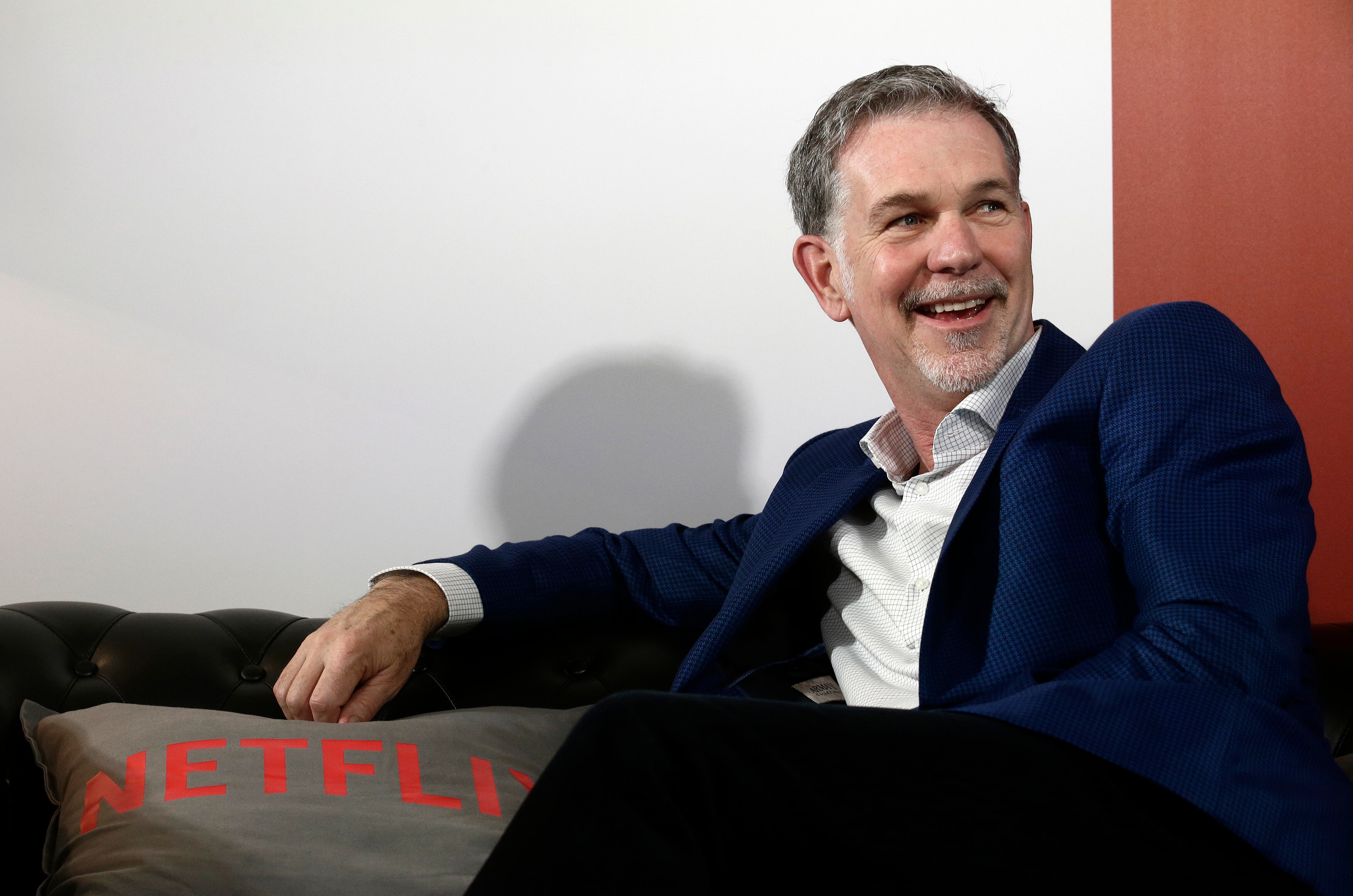
In this Feb. 28, 2017, file photo, Netflix Founder and CEO Reed Hastings smiles during an interview in Barcelona, Spain. Hastings and his wife, Patty Quillin, are donating $120 million toward student scholarships at historically black colleges and universities. (AP Photo/Manu Fernandez, File)
Netflix CEO Reed Hastings and his wife, Patty Quillin, are donating $120 million toward student scholarships at historically black colleges and universities.
The couple is giving $40 million to each of three institutions: the United Negro College Fund, Spelman College and Morehouse College. The organizations said it is the largest individual gift in support of student scholarships at HBCUs.
Hastings has a history of supporting educational causes, including charter schools. He launched a $100 million education fund in 2016, beginning with money toward college scholarships for black and Latino students.
Hastings said now is the time when "everyone needs to figure out" how to contribute to solving racism. He said HBCUs have been resilient "little-known gems" for black education.
Amid protests over police brutality that began three weeks ago, companies and business leaders have been pledging solidarity with their black employees and the black community. But tech companies — including Netflix — have fallen short in hiring, retaining and promoting underrepresented minorities within their own ranks.
Other tech industry donations in the wake of the Black Lives Matter protests have largely been on the company level. Last week, for instance, Apple CEO Tim Cook announced that the company will spend $100 million on a new Racial Equity and Justice Initiative, investing in education and criminal justice reform among other things. YouTube, meanwhile, pledged $100 million to help black artists and other creators.
YouTube will offer creators a way to rejoin the streaming platform if they were banned for violating COVID-19 and election misinformation policies that are no longer in effect.
Lukas Alpert of MarketWatch explores how networks, brands, and ad buyers absorb the shockwaves when late‑night show hosts are suddenly cut — and brought back.
A new poll finds U.S. adults are more likely than they were a year ago to think immigrants in the country legally benefit the economy. That comes as President Donald Trump's administration imposes new restrictions targeting legal pathways into the country. The Associated Press-NORC Center for Public Affairs Research survey finds Americans are more likely than they were in March 2024 to say it’s a “major benefit” that people who come to the U.S. legally contribute to the economy and help American companies get the expertise of skilled workers. At the same time, perceptions of illegal immigration haven’t shifted meaningfully. Americans still see fewer benefits from people who come to the U.S. illegally.
Shares of Tylenol maker Kenvue are bouncing back sharply before the opening bell a day after President Donald Trump promoted unproven and in some cases discredited ties between Tylenol, vaccines and autism. Trump told pregnant women not to use the painkiller around a dozen times during the White House news conference Monday. The drugmaker tumbled 7.5%. Shares have regained most of those losses early Tuesday in premarket trading.